


Knee Pain Relief Without Surgery: How Class IV Laser Therapy Helps
author: "Laser Lab Therapy" ---
Chronic knee joint stiffness can turn simple daily tasks like climbing stairs into major challenges. Finding knee pain relief without surgery is a priority for many active adults who want to protect their joint health without facing long recovery periods. Fortunately, modern medical technology and lifestyle therapies offer effective ways to manage joint discomfort without invasive procedures.
Request an Appointment to discuss your knee pain and learn if Class IV laser therapy is right for you.
Achieving knee pain relief without surgery is highly possible through a combination of clinical care and targeted joint therapies. Many individuals manage conditions like arthritis, tendonitis, and meniscus damage through physical therapy, joint bracing, weight management, and low-impact exercise. Additionally, advanced non-operative options like FDA-cleared Class IV laser therapy target deep tissue pain, helping to reduce local inflammation. According to a clinical study on PMC, non-operative management of knee issues is the initial treatment of choice for patients with mild to moderate symptoms. This comprehensive approach helps improve joint mobility, supports natural healing, and can delay or prevent the need for invasive surgical procedures like joint replacement.
If you want to protect your joints, learning about your options is the first step toward finding a solution that works. Let us look at how common joint issues develop and explore the top non-surgical paths. The process of protecting your joints begins with Understanding Knee Pain: Common Causes and Non-Surgical Options.
Knee Pain Relief Without Surgery: Your Guide to Non-Invasive Care
Understanding Knee Pain: Common Causes and Non-Surgical Options
Knee pain can severely limit your daily movement, making simple tasks like climbing stairs or walking a challenge. The knee is a complex joint where bones, cartilage, ligaments, and tendons work together. When any of these structures suffer damage, pain and stiffness follow. Finding knee pain relief without surgery starts with understanding the source of your joint pain and exploring non-surgical care paths early.
How Osteoarthritis Affects Knee Joint Cartilage
Osteoarthritis is one of the most common causes of long-term knee pain. This chronic degenerative condition involves the gradual breakdown of joint cartilage, which is the protective tissue covering the ends of your bones. According to research published in the National Institutes of Health PMC database, osteoarthritis has a distinctive picture that includes cartilage damage and the growth of bone spurs, also known as osteophytes, which lead to joint stiffness and pain. As the cartilage thins, the joint loses its natural shock absorber, making physical movement painful.
Common Knee Soft Tissue Injuries
Beyond wear-and-tear arthritis, soft tissue injuries frequently cause acute or chronic knee pain. Meniscus tears occur when the shock-absorbing cartilage rings inside the knee twist or rip during physical activity. Tendonitis, such as patellar tendonitis, is an inflammation of the thick bands of tissue that connect your muscles to bone. Runner's knee, or patellofemoral pain syndrome, causes pain behind or around the kneecap. Each of these conditions changes how your joint moves, which can cause extra stress on the remaining healthy tissue.
The Role of Non-Surgical Joint Care
Many people assume that chronic joint wear or injuries require surgical repairs. However, a study in PubMed Central shows that non-operative management of knee osteoarthritis is the initial treatment of choice for patients with mild to moderate symptoms. Taking a non-surgical path allows you to manage discomfort and improve joint function without the risks of an operation. You can learn more about these approaches by reviewing modern knee arthritis treatments designed to manage symptoms and keep you active.
Using Physical Therapy and Focused Exercise
Physical therapy is a vital piece of non-surgical knee care. A tailored exercise program focuses on strengthening the key muscles that support the knee joint, such as the quadriceps and hamstrings. Research in the PMC database confirms that physical therapy is a key component of non-surgical management, focusing on muscle strength and joint mobility. Stronger surrounding muscles take the pressure off your joint, stabilize the kneecap, and reduce pain during daily movements.
When standard knee pain persists, patients often explore a range of non-surgical options before considering invasive procedures. Each option addresses knee pain differently, from strengthening the supporting muscles to targeting inflammation at the cellular level. Understanding how these approaches compare helps you choose the right path for your knee pain relief without surgery.
Physical Therapy and Exercise
Physical therapy is the most common first-line treatment for knee osteoarthritis and related conditions. A licensed therapist designs a program of targeted exercises to strengthen the quadriceps, hamstrings, and calf muscles that support the knee joint. Exercises such as quad sets, straight leg raises, step-ups, and stationary cycling build the muscular support system around the knee, reducing the load on cartilage and bone. According to clinical guidelines from PubMed Central, strengthening the muscles surrounding the knee is a key component of non-surgical management for knee osteoarthritis. Most patients attend PT sessions one to three times per week for several weeks, and results depend heavily on consistent participation and home exercise compliance.
Medications and Anti-Inflammatories
Over-the-counter pain relievers offer a quick, accessible option for managing knee discomfort. Non-steroidal anti-inflammatory drugs (NSAIDs) like ibuprofen (Advil, Motrin) and naproxen (Aleve) reduce inflammation and pain, while acetaminophen (Tylenol) provides pain relief without anti-inflammatory effects. As noted by Penn Medicine, these medications are commonly recommended for initial knee pain management. However, they primarily mask symptoms rather than address the underlying joint condition. Long-term NSAID use carries risks including gastrointestinal irritation, kidney strain, and potential cardiovascular concerns, making them unsuitable as a standalone long-term solution for chronic knee pain.
Corticosteroid Injections and Viscosupplementation
When oral medications provide insufficient relief, injectable options offer more direct intervention. Corticosteroid injections deliver powerful anti-inflammatory medication directly into the knee joint space, often providing significant pain relief lasting several weeks to months. However, repeated steroid injections can accelerate cartilage breakdown and weaken the joint structure over time. Viscosupplementation, or "gel shots," involves injecting hyaluronic acid into the knee to restore the natural lubricating fluid that cushions the joint. This option is particularly relevant for osteoarthritis patients whose joint fluid has degraded. Both injection types are office-based procedures requiring little to no recovery time, but their effects are temporary and do not address the underlying tissue health of the knee.
Joint Bracing and Assistive Devices
Knee braces provide external support that can offload pressure from affected compartments of the knee. Unloader braces are designed specifically for arthritis patients, shifting weight away from the damaged area toward healthier tissue. Simple sleeve braces offer compression and proprioceptive feedback, which can improve joint awareness during movement. Walking aids such as a cane or walker, used in the hand opposite the painful knee, can significantly reduce joint loading during daily activities. When combined with physical therapy, bracing helps patients maintain mobility while protecting the joint from further strain.
Class IV Laser Therapy at Laser Lab Therapy
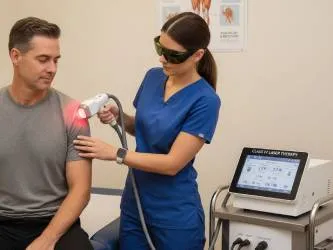
For patients seeking drug-free, non-invasive knee pain relief without surgery, Class IV laser therapy offers a modern alternative. The Summus P4 laser delivers four therapeutic wavelengths (650nm, 810nm, 915nm, and 980nm) that penetrate deep into knee tissue to stimulate cellular repair. This FDA-cleared technology works through photobiomodulation, increasing ATP production in mitochondria, reducing pro-inflammatory cytokines, and improving local blood circulation. Sessions last only five to ten minutes with zero downtime, making this option far more time-efficient than physical therapy while avoiding the risks associated with medications and injections. The table below summarizes how these common non-surgical options compare.
Treatment OptionPrimary ApproachProsConsTypical OutcomePhysical TherapyMuscle strengthening and stretchingStrengthens joint support system, no drugsRequires significant time commitment and effortImproved stability and function over weeksOTC MedicationsOral anti-inflammatories / pain relieversEasy to access, low upfront costGI and kidney risks with long-term use, masks symptomsTemporary relief, does not treat root causeSteroid InjectionsCorticosteroids injected into joint spaceFast, powerful anti-inflammatory effectRepeated use can damage cartilage over timeRelief lasting weeks to monthsViscosupplementationHyaluronic acid gel injectionsRestores joint lubrication, cushions the kneeMultiple injections needed, expensiveImproved cushioning for 6-12 monthsJoint BracingExternal support and load redistributionNon-invasive, immediate effect during activityDoes not treat underlying condition, can be bulkyReduced pain during weight-bearing activitiesClass IV Laser TherapyPhotobiomodulation with four wavelengthsDrug-free, no downtime, FDA-cleared, treats at cellular levelRequires multiple sessions over several weeksReduced inflammation, improved circulation, tissue healing
Lifestyle Changes That Support Knee Pain Relief Without Surgery
Making smart daily choices is a great way to handle joint discomfort. Simple adjustments in your routine can reduce stress on your joints and keep you moving. When you change how you move, eat, and exercise, you can find lasting arthritis pain relief without pills.
Reducing Joint Load and Pain
Your knees carry the weight of your entire body with every step. When you run, jump, or climb, that force multiplies. Making changes to lower this daily load can protect your joint cartilage from wearing down.
- Manage Your Weight
- Losing weight is one of the best ways to get knee pain relief without surgery. Carrying extra weight adds heavy stress to your joints. In fact, every 10 pounds of extra body weight can add about 50 pounds of pressure across your knees, according to the American Association of Hip and Knee Surgeons. Dropping just 10% of your body weight can greatly reduce joint discomfort and help you move with ease.
- Modify Your Daily Activities
- How you move during the day affects your joint health. Daily tasks can put heavy strain on your knees. For example, the American Association of Hip and Knee Surgeons notes that climbing stairs puts three to five times your total body weight across your knee joints. You can limit this stress by taking elevators when possible, avoiding steep slopes, and using chairs with solid armrests to help you stand up.
- Choose Low-Impact Exercise
- Staying active keeps your joints loose, but high-impact workouts can cause pain. Low-impact exercises like swimming, cycling, and walking are much safer choices. Research published in PubMed Central shows that these gentle activities are essential tools to reduce symptom flare-ups in knee joints. Regular movement also boosts blood flow to help your knees stay healthy.
- Wear Supportive Footwear
- The shoes you wear play a big role in how your knees feel. Flat shoes without support can throw off your alignment and cause joint strain. Choose shoes with good arch support and thick, shock-absorbing soles to cushion each step. Proper footwear helps distribute your weight evenly and takes the pressure off your sore knees.
Strengthen and Protect Your Knees
Simple daily changes work best when you combine them. Keeping your leg muscles strong supports your joint structure and keeps your kneecaps aligned. By focusing on low-impact movement and smart weight goals, you can protect your joints and avoid invasive treatments.
How Class IV Laser Therapy Offers Knee Pain Relief Without Surgery
For many active adults, finding knee pain relief without surgery is a top priority. Invasive joint operations often require months of recovery time and carry significant risks. For patients with mild to moderate symptoms, non-operative care serves as the best first step. The National Institutes of Health indicates that early non-surgical care can help patients manage symptoms and delay major joint surgery. High-power Class IV laser therapy is a key part of this non-invasive approach.
The Science of Photobiomodulation
Class IV laser therapy works through a biological process called photobiomodulation. This treatment uses specific wavelengths of light to trigger a cellular response. The Summus P4 laser system uses four distinct wavelengths to target different tissue depths in the knee joint. The 650-nanometer wavelength targets shallow tissue, while the 810-nanometer wavelength stimulates cell power plants to speed up healing. The 915-nanometer wavelength increases oxygen delivery to muscles, and the 980-nanometer wavelength improves local blood flow. Together, these light waves penetrate deep into the knee to reach damaged cartilage, tendons, and ligaments.
How Light Reduces Joint Inflammation
Knee pain often stems from swelling and tissue irritation. When laser light reaches the damaged knee joint, it starts a positive cellular chain reaction. This reaction helps lower inflammatory chemicals while boosting natural healing factors. The treatment works to increase local blood flow and ease muscle tightness in the leg. Patients who want to explore these biological benefits can read more about light therapy for joint pain. By reducing chronic swelling, this therapy helps restore joint movement without the need for invasive procedures.
Blocking Pain Signals and Boosting Joint Function
In addition to calming inflammation, Class IV laser therapy acts directly on the nervous system to ease discomfort. The laser energy helps soothe irritated nerve fibers in the knee, which blocks pain signals from reaching the brain. This neural modulation provides relief that helps patients return to their normal daily tasks. Using these non-invasive methods is a vital step in modern natural pain management services. When nerve pain is quieted, patients can focus on strengthening the muscles around the joint to keep the knee stable.
An FDA-Cleared Alternative to Joint Surgery
Class IV laser technology offers a safe, cleared option for those seeking a path away from the operating room. The Food and Drug Administration has cleared this laser technology for the temporary relief of minor muscle and joint aches, arthritis, muscle spasms, and joint stiffness. It is also cleared to promote muscle relaxation and temporarily increase local blood circulation. At Laser Lab Therapy in Murrells Inlet, we use this medical-grade technology under medical oversight. Each session is quick, taking only five to ten minutes, and requires no downtime. This makes it an ideal choice for people across the Grand Strand who want to keep moving without surgery.
Ready to find knee pain relief without surgery? Contact Laser Lab Therapy to schedule your consultation today.
What to Expect During Laser Therapy for Knee Pain
Starting a new treatment can bring up many questions. At Laser Lab Therapy, we keep your care simple, safe, and professional. We help people throughout the Grand Strand find knee pain relief without surgery. Our team guides you through each step of the process so you always know what to expect.
Your Medical Consultation and Doctor Oversight
Your journey to knee pain relief without surgery begins with a complete medical review. We do not guess when it comes to your joint health. Our medical director, Dr. Heather Hinshelwood, MD, overseeing all clinic care, has over twenty years of medical practice. She and our clinical team evaluate your full history, pain levels, and lifestyle goals. We screen for any reasons why laser therapy might not suit you. This ensures your custom care plan is both safe and right for your specific knee issue.
The Protective Eyewear and Safety Protocol
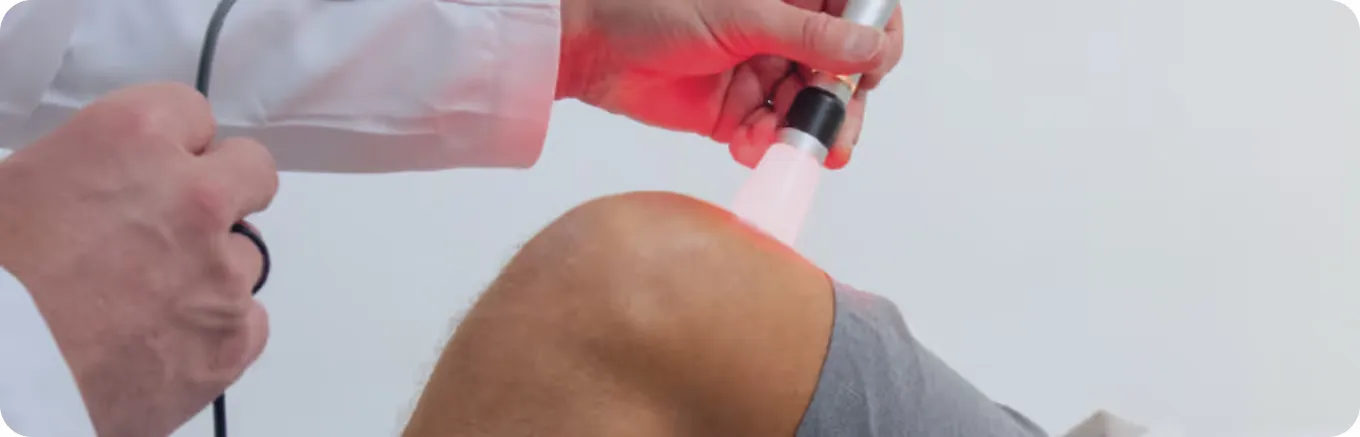
Your safety is our top priority during every treatment session. Class IV lasers are high-power systems that need specific safety steps. Before we start, our certified technicians will give you special protective eyewear. Everyone in the treatment room must wear these safety glasses. This eyewear filters out the specific light waves of the laser to protect your eyes. We keep a safe space so you can relax completely during your care.
Laser Handpiece Positioning and Care Delivery
Once you are comfortable on the treatment table, our certified technician will begin the session. The technician moves the laser handpiece slowly over your knee joint. We target the specific areas of your pain, such as the joint line, tendons, and meniscus. The handpiece is kept close to your skin or in light contact to deliver the light energy deep into your tissues. This process helps by increasing local blood circulation to support joint health. You will feel a soothing, deep warmth as the light energy acts, but you will not feel any pain.
Treating Specific Joint and Knee Conditions
Class IV laser therapy helps with many types of joint issues. It is a key option for managing knee osteoarthritis and cartilage wear non-operatively. It also works well for patellar tendonitis, ligament strains, and meniscus injuries. Many people turn to light therapy to manage chronic swelling and stiffness. This care helps you stay active and delays the need for more invasive choices like joint replacement.
Serving Grand Strand Residents with Elite Care
We are proud to serve people throughout our coastal community. Residents in Myrtle Beach, Surfside Beach, Pawleys Island, and Conway come to our clinic in Murrells Inlet for care. We offer real, drug-free options to help our neighbors stay active on the beach and golf courses. Our patients report a 98% satisfaction rate, reflecting our commitment to great care and reliable results. If you want to explore natural pain management services, we are here to support your recovery.
Frequently Asked Questions
Can laser therapy help with arthritis in the knee?
Yes, Class IV laser therapy can help manage symptoms of knee arthritis. Degenerative joint conditions involve the breakdown of cartilage and the formation of bone spurs that lead to pain. Laser therapy uses deep-penetrating light energy to target these joint tissues. According to study data on PubMed Central, this FDA-cleared process provides temporary relief of minor joint aches and reduces stiffness. It also temporarily increases local blood circulation to help you manage arthritis pain without surgery.
How long does it take to see results from laser therapy for knee pain?
Many patients notice positive changes after just a few brief sessions. A typical treatment plan at Laser Lab Therapy involves quick sessions lasting five to ten minutes. These are scheduled two to three times per week over a period of two to six weeks. While some individuals experience temporary relief from joint pain during their first week, overall results depend on the severity of your knee condition.
Is laser therapy for knee pain covered by insurance?
Health insurance plans do not typically cover Class IV laser therapy. At Laser Lab Therapy, we offer flexible payment options and membership programs to help make care accessible. Patients often find that investing in non-surgical laser treatments is a cost-effective choice compared to the high out-of-pocket expenses of surgery. We recommend scheduling a personal consultation to discuss our silver, gold, and platinum membership plans.
How is Class IV laser different from cold laser for knees?
The primary difference is power output and tissue penetration. Cold lasers use lower power and only reach shallow tissue depths. Class IV lasers deliver higher medical-grade power. This allows the light energy to reach deep joint tissues, tendons, and meniscus areas. According to research on PubMed Central, non-surgical therapies are key for mild to moderate knee issues. Class IV lasers provide the depth needed to stimulate blood flow in large joints.
Can lifestyle changes provide knee pain relief without surgery?
Yes, daily habits play a major role in managing knee pain. Research from the American Association of Hip and Knee Surgeons shows that ten pounds of extra body weight puts fifty pounds of pressure on your knees. Activities like climbing stairs increase joint pressure up to five times your body weight. Losing weight and doing low-impact exercise can reduce joint pressure, strengthen supporting muscles, and help you avoid knee surgery.
Ready to Request an Appointment for Class IV Laser Therapy in Murrells Inlet?
Living with knee pain can limit your daily life and keep you from doing what you love in the Grand Strand area. Leaving joint wear, meniscus issues, and arthritis alone can make your physical condition much worse over time. Starting non-invasive care now helps protect your joint health and supports your overall mobility. Our local clinic offers a drug-free, surgery-free path to help you find relief with our FDA-cleared Class IV laser technology. Do not wait for your knee discomfort to get worse when you can start your recovery path today.
Ready to request an appointment? Contact Laser Lab Therapy to schedule your Class IV laser therapy consultation in Murrells Inlet today.
Frequently Asked Questions
Is light therapy safe for athletes?

Yes, light therapy is completely safe and highly beneficial for athletes. It promotes faster muscle recovery, reduces inflammation, and supports performance without the risks of medication or downtime. That’s why professional and amateur athletes worldwide rely on it to train smarter and recover quicker.
How many sessions will I need?
The number of sessions varies depending on the type and severity of your condition. Many patients notice improvement after 3–5 sessions, while chronic conditions may require ongoing care for best results. During your initial consultation, we’ll design a personalized treatment schedule tailored to your body’s response and recovery goals.

Ready to Try Light Therapy for Recovery?