

Class IV Laser vs Cold Laser: Key Differences
The main difference between a class iv laser vs cold laser is the power output and the depth of tissue penetration. Cold laser therapy, or Low-Level Laser Therapy (LLLT), uses lower power to treat surface issues and often needs longer sessions. In contrast, Class IV lasers use much higher power to reach deeper tissues. This makes them more effective for deep muscle stiffness and chronic aches. This high-power approach allows Class IV lasers to penetrate deeper than lower-power tools. While both types are non-invasive and FDA-cleared for minor pain relief, Class IV sessions at Laser Lab Therapy are typically done in 5 to 10 minutes. This speed makes high-power laser therapy a top choice for busy people who want fast and effective support for their recovery.
Class IV laser vs cold laser at a glance
Picking between a class iv laser vs cold laser depends on your needs. Both choices do not need surgery and aim to help with pain. They work by sending light into the body to help it heal. These tools are often used for pain relief for joint and muscle issues. They are a great fit for treating back pain with laser therapy and other old injuries.
How power levels work
The main gap between these two tools is how much power they use. A Class IV laser uses high power to send light deep into the body. This helps it reach spots that lower-power tools might miss. More power also means the light can do its work fast. You can learn more about high intensity laser therapy and how it works for deep pain.
On the other hand, cold laser therapy is known as Low-Level Laser Therapy. It uses much less power and does not make heat. It takes more time to work but is a safe choice for surface-level care. Both types of laser therapy are safe and do not use needles. They help the body fix itself by giving cells the energy they need to work well.
Session time and feel
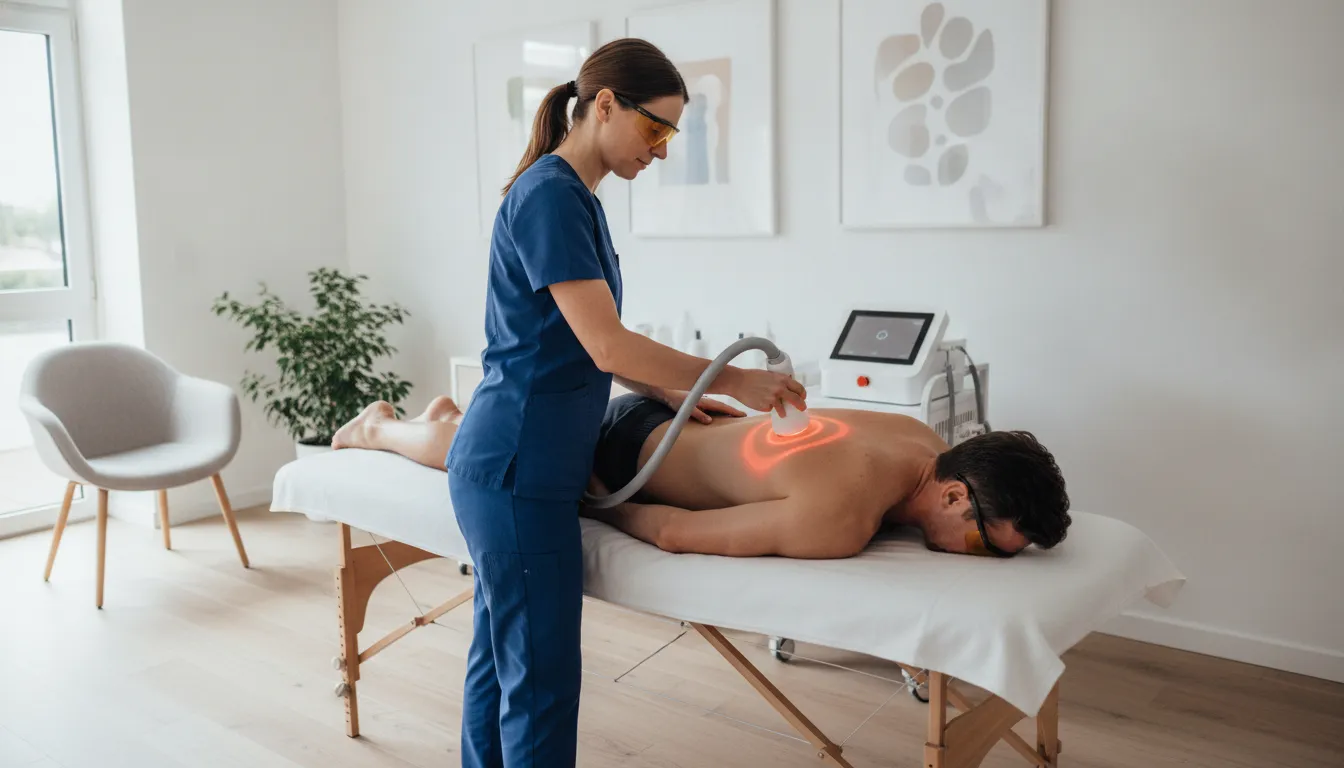
Time is a big point for many people. High-power laser sessions are fast. Most of these visits last about 5 to 10 minutes. Since the laser is strong, you might feel a warm glow during the care. This warmth shows the light is reaching the right spot.
Cold laser sessions take more time because of the low power. You will not feel any heat during the care. This makes it feel soft. Both ways are good for those who want to avoid drugs. They help with Class IV laser therapy gains like easing stiffness and aches. These tools are a top choice for people who want to stay active and live without pain.
| Feature | Class IV Laser | Cold Laser (LLLT) |
|---|---|---|
| Power Level | High (HILT) | Low (LLLT) |
| Sensation | Soothing warmth | No heat felt |
| Session Time | 5 to 10 minutes | 20 to 40 minutes |
| Depth | Deep tissue | Near the surface |
What do Class IV and cold laser actually mean?
Laser therapy uses light to help the body heal. Doctors and clinics often use two main types: Class IV and cold laser. These tools look similar, but they work in other ways to reach deep tissues. Choosing between a class iv laser vs cold laser depends on your goals for pain care and recovery.
The basics of cold laser
Cold laser therapy is also called Low-Level Laser Therapy or LLLT. This type uses very low power levels. It does not heat up the skin or cut tissue. Which is why people call it "cold." Doctors use it to help with minor joint pain and skin issues. It is a slow and gentle way to send light to the cells.
Because the power is low, it takes more time for the light to go deep. These sessions can be long and may need to happen many times a week. This tool is a good choice for people who want a soft way to start care. It is safe and does not need any surgery or needles to work well for most people.
How Class IV laser differs
Class IV lasers are the high-power type of light care. They use much more energy than cold lasers. This helps the light go deep into your muscles and joints. This deep reach is helpful for thick tissues like the hip or lower back where cold lasers may not reach.
At our clinic, we use this high intensity laser therapy to help patients find relief. Because the power is high, sessions are very fast. Most treatments take only five to ten minutes per area. This makes it a great fit for busy people who need quick care for minor muscle aches and pains.
You can see many Class IV laser therapy benefits when you use it for chronic stiffness. It helps move more blood to the area and relaxes tight spots. This fast-acting tool is now a top choice for many care centers across the country. It lets doctors treat large parts of the body in a short time.
Shared traits and safety
Both types of laser are non-invasive. This means they do not use cuts or shots to get results. Both tools are used for pain relief in the muscles and bones. They are safe when used by a pro and can help you feel better without long rest times or missed work.
Laser care is FDA-cleared for temporary relief of minor joint pain and stiffness. It can also help with muscle spasms and arthritis. While these tools are powerful, we do not guarantee cures. Every person's body reacts to light care in a unique way. We look at your health history to find the best plan for your needs.
Whether you choose cold or hot light, the goal is the same. These tools help the body use its own power to heal. Many people find that laser care helps them move better and feel less stiff. It is a drug-free way to manage pain and get back to your daily life.
How does each treatment feel?
Most patients want to know what it is like to sit for a session. While both tools use light to help the body, the way they feel is not the same. The main gap between a class iv laser vs cold laser is the power and the heat you feel during the visit.
A soothing warmth with Class IV laser
When you get a Class IV laser session, you will often feel a gentle, soothing warmth. This happens because the laser uses more power to reach deep into your tissues. This Class IV laser therapy benefits the area by helping with blood flow.
Most people find the heat very calm as the laser moves over their skin. The warm feeling is a sign that the light is working deep in the body to help you feel better. These sessions are also very fast, which helps if you have a busy day.
Most of the time, a session lasts only 5 to 10 minutes. The clinician will keep the laser head moving to make sure the heat stays at a nice level. Since it is a high-power tool, you and the staff must wear safety glasses during the whole visit.
These glasses protect your eyes from the bright light while the laser is on. It is a quick and easy way to address pain without much downtime. You can get back to your day right after the session is done.
The feeling of cold laser therapy
Cold laser therapy got its name because it does not create heat. You will likely feel nothing at all during the session. It uses much lower power than the Class IV laser, so there is no warming of the skin.
This means it does not warm the muscles deep below. Some people call this Low-Level Laser Therapy or LLLT. It is a good choice if you do not want to feel heat on your skin. You can still get help for your aches without any warmth.
Because the power is low, cold laser sessions often take more time. The light needs more time to do its job and reach the right spot. Both Class IV and cold laser tools are non-invasive, which means no needles or cuts.
You can just sit back and let the light do its work. This method is common in laser therapy for athletic recovery and pain care. It is a simple way to help with aches without the stress of surgery or drugs.
Staff technique and safety
The way the clinician uses the tool also changes how the session feels. For a Class IV laser, the head of the tool is usually in motion. This helps spread the warmth and covers a larger area of the body.
For a cold laser, the tool might stay in one spot for a long time. This is because the low power needs to focus on a small area to work well. Both ways are safe and help you reach your goals for health.
No matter which one you choose, the goal is to help you feel better. Both types of lasers are used for short-term pain relief. They can help with minor joint aches or muscle spasms in the back and legs.
Your clinician will pick the best method for your needs based on your body. They will make sure you are safe from start to finish. You can trust that the tech is used to give you the best care possible.
Which laser therapy may fit your needs?
Choosing between a class iv laser vs cold laser depends on your health goals and the type of pain you have. Both tools use light to help the body, but they work in different ways. Your care team will check where your pain is and how deep it goes before picking a plan. Knowing how these lasers differ can help you see which one might be right for you. By learning the facts, you can make a choice that fits your life and your body.
Depth and tissue reach
The main way these tools differ is how much power they use. Class IV lasers use more power than cold lasers. This extra power helps the light go deep into your body. Cold lasers, also called low-level laser therapy (LLLT), use less power and may not reach as far into deep tissue. This makes Class IV lasers a common choice for deep muscle or joint pains that are hard to reach.
If you are treating back pain with laser therapy, depth is key. Muscles in the back are thick, so the light needs to travel deep to work well. Cold lasers may be used for things closer to the skin, like a finger joint or a small rash. Both types are used for pain relief in many bone and muscle problems. Your choice may depend on where you feel the most stiffness or ache in your daily life.
Session time and goals
Time is another thing to think about when you pick a tool. Because Class IV lasers have more power, they can give a full dose of light fast. Most sessions only take five to ten minutes to finish. This is helpful if you have a busy life and need to get back to work or play soon. Cold laser sessions often take much longer to give the same amount of energy to the body. This can be hard for some people to fit in.
People often pick a certain laser based on how fast they want to see a change. Some use laser therapy for sports healing after a hard workout or a big game. The goal is to increase blood flow and reduce stiffness without using drugs or pills. Since both types are non-invasive, you do not have to worry about surgery or needles during your visit. You can just sit back and let the light do the work while you rest.
Safety and expectations
Both tools are safe when used by a pro who knows how to handle the light. They are FDA-cleared to give short-term relief for minor joint aches and muscle spasms. They can also help with the pain from arthritis and other common health issues. You should know that results can vary for each person based on their own body and health past. Laser therapy is not a cure for every health problem, and no one can promise a certain result for everyone.
You should talk with a team to see how you respond to the light during your first visit. They will look at your health past to make sure the therapy is safe for you and your goals. Most people find the warmth of a Class IV laser calm and nice. Cold lasers do not produce heat, so you might not feel anything at all during the process. Both paths aim to help you move better and feel less pain in your daily life as you heal.
Questions to ask before choosing laser therapy
Choosing the right care for your pain starts with asking the right questions. While many clinics offer laser care, the tools and staff they use can vary. You want to make sure the provider uses the best tech for your needs and has the right training to help you heal.
Check the laser power
One of the first things to find out is what kind of laser the clinic uses. The main choice is often between a Class IV laser therapy benefits and a cold laser. These tools work in very different ways based on their power.
Ask if the laser is a Class IV or a cold laser, which is also called low-level laser therapy. A Class IV laser has more power, which helps the light reach deep into your body to help with pain. Some studies in academic papers show that this higher power helps the light get deep into your tissues.
Ask about safety and staff
You should also ask about who will be doing the work. It is key to know if the staff has the right training to use these tools. Since High-Intensity Laser Therapy uses high power, the person using it must know how to keep you safe.
Ask how they watch for your progress and how they change your care if things do not get better. At Laser Lab Therapy, we start with a full talk to find the best path for you. We check in often to see how you feel and make sure the light care is doing its job for your muscle or joint aches.
- What class of laser do you use? Find out if they use a Class IV laser or a cold laser. This choice is vital for how deep the care goes.
- Is the tool FDA-cleared? Check if the laser has FDA clearance for your kind of pain or stiffness.
- How long are the sessions? Most Class IV care lasts about 5 to 10 minutes, while cold laser may take much longer.
- Who manages my care plan? Make sure there is a pro who knows how to check your goals and change the plan if needed.
- What are the total costs? Ask for a clear price for each visit or for a full set of sessions so there are no surprises.
- How many visits will I need? Get an idea of the schedule and when you might start to feel less pain or stiffness.
What should you know about safety and results?
When you look at a class iv laser vs cold laser, safety is often the first thing people ask about. Both types of care are non-invasive. This means they do not use needles or surgery to help you feel better. Instead, they use light to reach deep tissues without breaking the skin. You can find more facts on how these non-invasive therapies work in recent medical studies.
Safety checks and eye care
Before you start any visit, our team will talk with you about your health. These safety checks help us find any reasons why laser care might not be right for you. For example, some skin issues or past health facts might change how we use the laser. We always put your safety first to make sure you have a good time.
During the session, you must wear special goggles. These goggles protect your eyes from the bright laser light. This is true for both high-power and low-power lasers. While the light is safe for your skin, it can be too strong for your eyes to look at directly. Our staff will give you the right eye tools before the session starts.
FDA rules and professional care
The tools we use are FDA-cleared. This means they have met high standards for safety and use. The FDA has cleared our lasers for the short-term relief of minor muscle and joint aches. This includes help with stiff joints and muscle spasms. You can learn more about Class IV laser therapy benefits on our site.
Our clinic works with medical oversight to make sure you get the best care. Every person on our team has the right training to use these tools. This oversight is key when using high-power Class IV lasers. These lasers can give off a warm feeling on the skin, so we watch your comfort levels closely. Our team knows how to set the tools to keep the session safe and helpful.
Goals and what to expect
It is vital to know what these lasers can and cannot do. We do not promise cures or guaranteed results. Laser care aims to give you short-term relief from pain and stiffness. It can also help by boosting local blood flow for a short time. Many people use laser therapy for athletic recovery to help with muscle soreness after a hard workout.
Most sessions are fast and take only 5 to 10 minutes. While many feel a change after one visit, others might need a few more to see the full effect. Since every person is unique, your body will respond in its own way. We will work with you to track your progress and adjust your plan as needed.
Making an informed laser therapy decision in Murrells Inlet
Picking the right care for your needs is a vital first step. In Murrells Inlet, people often look at class iv laser vs cold laser to find the best fit. Both tools are safe and do not need surgery or needles. They help with pain from tight muscles or old joint aches. At Laser Lab Therapy, we focus on helping you find a plan that fits your life and goals.
Class IV power and depth
Class IV lasers use much higher power levels than cold lasers. This helps the light reach deeper into your tissues. This depth is useful for reaching areas that cold lasers might miss. Research shows that high power outputs help light go deeper than low power tools can reach. If you have pain deep in your joints, this tool may be a good choice for you.
Our team uses Class IV tools to help with treating pain with laser therapy in short visits. Most sessions take only 5 to 10 minutes. This makes it easy to get care and go back to your day. We focus on giving you fast help for your aches and stiffness.
Safety and non-invasive care
Both Class IV and cold laser therapy are non-invasive ways to find relief. You do not have to worry about skin breaks or long recovery times. Cold laser, or low-level laser therapy, works at low power levels. It is often used for surface needs or minor skin issues. While both help with pain, they work in different ways to reach your goals.
It is good to talk with a pro to see which path is right for your body. At our clinic, we look at your history and goals first. We want to make sure you get the best care for your specific pain. While results can vary, laser therapy aims to help you move better and feel less stiff.
Choosing your recovery path
Your choice depends on your pain and how much time you have. Class IV tools offer a fast way to get deep help for joint and muscle issues. Cold lasers may need more time to show results for the same needs. We offer high intensity laser therapy to help our Murrells Inlet neighbors get back to the things they love. Our goal is to give you a natural way to stay active and healthy.
Frequently asked questions
Is Class IV laser the same as cold laser?
No. Both use light as part of laser therapy, but they operate at different power levels and can create a different treatment experience. Class IV treatment may feel warm, while cold laser treatment often produces little or no sensation.
Is Class IV laser always better than cold laser?
No single laser type is automatically best for every person or goal. Device settings, dose, treatment area, medical history, and clinician judgment all matter. A qualified provider should explain why a specific approach may fit your needs.
How long does a Class IV laser session take?
Session length varies with the treatment area and care plan. Laser Lab Therapy describes its Class IV sessions as quick, often taking about 5 to 10 minutes. Your provider should explain the planned schedule before care begins.
What should I ask a laser therapy provider?
Ask which device and laser class they use, who oversees care, how they choose settings, what safety steps are required, and how progress will be reviewed. Also ask about the expected schedule and costs before starting.
Are you ready to find the best laser therapy for your chronic pain?
Not treating your joint aches today can lead to much more pain and longer healing times as small issues turn into big problems for you. Waiting to handle these symptoms only lets them get in the way of your life and keeps you from doing the things you love most. Starting a fast path to relief right now helps you avoid the stress of chronic pain and gets you back to your very best self.
Ready to find relief? Book your visit online today to request an appointment and talk to an expert about your care. We are here to help you move again without any more delay and get back to your life.
Frequently Asked Questions
Is light therapy safe for athletes?

Yes, light therapy is completely safe and highly beneficial for athletes. It promotes faster muscle recovery, reduces inflammation, and supports performance without the risks of medication or downtime. That’s why professional and amateur athletes worldwide rely on it to train smarter and recover quicker.
How many sessions will I need?
The number of sessions varies depending on the type and severity of your condition. Many patients notice improvement after 3–5 sessions, while chronic conditions may require ongoing care for best results. During your initial consultation, we’ll design a personalized treatment schedule tailored to your body’s response and recovery goals.

Ready to Try Light Therapy for Recovery?