


TMJ Pain Relief Laser Therapy: Non-Invasive Care for Jaw Pain
Jaw pain that flares while chewing, clicking that makes you hesitate, or headaches that seem to start near your temples can make ordinary activities feel surprisingly difficult. TMJ disorders affect the jaw joint and the muscles that control its movement, and symptoms may also include ear discomfort or tenderness. The cause is often a mix of factors, including stress, teeth clenching, and grinding, rather than one obvious injury (Mayo Clinic).
Ready to explore a non-invasive option for jaw discomfort? Request an Appointment.
TMJ pain relief laser therapy uses non-invasive, drug-free light-based care to target jaw tissues and support local muscle relaxation and circulation. At Laser Lab Therapy in Murrells Inlet, Class IV laser therapy is part of a medically guided pain-management approach, but it is not a guaranteed cure or outcome.
Understanding what the temporomandibular joint does, and why jaw pain can develop, is the first step toward choosing an appropriate care plan.
Tmj Pain Relief Laser Therapy: What Is TMJ and What Causes Jaw Pain?
The temporomandibular joints connect your lower jaw to your skull, while nearby muscles control chewing and jaw movement. TMJ disorders, also called temporomandibular disorders or TMD, involve pain or dysfunction in the jaw joint and the muscles around it. Because these muscles and joints interact with the ears, neck, and face, symptoms may extend beyond the jaw itself.
Common symptoms can include:
- Jaw pain, tenderness, or soreness
- An aching pain in or around the ear
- Difficulty chewing or pain while chewing
- Headaches
- Neck pain
- Eye pain
- Clicking, popping, or grating when opening the mouth or chewing
The causes are often multifactorial rather than tied to one single problem. Stress may contribute to muscle tension and unconscious teeth clenching or grinding, known as bruxism. Other habits, such as frequent gum chewing or nail biting, may also place additional strain on the jaw. A jaw injury or conditions that occur alongside TMD, including fibromyalgia or osteoarthritis, can be contributing factors as well. The natural TMJ pain relief options available through a professional pain-management plan should be selected based on the source and pattern of your symptoms.
Not every jaw sound signals a disorder. Clicking or grating without pain, tenderness, or limited jaw movement typically does not require treatment. However, persistent pain, difficulty opening or closing the mouth, or symptoms that interfere with eating deserve clinical evaluation. A dentist or qualified specialist can assess jaw movement and surrounding tissues, then determine whether conservative care. Such as self-care, a mouth guard, physical therapy, or another non-invasive approach, is appropriate.
When muscle tension and joint discomfort are part of the picture, some patients also explore non-invasive TMJ pain relief with light-based care. If an inflammatory or systemic condition may be involved, learn more about laser therapy for TMJ pain relief and related jaw symptoms before choosing a treatment path.
How Class IV Laser Therapy Provides TMJ Pain Relief
Class IV laser therapy uses photobiomodulation, a controlled application of light that reaches the jaw muscles and joint tissues without an incision or medication. At Laser Lab Therapy, the Summus P4 system uses four wavelengths, 650 nm, 810 nm, 915 nm, and 980 nm, with penetration of up to 10 cm. This combination allows treatment to be tailored to the depth and location of discomfort. Learn more about non-invasive TMJ pain relief and how this technology fits into broader pain care.
Supporting cellular energy and circulation
Light energy is absorbed by cellular structures involved in energy production. This process can support adenosine triphosphate, or ATP, production, giving cells more usable energy for normal repair and tissue function. Photobiomodulation also promotes local vasodilation, or widening of blood vessels. The resulting increase in local blood circulation and muscle relaxation may help address stiffness and tension around the jaw. These effects are part of why Class IV laser therapy is used as a non-invasive approach to pain management.
Calming inflammation and modulating pain signals
TMJ discomfort may involve irritated joint tissues, overworked chewing muscles, or both. Photobiomodulation targets these tissues and may help moderate the inflammatory cascade while reducing muscle tension. It may also influence how nerves transmit pain signals, a process known as neural modulation. Together, these mechanisms can support targeted relief without claiming to cure the underlying cause of a TMJ disorder.
Class IV lasers are FDA-cleared for the temporary relief of minor muscle and joint aches, arthritis. Muscle spasms, and stiffness, as well as muscle relaxation and a temporary increase of local blood circulation. That clearance defines the permitted use of the technology; it does not guarantee a particular result for an individual patient.
What the TMJ research shows
A systematic review included 28 randomized controlled trials evaluating laser therapy for temporomandibular disorders. Compared with placebo, laser treatment produced a statistically greater reduction in pain measured by the visual analog scale (VAS). Research also reported improvements in maximum active vertical opening (MAVO), maximum passive vertical opening (MPVO). And lateral jaw movement, which are functional measures relevant to chewing and opening the mouth. The review found improvement signals across pain and jaw mobility outcomes, although treatment parameters and study quality varied.
A separate review of 37 studies reported that 18 of 37 studies confirmed effectiveness for TMJ pain. This evidence supports laser therapy as a treatment option to discuss with a qualified provider, not as a universal promise. For readers comparing devices, wavelengths, and treatment depth, see this guide to Class IV laser technology.
Sources: PubMed systematic review of laser therapy for TMD; Laser Lab Therapy technology and FDA clearance information; review summary of TMJ laser research.
How Laser Therapy Compares to Other TMJ Treatments
Choosing an approach for TMJ discomfort depends on the likely cause, symptoms, and clinical evaluation. Conservative care is often the starting point, while non-invasive pain management services may offer another drug-free option for appropriate patients. This comparison is educational and does not replace advice from a qualified healthcare professional.
| Treatment | Approach | Invasiveness | Recovery |
|---|---|---|---|
| Laser therapy | Uses light-based care to support temporary relief of minor muscle and joint aches, stiffness, and muscle spasms. Sessions at Laser Lab Therapy typically take 5-10 minutes. | Non-invasive and drug-free; no incision or injection. | Generally involves no surgical recovery period. A provider determines whether it fits the individual treatment plan. |
| Night guards or oral splints | May reduce strain associated with clenching or grinding and help manage symptoms as part of conservative care. | Non-invasive, although fit and ongoing adjustment may be needed. | Usually allows normal daily activity, with adaptation to wearing the appliance. |
| Physical therapy and jaw exercises | Uses guided movement, exercises, and home care to address jaw function and contributing muscle tension. | Non-invasive. | Progress depends on consistent exercises and the underlying condition. Mayo Clinic identifies physical therapy and self-care as potentially effective options for TMJ symptoms. |
| Medications | NSAIDs may address pain and inflammation, while muscle relaxants may be prescribed in selected cases. | Non-surgical, but medication suitability and side effects require professional guidance. | There is no incision-based recovery period, but use should follow a clinician's instructions. |
| TMJ arthroscopy | A minimally invasive procedure that may remove inflammatory tissue and byproducts to help improve jaw movement. | Minimally invasive, requiring a procedure. | Recovery is procedure-dependent and should be discussed with the treating specialist. |
| Open-joint surgery | Addresses selected structural or severe joint problems when less invasive measures have not provided adequate results. | Invasive surgery. | Requires surgical recovery and carries procedure-specific risks. Surgery is generally considered a last resort after conservative measures have been exhausted. |
Conservative treatment is usually considered before surgery. Self-care, physical therapy, and mouth guards can be effective for many TMJ symptoms, while arthroscopy and open-joint surgery are reserved for situations that warrant procedural care. A clinical assessment can help determine which options are appropriate.
What to Expect During Laser Therapy for TMJ at Laser Lab Therapy
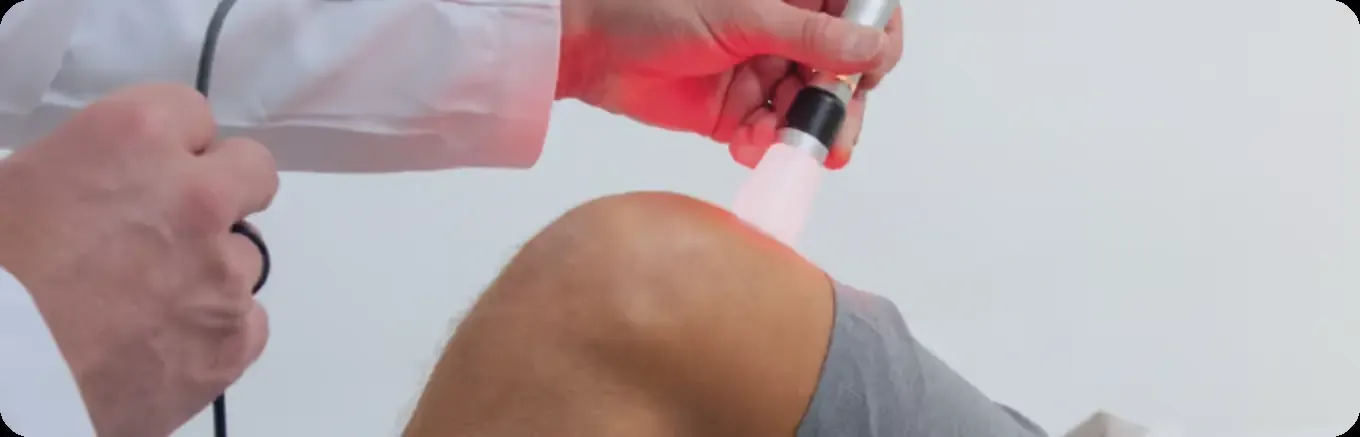
A TMJ laser therapy visit at Laser Lab Therapy is designed to be straightforward and comfortable. Under the medical oversight of Dr. Heather Hinshelwood, MD, the clinic uses light-based care to address jaw-related muscle and joint discomfort as part of an individualized pain management plan.
Sessions typically last 5 to 10 minutes. The FDA-cleared Summus P4 Class IV laser is applied to the treatment area without injections, incisions, or medication. Its clearance covers the temporary relief of minor muscle and joint aches, arthritis. Muscle spasms, and stiffness, along with muscle relaxation and a temporary increase of local blood circulation. FDA clearance does not guarantee a particular result, so your plan should reflect your symptoms, health history, and clinical evaluation.
How often will you go?
Plans for chronic pain conditions typically span 2 to 6 weeks, with visits 2 to 3 times per week. The exact schedule depends on your presentation and how your body responds over time. Because there is no downtime associated with this non-invasive approach, many patients can return to normal activities after a session. Laser therapy is not a replacement for urgent medical or dental care when jaw movement is suddenly restricted or pain is severe.
Convenient care for the Grand Strand
Laser Lab Therapy is located in Murrells Inlet and serves patients throughout the Grand Strand, including Myrtle Beach, Surfside Beach, Pawleys Island, and Conway. If you are comparing natural TMJ pain relief options, the team can discuss whether light-based care fits your needs. You can also learn how effective laser therapy for joint and jaw pain fits within a broader, drug-free wellness approach.
When to See a Specialist for TMJ Pain
Constant jaw pain, tenderness, or pain that appears during movement deserves professional attention. You should also seek an evaluation if your jaw suddenly becomes difficult to move or you cannot open or close your mouth completely. These signs can point to a problem that needs more than watchful waiting. Mayo Clinic guidance recommends medical attention for these symptoms.
A clinical evaluation usually begins with a conversation about your symptoms and habits, followed by a hands-on examination. A clinician may listen to the jaw as you open and close your mouth, feel for changes in movement. Palpate the surrounding muscles and joint to locate tenderness, and assess your range of motion. If the examination suggests a soft-tissue concern, an MRI may help show issues involving the joint disk or nearby soft tissue. Learn more about TMJ diagnosis.
Most TMJ discomfort is temporary, and conservative care is usually the first line of management. Depending on the findings, that may include self-care, jaw-focused physical therapy, or a mouth guard. Surgery is generally reserved for situations in which conservative approaches have not resolved the problem.
For people seeking a non-invasive option in Murrells Inlet, Laser Lab Therapy can discuss light-based care as part of an individualized pain-management plan. Its FDA-cleared Class IV laser technology is cleared for the temporary relief of minor muscle and joint aches. Arthritis, muscle spasms, and stiffness, as well as muscle relaxation and a temporary increase of local blood circulation. Sessions are non-invasive and drug-free. Research has reported improvements in pain and jaw function with laser therapy for TMD, but outcomes vary and treatment should not replace an appropriate medical or dental evaluation. For related context, read about laser therapy for TMJ pain relief.
Frequently Asked Questions
How does laser therapy provide relief for TMJ pain?
Photobiomodulation applies light to tissues around the jaw to support muscle relaxation and address stiffness, tension, and discomfort. Laser therapy is intended to provide targeted, non-invasive care, and research has reported improvements in pain scores and jaw movement for some people with temporomandibular disorders. Outcomes vary, so an evaluation is important.
Is laser therapy for TMJ safe and painless?
Laser therapy is non-invasive and drug-free, with no injections or incisions. Laser Lab Therapy uses FDA-cleared Class IV technology for the temporary relief of minor muscle and joint aches. Muscle spasms, stiffness, muscle relaxation, and temporary increase of local blood circulation. Clearance describes intended use, not a guarantee of results. Your provider can discuss whether this approach fits your health history.
How long do TMJ laser therapy sessions take?
Pain-management sessions at Laser Lab Therapy typically last 5 to 10 minutes. A plan may include visits two to three times weekly over two to six weeks, depending on your symptoms and clinical recommendations.
Can laser therapy replace a night guard, physical therapy, or dental care?
Not necessarily. TMJ symptoms can have several contributing factors, including clenching, grinding, stress, and other health conditions. Laser therapy may complement conservative care, but a dentist or qualified clinician should evaluate persistent pain. Limited jaw movement, or changes in your bite before treatment decisions are made.
How much does TMJ laser treatment cost?
Pricing depends on your evaluation and recommended plan, so Laser Lab Therapy provides cost details during consultation rather than publishing a universal fee. Contact the Murrells Inlet clinic to discuss your symptoms, treatment options, and next steps.
If living with TMJ discomfort has affected your daily comfort and activities, exploring non-invasive care options may be the next step in finding the relief you need. Laser Lab Therapy in Murrells Inlet serves patients throughout the Grand Strand, including Myrtle Beach, Surfside Beach, Pawleys Island, and Conway. The clinic offers medically guided, drug-free care using FDA-cleared Class IV laser technology for temporary relief of minor muscle and joint aches, stiffness, and muscle spasms. Request an appointment today to start a conversation about your symptoms and whether light-based care is right for you.Frequently Asked Questions
Is light therapy safe for athletes?

Yes, light therapy is completely safe and highly beneficial for athletes. It promotes faster muscle recovery, reduces inflammation, and supports performance without the risks of medication or downtime. That’s why professional and amateur athletes worldwide rely on it to train smarter and recover quicker.
How many sessions will I need?
The number of sessions varies depending on the type and severity of your condition. Many patients notice improvement after 3–5 sessions, while chronic conditions may require ongoing care for best results. During your initial consultation, we’ll design a personalized treatment schedule tailored to your body’s response and recovery goals.

Ready to Try Light Therapy for Recovery?