


TMJ and Rheumatoid Arthritis: An Essential Guide
Trying to find the source of chronic jaw pain can be a frustrating journey. It’s an issue often attributed to stress, teeth grinding, or a minor injury. But when you have an underlying autoimmune condition, the answer might be hiding in plain sight. For many people, jaw discomfort is one of the less-obvious symptoms of their rheumatoid arthritis. The link between TMJ and rheumatoid arthritis is a critical piece of the puzzle that, once identified, can open the door to effective treatment. If you’ve been struggling with unexplained jaw pain and stiffness, you’re in the right place. We’ll explore how these two conditions are connected and what you can do to get a clear diagnosis and find lasting relief.
Key Takeaways
- Understand the RA-TMJ Connection: Since rheumatoid arthritis is a systemic disease, the inflammation it causes can affect your jaw joint just like your knees or wrists. Pay attention to symptoms like jaw stiffness, clicking sounds, or pain on both sides of your face, and be sure to report them to your doctor.
- Adopt a Holistic Approach to Relief: The most effective management plans combine professional treatments, like light therapy or physical therapy, with simple daily habits. Adjustments like eating soft foods during a flare-up and managing stress can significantly reduce strain on your jaw.
- Act Early to Prevent Long-Term Damage: Don't ignore minor jaw discomfort. Addressing symptoms as soon as they start is key to preventing progressive joint damage and chronic pain. Regular check-ups and open communication with your healthcare team allow for early intervention.
How Are TMJ and Rheumatoid Arthritis Connected?
If you live with rheumatoid arthritis (RA), you’re likely familiar with joint pain and stiffness in your hands, knees, or wrists. But what about your jaw? It’s a connection many people don’t make right away, yet the link is significant. Since RA is a systemic condition, the inflammation it causes can affect joints throughout your body, including the ones that help you talk, chew, and yawn every day. Understanding how these two conditions are related is the first step toward finding effective relief and managing your symptoms.
What Is the Temporomandibular Joint (TMJ)?
Let's start with the basics. The temporomandibular joint, or TMJ, is the hinge that connects your lower jaw to your skull. You have two of them, one on each side of your face, just in front of your ears. The TMJ is one of the most complex and frequently used joints in your entire body, responsible for the up-and-down and side-to-side movements of your jaw. Every time you speak, chew, or even swallow, your TMJ is hard at work. Because of its constant motion and intricate structure, it can be susceptible to pain and dysfunction, especially when an inflammatory condition like arthritis is involved.
How Rheumatoid Arthritis Affects Your Joints
Rheumatoid arthritis isn't your typical wear-and-tear arthritis. It's a chronic autoimmune disorder, which means your immune system mistakenly attacks your own healthy tissues, primarily the lining of your joints. This attack triggers widespread inflammation, causing pain, swelling, and stiffness. Over time, this persistent inflammation can lead to bone erosion and joint damage. A key feature of RA is that it often affects joints symmetrically, meaning if your right wrist is inflamed, your left one probably is, too. This systemic nature is why RA can impact so many different parts of the body, from major joints like the knees to smaller ones like those in your jaw.
Why RA Can Target Your Jaw
Because RA can affect any joint, the TMJ is also a potential target. When inflammation takes hold in the jaw, it can cause a range of uncomfortable symptoms, including persistent pain, morning stiffness, and muscle spasms. You might also notice that your jaw movement feels limited or hear clicking and popping sounds. While it’s rare for the jaw to be the first joint affected by RA, studies show that a significant number of people with the condition eventually experience TMJ issues. This can make diagnosis tricky at first, but recognizing the symptoms is crucial for getting the right kind of pain management and protecting your joint health long-term.
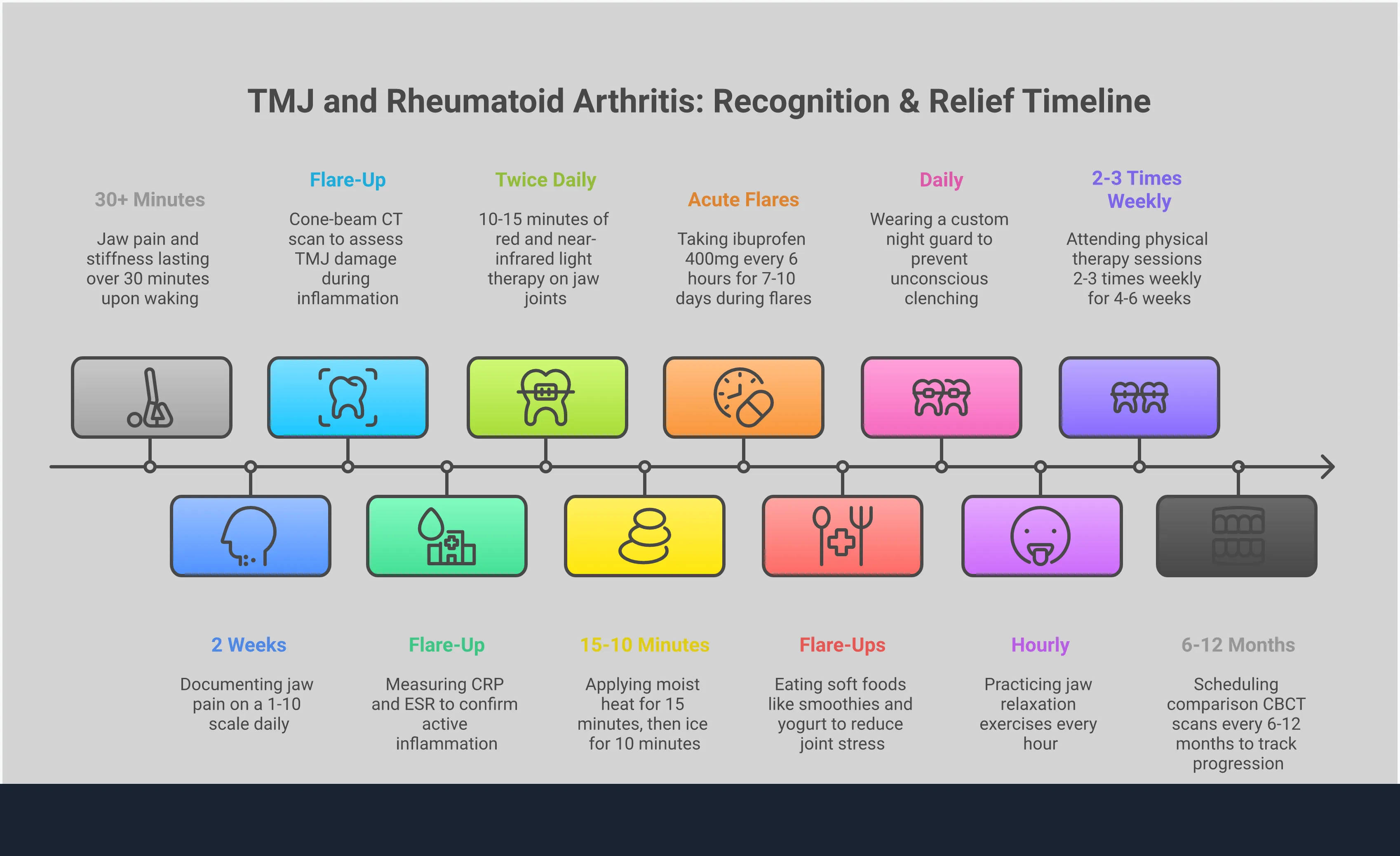
How Does Rheumatoid Arthritis Affect Your Jaw Joint?
When you have rheumatoid arthritis, your immune system mistakenly attacks the lining of your joints, causing inflammation. While you might first notice this in your hands or knees, that same process can happen in your jaw. The temporomandibular joint (TMJ) is a complex joint that can be a target for RA, leading to a unique set of challenges that go beyond typical TMJ dysfunction. Understanding how RA specifically impacts this joint is the first step toward finding the right kind of relief.
The Inflammatory Process in the TMJ
Rheumatoid arthritis is a systemic inflammatory condition, which means it can affect your entire body. When it targets the TMJ, it causes the synovium—the soft tissue lining the joint—to become inflamed. This inflammation is your body’s defense system gone wrong. Instead of protecting the joint, it starts to damage it. While the jaw is rarely the first joint affected by RA, the chronic inflammation can eventually lead to significant pain and stiffness, making simple actions like talking or eating feel like a chore. Managing this inflammation is a key part of any preventative wellness strategy for RA.
Understanding Joint Damage and Erosion
Over time, persistent inflammation in the jaw joint can do more than just cause pain. It can lead to the erosion of the cartilage and bone within the TMJ. Think of it as a slow, steady wearing away of the joint’s smooth surfaces. This damage can cause morning stiffness, muscle spasms, and a limited range of motion. In more advanced cases, the erosion can even change how your teeth fit together. Because RA is one of the most common inflammatory conditions to affect the TMJ, addressing the root cause is crucial for effective pain management and preventing long-term damage.
Why It Often Affects Both Sides of the Jaw
One of the tell-tale signs of rheumatoid arthritis is its symmetry. The condition usually affects joints on both sides of the body in a balanced way. If you have RA in one wrist, you’ll likely have it in the other. The same principle applies to your jaw. If you’re experiencing pain, stiffness, or swelling in both of your temporomandibular joints, it could be a strong indicator that a systemic condition like RA is the underlying cause, rather than a localized issue like a simple strain or injury. This bilateral symptom is an important clue for you and your doctor to consider.
What Are the Warning Signs of TMJ Issues with RA?
When rheumatoid arthritis begins to affect your jaw, the signs can be easy to dismiss at first. You might think you just slept funny or chewed something tough. But paying attention to these early signals is key to getting ahead of the problem. Knowing what to look for can help you and your doctor connect the dots between your RA and any new jaw discomfort, allowing you to find the right path for pain management sooner.
Jaw Pain and Stiffness
One of the most common red flags is a persistent, aching pain in your jaw joint, located just in front of your ear. This discomfort can feel worse in the morning, a classic sign of RA-related inflammation. You might notice a deep stiffness that makes it difficult to move your jaw when you first wake up. The pain can range from a dull, constant ache to a sharp, shooting sensation when you talk, yawn, or chew. If you find yourself consistently reaching for your jaw in discomfort, it’s a clear signal that the joint is inflamed and needs attention.
Clicking, Popping, or Grinding Sounds
Do you hear a clicking or popping sound when you open or close your mouth? Maybe it’s more of a grating or grinding sensation. While an occasional jaw pop can be normal, consistent noises are often a sign of joint dysfunction. When RA causes inflammation in the TMJ, it can damage the cartilage and disrupt the smooth, gliding motion of the joint. These sounds are your body’s way of telling you that the components of your jaw joint aren't moving together as they should. These symptoms of rheumatoid arthritis affecting the temporomandibular joint are worth discussing with your healthcare provider.
Difficulty or Fatigue While Chewing
Eating shouldn't feel like a workout for your jaw. If you notice that your jaw muscles get tired quickly while eating, especially with foods that require a bit more effort like a crunchy apple or a chewy piece of bread, it could be a sign of TMJ involvement. This fatigue happens because the inflammation from RA weakens the joint and surrounding muscles, making them work harder to perform simple movements. Ignoring this symptom can lead to dietary changes and nutritional issues, so it’s important to address it early. Proper management of the temporomandibular joint is crucial to prevent further complications.
Limited Ability to Open Your Mouth
Another significant warning sign is a noticeable decrease in your jaw's range of motion. You might find it difficult to open your mouth wide enough to take a big bite of a sandwich or even to yawn fully. This feeling of a "locked" or restricted jaw is often caused by inflammation, swelling, or damage within the joint. This limitation can be frustrating and can significantly interfere with daily activities like eating, speaking, and even brushing your teeth. If you feel like your jaw just won't open the way it used to, it's a strong indicator of an underlying TMJ issue.
Facial Swelling and Tenderness
Sometimes, the signs of TMJ inflammation are visible. You might notice swelling or puffiness on the side of your face, right over the jaw joint. The area may also feel warm and be tender to the touch. This is especially common during an RA flare-up, when inflammation levels are high throughout your body. The swelling can make your face look asymmetrical and can be accompanied by a constant, throbbing pain. This tenderness is a direct result of the inflammatory process happening inside the joint, and it’s a clear signal that your RA is actively affecting your TMJ.
How Do Doctors Diagnose RA-Related TMJ Problems?
If you’re dealing with jaw pain and suspect rheumatoid arthritis is the cause, getting a clear diagnosis is the first step toward feeling better. Doctors use a combination of methods to connect the dots between RA and your TMJ symptoms. It’s a careful process that involves looking at your overall health, examining your jaw, and running specific tests to confirm what’s happening inside the joint. This comprehensive approach ensures they can pinpoint the root cause and rule out other issues, setting you up with an effective plan for pain management.
What to Expect During a Clinical Exam
Your appointment will likely start with a conversation. Your doctor will want to know about your health history, especially your experience with RA, and the specific jaw symptoms you’re having. When did the pain start? Does it click or pop? Is it hard to chew? Next, they’ll perform a physical exam, gently feeling the area around your jaw joints to check for tenderness and swelling. They will also ask you to open and close your mouth to observe your jaw’s range of motion. This initial evaluation gives your doctor a solid foundation and helps them decide which tests are needed to get a complete picture of your joint health.
The Role of Imaging Scans
To see what’s happening inside the joint, your doctor will order imaging scans. While a standard X-ray might be used, it often can’t detect the earliest signs of arthritic damage in the TMJ. Because of this, a specialist might recommend a more detailed scan, like a cone-beam computed tomography (CBCT). This special type of X-ray creates a 3D image of your jaw, making it much easier for your doctor to spot subtle bone changes or erosion caused by RA. Getting this clear view is crucial for catching the problem early and preventing further damage before it becomes more severe.
Using Blood Tests to Check for Inflammation
Since rheumatoid arthritis is a systemic autoimmune disease, blood tests are a key part of the diagnostic process. These tests can’t diagnose a TMJ disorder on their own, but they can confirm the presence of RA and measure the level of inflammation in your body. Your doctor will look for specific inflammatory markers, such as Rheumatoid Factor (RF), C-reactive protein (CRP), and an elevated Erythrocyte Sedimentation Rate (ESR). High levels of these markers are strong indicators that RA is active and likely contributing to the inflammation and pain you’re feeling in your jaw joints.
Ruling Out Other Jaw Conditions
Jaw pain isn’t always caused by arthritis. Many other conditions can cause similar symptoms, so your doctor will work to rule them out. For example, dental problems like a hidden cavity, an abscess, or gum disease can create pain that feels like it’s coming from the jaw joint. Other possibilities include trigeminal neuralgia (a nerve condition) or even sinus infections. By carefully considering and eliminating these other potential causes, your doctor can be confident that RA is the true source of your TMJ issues. You can find more helpful articles on our blog to better understand your health.
What Are Your Treatment Options for TMJ and RA?
When you’re dealing with jaw pain from rheumatoid arthritis, finding the right treatment plan can feel overwhelming. The good news is you have several options, and you don’t have to figure it out alone. The primary goals of any treatment are to manage pain, reduce inflammation, and restore your jaw’s normal function. Most people find that a combination of approaches works best for them.
Your healthcare team might suggest starting with conservative treatments, like medication or lifestyle adjustments. From there, you can explore other therapies that address the root cause of your discomfort. It’s all about creating a personalized strategy that fits your specific symptoms and health goals. Whether you’re looking for immediate relief during a flare-up or a long-term solution to protect your joints, there are effective paths forward. Let’s walk through some of the most common and effective treatment options available.
Anti-Inflammatory Medications
During an acute flare-up, your doctor might suggest nonsteroidal anti-inflammatory drugs (NSAIDs) like ibuprofen or naproxen. These over-the-counter medications can be effective at temporarily reducing both pain and swelling in the jaw joint, making it easier to get through your day. While they can offer quick relief, many people prefer to find long-term management strategies that don't rely solely on medication. Think of NSAIDs as a helpful tool in your toolkit for managing sudden, intense symptoms, but not necessarily the entire solution for ongoing joint health.
How Physical Therapy Can Help
Physical therapy offers a hands-on, comprehensive approach to managing TMJ pain. A skilled physical therapist can guide you through gentle exercises designed to stretch and strengthen your jaw muscles, which can significantly improve your range of motion. They may also use techniques like massage to release tension in the surrounding muscles. A therapist will create a personalized plan to help you relieve jaw pain and correct any postural habits that might be contributing to the strain on your jaw, giving you practical tools to manage your symptoms at home.
Finding Relief with Light Therapy
If you're looking for a drug-free and non-invasive option, light therapy is an excellent choice for managing RA-related TMJ pain. This treatment uses specific wavelengths of red and near-infrared light to penetrate the skin and stimulate healing at a cellular level. It helps reduce inflammation directly in the joint, which can lead to significant pain relief and less morning stiffness. Because it supports your body’s natural healing processes, light therapy is a safe and effective way to get lasting relief without side effects. Our pain management services are designed to target joint pain and help you feel better.
Using Splints and Oral Appliances
Your dentist or a TMJ specialist may recommend an oral appliance, often called a splint or a bite guard. These are custom-made devices that fit over your teeth and are typically worn at night. They work by creating a physical barrier that prevents you from clenching or grinding, which reduces the strain on your jaw joints while you sleep. By easing the pressure on the TMJ, a splint can help alleviate pain, prevent further wear and tear on the joint, and allow the surrounding muscles to relax.
Corticosteroid Injections
For severe pain and inflammation that doesn’t respond to other treatments, your doctor might suggest corticosteroid injections. In this procedure, a steroid medication is injected directly into the temporomandibular joint. This can provide powerful, targeted relief by quickly reducing inflammation inside the joint capsule. While effective, injections are a more invasive option and are typically reserved for significant flare-ups. They can be a useful tool for breaking a cycle of intense pain, but they are often used in conjunction with other long-term management strategies.
Lifestyle Tips for Managing TMJ Symptoms
Beyond medical treatments, the small choices you make every day can have a big impact on your TMJ symptoms. Managing a chronic condition like rheumatoid arthritis often means finding a holistic approach that supports your body from all angles. Simple lifestyle adjustments can help reduce strain on your jaw, ease discomfort, and prevent flare-ups, giving you more control over your well-being. These practical tips are designed to work alongside your professional care plan, helping you build a routine that soothes your jaw and supports its healing. From what you eat to how you sleep, these strategies can provide significant relief and improve your quality of life.
Adjusting Your Diet with Soft Foods
When your jaw is aching, the last thing you want is to put it through a workout at mealtime. Adopting a temporary soft-food diet can be incredibly helpful. Think of it as giving your jaw muscles a much-needed rest, allowing inflammation to subside and giving the joint time to recover. This means swapping hard, crunchy, or chewy foods—like tough meats, raw carrots, or sticky candy—for gentler options. You can enjoy things like smoothies, soups, yogurt, scrambled eggs, and mashed potatoes. This simple dietary shift can reduce jaw strain and make eating a more comfortable experience.
Applying Heat and Cold Therapy
One of the most effective at-home remedies for jaw pain is using temperature therapy. Applying a warm, moist cloth or a heating pad to the side of your face for about 15 minutes can help relax tight muscles and ease stiffness. Heat is great for soothing dull, persistent aches. On the other hand, if you’re experiencing sharp pain or noticeable swelling, a cold pack wrapped in a thin towel can help numb the area and reduce inflammation. Many people find that alternating between heat and cold provides the most comprehensive relief, addressing both muscle tension and inflammation.
Gentle Jaw Exercises and Massage
While it’s important to rest your jaw, gentle movement is crucial for preventing stiffness and maintaining your range of motion. Simple, controlled exercises can make a world of difference once the initial pain subsides. Try slowly opening and closing your mouth or gently moving your jaw from side to side. You can also use your fingertips to massage the sore muscles around your jaw joint, working in small circles to release tension. A physical therapist can guide you through specific therapeutic exercises that are safe and effective for your condition, helping you strengthen the joint without causing further irritation.
Simple Stress Management Techniques
Stress and jaw pain are often closely linked. When you’re feeling stressed or anxious, you might unconsciously clench your jaw or grind your teeth, which puts immense pressure on the TMJ. Incorporating stress-relief practices into your daily routine can help break this cycle. This doesn’t require a major time commitment. It can be as simple as practicing deep breathing for a few minutes, trying a guided meditation app, or taking a short walk to clear your head. Finding healthy ways to manage stress not only benefits your mental health but also provides direct relief for your jaw.
Finding the Right Sleep Position
Your sleeping posture can have a surprising effect on your jaw. If you sleep on your stomach or side, you may be putting sustained pressure on your jaw joint throughout the night, leading to morning pain and stiffness. The ideal position is sleeping on your back, as it allows your head, neck, and spine to remain in a neutral alignment and takes the weight off your jaw. If you’re not used to sleeping on your back, try using pillows to support your body and keep you from rolling over. This small change in your sleep habits can help you wake up feeling more refreshed and with less discomfort.
Common Myths About TMJ and Rheumatoid Arthritis
When you’re dealing with jaw pain, it’s easy to get lost in a sea of conflicting information. Misconceptions about TMJ and rheumatoid arthritis are common, and they can stand in the way of getting the right diagnosis and care. Let’s clear up a few of the biggest myths so you can move forward with confidence and clarity. Understanding the facts is the first step toward finding effective relief and taking control of your health.
Myth: TMJ Is Only Caused by Injury
It’s a common belief that TMJ problems only happen after a direct hit to the jaw. While an injury can certainly trigger a TMJ disorder, it’s far from the only cause. In reality, many different factors can lead to jaw pain and dysfunction. Things like chronic teeth grinding (bruxism), high levels of stress that cause you to clench your jaw, and underlying health conditions like arthritis are all potential culprits. Thinking that only an accident can cause TMJ issues can keep you from identifying the real root of your discomfort.
Myth: RA Doesn't Affect the Jaw
Some people assume that rheumatoid arthritis is a condition that only impacts joints like the hands, knees, or hips. However, RA is a systemic autoimmune disease, which means it can affect any joint in your body—including your jaw. The temporomandibular joint is just as susceptible to the inflammation and damage caused by RA as any other joint. This inflammation can lead to the classic symptoms of pain, stiffness, and reduced movement, making it difficult to talk, chew, or even yawn comfortably. Recognizing that RA can affect the jaw is crucial for getting a complete and accurate diagnosis.
Myth: All Jaw Pain Is Arthritis
On the flip side, it’s also a mistake to assume that every ache or pain in your jaw is automatically arthritis. While TMJ and arthritis are common sources of jaw discomfort, they aren't the only ones. Many other issues can present with similar symptoms. For example, dental problems like a severe toothache, an abscess, or gum disease can radiate pain that feels like it’s coming from the jaw joint itself. That’s why it’s so important to get a thorough evaluation from a healthcare professional who can rule out other conditions and pinpoint the true source of your pain.
Myth: TMJ and RA Are Unrelated
Perhaps the most important myth to debunk is the idea that TMJ and rheumatoid arthritis are two separate, unrelated issues. The truth is, they can be directly connected. RA can be an underlying cause of TMJ disorders, as the autoimmune-driven inflammation can attack the jaw joint, leading to cartilage and bone erosion. If you have an RA diagnosis and start experiencing jaw pain, it’s not a coincidence—it’s a symptom that needs to be addressed as part of your overall pain management plan. Understanding this link helps ensure you and your healthcare team are treating the cause, not just the symptoms.
What Happens if RA-Related TMJ Goes Untreated?
Ignoring jaw pain related to rheumatoid arthritis won't make it go away. In fact, putting off care can allow the underlying issues to worsen, leading to more significant problems down the road. When inflammation in the temporomandibular joint isn't managed, it can set off a chain reaction that affects not just your jaw, but your overall comfort and quality of life. Understanding the potential consequences is the first step toward taking proactive control of your health and seeking the right support for long-term relief.
The Risk of Progressive Joint Damage
When RA affects your TMJ, the inflammation can slowly wear away at the cartilage and bone within the joint. If left unmanaged, this can lead to progressive joint damage. Think of it like a slow, persistent fire that gradually weakens the structure of your jaw. Over time, this can cause persistent pain, increased stiffness (especially in the morning), and a noticeable decrease in your jaw’s range of motion. In more advanced cases, the damage can even change how your teeth fit together. Taking action early helps put out that fire before it can cause lasting harm.
Complications from Jaw Misalignment
An inflamed and damaged jaw joint doesn't function properly, which can lead to misalignment. When your jaw is out of alignment, it creates a domino effect of other problems. You might find it harder to chew your food thoroughly, leading to digestive issues. The imbalance can also strain the surrounding muscles in your face, neck, and shoulders, causing tension headaches and chronic discomfort. Since TMJ symptoms can sometimes appear early in RA and worsen during systemic flares, addressing them promptly is key to preventing these compounding complications.
How Acute Pain Can Become Chronic
Initially, you might experience jaw pain that comes and goes. This is acute pain—a direct signal from your body that something is wrong. However, if the underlying inflammation from RA isn't treated, your body’s pain signaling system can go into overdrive. The nerves become more sensitive, and the pain can become constant, transforming from a temporary warning into a chronic condition. This type of long-term pain can be much more challenging to manage and can start to interfere with your daily life, making effective pain management essential.
The Impact on Your Quality of Life
Ultimately, untreated TMJ issues can take a real toll on your day-to-day happiness. Simple activities like enjoying a meal with family, laughing with friends, or even yawning can become painful. The constant discomfort can make it difficult to focus at work and can disrupt your sleep. According to the Arthritis Foundation, the stress of living with pain can also make you clench your jaw more, creating a vicious cycle. It’s not just about physical pain; it’s about preserving your ability to live a full and comfortable life.
How to Proactively Manage TMJ with Rheumatoid Arthritis
When you’re living with rheumatoid arthritis, taking a proactive stance on your jaw health can make all the difference. Instead of waiting for severe pain to strike, you can implement strategies that protect your TMJ, reduce inflammation, and maintain your quality of life. It’s about shifting from a reactive mindset to one of empowerment, where you and your healthcare providers work together to stay ahead of symptoms. By focusing on early detection and consistent self-care, you can keep your jaw functioning smoothly and comfortably for the long haul. This approach helps you feel more in control, turning daily habits and regular appointments into powerful tools for your well-being.
The Importance of Early Action
It’s easy to dismiss a little jaw stiffness, but with RA, early symptoms are your cue to act. Research shows that TMJ issues can appear early in the disease, sometimes even before other joints are noticeably affected. Addressing jaw discomfort right away isn't just about immediate pain management; it’s about preventing the kind of long-term joint damage that can limit your ability to talk, eat, and express yourself. Listening to your body and speaking up at the first sign of trouble—like tenderness or fatigue while chewing—is one of the most powerful things you can do for your joint health.
Why Regular Check-Ups Matter
You can’t manage what you don’t monitor. Regular check-ups with your dentist and rheumatologist are essential for tracking your TMJ health. While you might notice symptoms like pain or clicking sounds, your doctor can identify the underlying issues. A clinical exam helps them assess your jaw’s range of motion and pinpoint tenderness. Often, they’ll recommend imaging like an MRI or CT scan to get a clear picture of what’s happening inside the joint, as these scans can reveal the characteristic erosions caused by RA. These appointments create a baseline, making it easier to spot changes and adjust your treatment plan before a small issue becomes a major problem.
Collaborating with Your Healthcare Team
Managing RA-related TMJ is a team sport, and you’re the captain. Your team should include your rheumatologist, dentist, and potentially a physical therapist or an oral and maxillofacial surgeon who specializes in TMJ disorders. As experts note, seeing a specialist early on helps ensure you get the right treatment at the right time. Open communication is key. Be sure to tell your rheumatologist about any jaw symptoms, and let your dentist know you have RA. A collaborative approach ensures everyone is on the same page, creating a comprehensive care plan that addresses your health from all angles.
Empowering Yourself Through Self-Management
Your daily habits have a huge impact on your jaw comfort. Simple lifestyle adjustments can provide significant relief and support your professional treatments. When your jaw feels sore, stick to soft foods like smoothies, soups, and yogurt to give it a rest. It’s also a good idea to avoid chewing gum or biting your nails. Once any inflammation subsides, gentle jaw exercises can help prevent stiffness and maintain your range of motion. These small, consistent actions are a cornerstone of preventative wellness, empowering you to take control of your symptoms and feel your best every day.
Frequently Asked Questions
What's the first step I should take if I have RA and my jaw starts to hurt? Your first call should be to your rheumatologist. While a dentist can be a helpful part of your care team, your rheumatologist is the one who manages your RA as a whole. They can help determine if your jaw pain is part of a systemic flare-up and adjust your overall treatment plan. From there, they can coordinate with other specialists to ensure you get comprehensive care that addresses both the symptoms and the root cause.
How can I tell the difference between jaw pain from RA and pain from stress or grinding? It can be tricky, but there are a few clues. Pain from stress or grinding often feels like muscle fatigue and tightness, and you might wake up with a headache. RA-related jaw pain, on the other hand, often comes with other signs of inflammation, like morning stiffness that lasts for a while, visible swelling over the joint, or tenderness when you press on the area. A key indicator is symmetry—if both of your jaw joints hurt, it’s more likely to be connected to a systemic condition like RA.
Are the treatments for RA-related TMJ different from 'regular' TMJ disorders? Yes, they are. While some strategies overlap, like using a bite guard or doing gentle exercises, treating RA-related TMJ requires a focus on the underlying autoimmune disease. The goal isn't just to manage jaw mechanics but to control the inflammation that is actively damaging the joint. This is why treatments that address your RA systemically, along with targeted therapies like light therapy that reduce local inflammation, are so important.
Can I develop jaw problems from RA even if my arthritis is well-managed in other joints? Unfortunately, yes. Rheumatoid arthritis is a systemic condition, which means it can be active in different parts of your body at different times. You might have your hand or knee pain under control, but a flare-up can still occur in a new joint, including the TMJ. This is why it's so important to mention any new joint pain to your doctor, even if it seems unrelated to your primary symptoms.
Will I eventually need surgery for my jaw if RA is the cause? Surgery is rarely the first option and is typically considered a last resort for RA-related TMJ issues. The focus is almost always on conservative, non-invasive management first. The goal is to control the inflammation, manage pain, and preserve the natural joint for as long as possible through a combination of medication, physical therapy, lifestyle adjustments, and treatments like light therapy. Most people find significant relief with these methods and never need to consider surgery.
Frequently Asked Questions
Is light therapy safe for athletes?

Yes, light therapy is completely safe and highly beneficial for athletes. It promotes faster muscle recovery, reduces inflammation, and supports performance without the risks of medication or downtime. That’s why professional and amateur athletes worldwide rely on it to train smarter and recover quicker.
How many sessions will I need?
The number of sessions varies depending on the type and severity of your condition. Many patients notice improvement after 3–5 sessions, while chronic conditions may require ongoing care for best results. During your initial consultation, we’ll design a personalized treatment schedule tailored to your body’s response and recovery goals.

Ready to Try Light Therapy for Recovery?