

Rotator Cuff Treatment Myrtle Beach: A Non-Invasive Guide
Shoulder pain can make simple movements, from reaching overhead to carrying a beach bag, surprisingly difficult. Rotator cuff problems may develop through repetitive use, sports activity, age-related changes, or an acute injury, and many people want options beyond repeated cortisone shots or surgery.
Ready to discuss your options? Request an Appointment.
For people exploring rotator cuff treatment Myrtle Beach, non-invasive Class IV laser therapy may offer targeted. Drug-free support for temporary relief of minor muscle and joint aches, stiffness, and muscle spasms. Laser Lab Therapy presents it as an alternative or complement to other care, not a guaranteed cure or substitute for an evaluation when surgery may be necessary.
Understanding what the rotator cuff does and how injuries develop can make the available treatment choices easier to evaluate. The anatomy and common causes are a useful place to begin.
What Is a Rotator Cuff Injury, and How Does It Happen?
The rotator cuff is a group of four muscles and their tendons that surround the shoulder joint. Together, they help keep the upper arm centered in the shoulder socket while you reach, lift, rotate, or perform overhead activities. This stabilizing system works during everyday movements as well as sports, work, and exercise.
The four muscles that stabilize the shoulder
Each part of the rotator cuff contributes to controlled shoulder movement:
- Supraspinatus: Helps begin lifting the arm away from the body and is frequently involved in shoulder injuries.
- Infraspinatus: Supports outward rotation of the arm.
- Teres minor: Assists outward rotation and helps steady the shoulder.
- Subscapularis: Supports inward rotation and protects the front of the shoulder joint.
The tendons connect these muscles to the upper arm bone. When a tendon becomes irritated or damaged, the shoulder may lose strength, smooth movement, or both.
How tears, overuse, and tendinopathy develop
A rotator cuff injury can develop suddenly, such as when someone falls on an outstretched arm or lifts a heavy object unexpectedly. Repeated overhead motion can also place ongoing stress on the tendons. Swimming, throwing, construction work, painting, and certain gym exercises may contribute when the shoulder does not have enough time to recover between activities.
Some injuries involve a partial or full tendon tear. Others involve tendinopathy, a condition in which the tendon becomes painful and less tolerant of load after repeated irritation or age-related changes. These conditions are not interchangeable, so persistent symptoms deserve an appropriate clinical assessment rather than self-diagnosis. Laser therapy may be considered as part of a broader shoulder pain management plan, depending on the individual situation.
Common symptoms to watch for
Rotator cuff problems do not feel exactly the same for everyone. Common symptoms include:
- A dull ache in the shoulder or upper arm.
- Pain when lifting or lowering the arm.
- Weakness during reaching, pushing, or pulling.
- Pain when reaching behind the back.
- Discomfort during overhead activity.
- Shoulder pain that becomes more noticeable at night.
A sudden injury with marked weakness, deformity, or an inability to move the arm should be evaluated promptly. For ongoing, activity-related pain, a qualified provider can help determine whether the symptoms fit a rotator cuff problem and discuss appropriate next steps.
How Class IV Laser Therapy Helps with Rotator Cuff Pain
Rotator cuff discomfort can affect reaching, lifting, sleeping, and the activities you enjoy along the Grand Strand. Class IV laser therapy uses photobiomodulation, in which therapeutic light is directed into the treatment area to support targeted pain management. At Laser Lab Therapy, this non-invasive approach is designed to work locally around the shoulder while allowing your care team to consider your symptoms, movement, and overall goals.
Supporting pain relief and shoulder function
Research on high-intensity laser therapy (HILT) provides encouraging evidence for people with rotator cuff tendinopathy. A systematic review reported that HILT, used alone or as an adjunctive therapy, significantly reduced pain and improved shoulder function. Standalone low-level laser therapy showed more limited effectiveness. The review also found that laser therapy significantly reduced pain, with a Hedges' g of -0.701, and disability, with a Hedges' g of -0.691. These findings describe results across reviewed studies, not a guaranteed outcome for every patient. Read the published review on PubMed.
The treatment may support a more comfortable shoulder environment by helping manage local discomfort, stiffness, and muscle tension. Photobiomodulation is applied to the area affected by rotator cuff pain, rather than requiring an incision or medication to enter the body. Your provider can determine whether it fits your situation and whether it should be paired with movement-focused rehabilitation or another part of your care plan.
What the FDA clearance means
The Class IV laser technology used at Laser Lab Therapy is FDA-cleared for the temporary relief of minor muscle and joint aches. Arthritis and muscle spasms, relief of stiffness, muscle relaxation, and the temporary increase of local blood circulation. This clearance describes the device's authorized uses. It does not mean the laser is cleared to cure a rotator cuff tear or guarantee recovery from tendinopathy.
A practical, drug-free option
Sessions are typically quick, often lasting about 5-10 minutes, and the treatment is non-invasive and drug-free. That format may appeal to people who want to explore targeted shoulder pain care without an injection or surgical procedure. Laser therapy should not replace an evaluation for a significant tear, severe weakness, trauma, or symptoms that may require prompt orthopedic attention. Instead, it can be considered as part of an individualized plan. For broader context on treatment considerations, visit this shoulder pain guide.
Finding the Right Rotator Cuff Treatment in Myrtle Beach: Conservative Options vs. Surgery
Choosing care for shoulder pain depends on the suspected injury, symptom severity, daily demands, and guidance from a qualified clinician. Cortisone injections, rehabilitation, Class IV laser therapy, and surgery each have a different role. A careful evaluation can help you compare options without assuming that one approach fits every rotator cuff problem.
| Option | Invasiveness and downtime | Repeat treatment considerations | Recovery considerations |
|---|---|---|---|
| Cortisone injection | Involves a needle and an injection into or around the painful area. Activity guidance may vary after treatment. | Repeated injections may not be appropriate for everyone. Your clinician should discuss timing, risks, and alternatives before additional injections. | May provide temporary symptom relief for some people, but it does not repair a torn tendon or address every cause of shoulder pain. |
| Minimally invasive care, including Class IV laser therapy | Laser therapy is non-invasive and drug-free, with no incision and typically no surgical recovery period. Sessions are usually brief. | Care may be provided as a series of sessions, depending on the treatment plan and clinical assessment. It can be used alone or alongside rehabilitation. | It is intended to support targeted symptom management and muscle relaxation. Individual responses vary, and it does not replace evaluation of a structural tear. |
| Surgery | Requires an operation, anesthesia, and a period of protected activity. The appropriate downtime depends on the procedure and the person. | Surgery is not a repeat injection decision. Follow-up care and rehabilitation are important parts of the treatment plan. | Recovery may involve healing restrictions and structured rehabilitation. A surgical consultation is important when the injury or symptoms may require repair. |
Where laser therapy may fit
At Laser Lab Therapy, Class IV laser therapy is positioned as a conservative option for people seeking drug-free, non-invasive care for shoulder discomfort. The technology is FDA-cleared for temporary relief of minor muscle and joint aches, arthritis and muscle spasms, stiffness, muscle relaxation, and a temporary increase in local blood circulation. That clearance should not be interpreted as a guarantee or as approval to treat every rotator cuff condition.
Laser therapy may complement a rehabilitation plan by helping address pain and muscle tension while you work through clinician-directed exercises. Learn more about how the approaches can relate in laser therapy vs. physical therapy. If imaging, weakness, a significant tear, or persistent symptoms raise concern, laser care should complement, not delay, an appropriate orthopedic or surgical consultation.
Make the decision with the right evaluation
The most appropriate path may involve rehabilitation, symptom-management care, an injection discussion, a surgical opinion, or a combination of these. Ask what the evaluation shows, what each option can and cannot address, and what warning signs should prompt follow-up. A personalized plan keeps conservative care in its proper role while preserving access to necessary medical treatment.
What a Rotator Cuff Laser Therapy Session Looks Like
At Laser Lab Therapy, a rotator cuff laser therapy visit is designed to be straightforward, comfortable, and easy to fit into an active schedule. The process uses non-invasive, drug-free Class IV laser technology under appropriate clinical oversight. You remain awake, and the treatment does not involve needles, incisions, or a lengthy recovery period.
Begin with a brief assessment
Your visit starts with a conversation about your shoulder symptoms, activity level, relevant medical history, and goals. The team considers where you feel discomfort and how it affects movement. This assessment helps determine whether laser therapy is appropriate as part of your care plan. Medical oversight remains important, particularly when shoulder pain follows a significant injury, persists despite self-care, or may require evaluation for a tear or another condition.
Receive targeted laser treatment
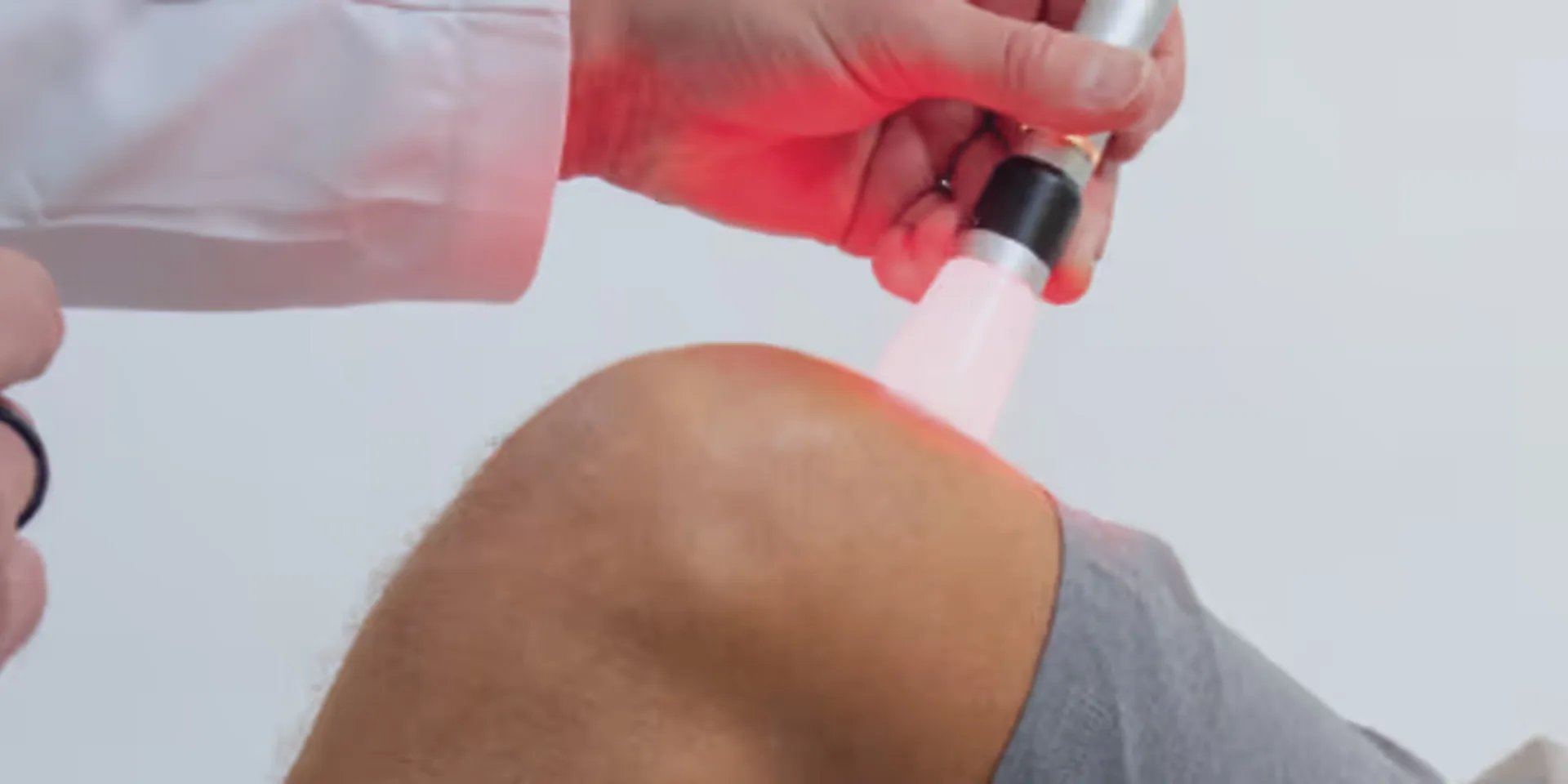
During the session, the provider guides the Class IV laser over the relevant shoulder area. You may notice gentle warmth or a soothing sensation, but treatment is intended to be comfortable and non-invasive. Sessions are typically brief, often lasting 5 to 10 minutes. FDA clearance for this technology covers temporary relief of minor muscle and joint aches. Arthritis and muscle spasms, relief of stiffness, muscle relaxation, and a temporary increase in local blood circulation. It does not represent a guarantee of a particular result for every rotator cuff problem.
Return to normal activity without treatment downtime
Because there are no incisions or injections, patients can generally resume normal activity after a session rather than planning around an invasive recovery period. That does not mean you should ignore pain or immediately return to demanding overhead activity. Follow the activity guidance provided for your situation, and speak with a qualified professional if symptoms change or worsen. You can learn more about the visit experience in what to expect at your first laser session.
Build care around your response
Laser therapy is commonly considered as a series of sessions rather than a one-time solution. The appropriate schedule depends on your symptoms, goals, and clinical assessment. Layering multiple visits may give the care plan time to address ongoing discomfort and support consistent progress, while outcomes remain individual and are not guaranteed.
Pair treatment with shoulder rehabilitation
Laser therapy works best as one part of a broader plan when stretching, mobility work, strengthening, or physical rehabilitation is appropriate. A provider or physical therapist can help you choose exercises that respect your current shoulder function. This combination supports active participation in recovery without presenting laser therapy as a substitute for necessary diagnostic care or surgical consultation. For more detail on the circulation-supporting role of Class IV laser therapy, review Class IV laser circulation support.
The goal is a practical, medically guided approach to shoulder care that respects your schedule while keeping safety and realistic expectations at the center.
Combining Laser Therapy with Exercise and Knowing When Surgery May Still Be Needed
Rotator cuff care rarely depends on one modality. Laser therapy can be a sensible early step for targeted, non-invasive pain management. But it works best within a broader plan that may include guided exercise, stretching, activity changes, and physical therapy. Those approaches address different parts of the problem: laser therapy may support temporary relief and muscle relaxation, while rehabilitation helps restore shoulder control, mobility, and strength over time.
Why rehabilitation belongs alongside laser therapy
A painful shoulder can lead people to protect the arm, avoid certain movements, and gradually lose strength. A qualified clinician or physical therapist can recommend exercises that match the suspected injury and current tolerance. These may include gentle range-of-motion work, rotator cuff strengthening, scapular control exercises, and gradual return to activities such as golf, swimming, or overhead work. Stretching can also help maintain comfortable movement, but forcing a painful shoulder is not a substitute for an individualized evaluation.
At Laser Lab Therapy, Class IV laser sessions can be considered as part of a conservative care conversation, not as a reason to stop prescribed rehabilitation. Patients interested in activity-specific support can also explore golf recovery in Myrtle Beach when shoulder symptoms affect their swing or practice routine.
What the research says about laser settings
Evidence summarized in a 2025 PubMed-indexed review found that pulsed-mode low-level laser therapy showed a greater pain-reduction benefit than continuous-mode treatment. The review also reported that laser therapy reduced pain and disability in people with rotator cuff tendinopathy, although outcomes depend on the condition, treatment approach, and individual patient. Read the source at PubMed. These findings support thoughtful treatment planning, not a guarantee of relief or recovery.
Laser therapy is FDA-cleared for the temporary relief of minor muscle and joint aches. Arthritis and muscle spasms, stiffness, muscle relaxation, and a temporary increase in local blood circulation. That clearance does not mean every rotator cuff problem can be managed without further medical care.
When imaging or a surgical consultation may be appropriate
Seek an evaluation when shoulder pain follows a significant injury, when weakness is pronounced, or when normal arm use becomes difficult. A provider may recommend imaging to clarify whether there is tendinopathy, a partial tear, or a larger structural injury. Large tears, substantial weakness, loss of function, or symptoms that do not improve with an appropriate course of conservative care may warrant consultation with an orthopedic specialist. Surgery is not automatically required, but delaying assessment of a serious injury can complicate decision-making.
The most responsible approach is collaborative: use non-invasive options when clinically appropriate, continue prescribed exercise. And involve a medical professional when symptoms suggest a more significant tear or failed conservative care. Laser therapy can pair with that guidance, but it should not replace it.
Frequently Asked Questions
How can Class IV laser therapy help with rotator cuff pain?
Class IV laser therapy delivers focused light energy to the shoulder area as a non-invasive option for managing pain, stiffness, and muscle tension. It is intended to support targeted relief, not guarantee a cure or replace a needed diagnosis. A 2025 systematic review reported that laser therapy reduced pain and disability in people with rotator cuff tendinopathy. With effect sizes of Hedges' g = -0.701 for pain and -0.691 for disability. Read the PubMed review.
Is laser therapy a new treatment for rotator cuff injuries?
Laser therapy is an established form of photobiomodulation, while its use for a specific shoulder problem should be guided by an appropriate evaluation. Laser Lab Therapy uses FDA-cleared Class IV technology within its clearance for temporary relief of minor muscle and joint aches. Stiffness, muscle spasms, muscle relaxation, and a temporary increase in local blood circulation. Those clearances do not mean every rotator cuff injury will respond the same way.
What type of doctor should evaluate a rotator cuff injury?
A primary care clinician, sports medicine physician, orthopedic specialist, or physical therapist may help evaluate shoulder pain, depending on the symptoms and suspected cause. Severe weakness, a visible deformity, an injury after a fall, or an inability to raise the arm warrants prompt medical attention. Laser therapy may complement professional evaluation and rehabilitation, but it should not delay care for a significant tear or other urgent condition.
Can laser therapy replace a cortisone shot or rotator cuff surgery?
Laser therapy can be considered as a non-invasive, drug-free option or complement, but it is not a universal replacement for injections, physical therapy, or surgery. The appropriate plan depends on the injury, symptoms, examination findings, activity goals, and response to conservative care. A qualified clinician can help explain whether surgery or another intervention is appropriate.
How much does rotator cuff laser therapy cost?
Pricing depends on the recommended care plan and is provided through consultation rather than a one-size-fits-all estimate. Contact Laser Lab Therapy to discuss your shoulder symptoms, goals, and available options in the Myrtle Beach and Grand Strand area.
Ready to Request Rotator Cuff Laser Therapy?
A personal evaluation can help clarify whether non-invasive laser therapy fits your shoulder-care goals and overall treatment plan. To request an appointment for rotator cuff laser therapy at Laser Lab Therapy, request an appointment through the contact page. The team can discuss your symptoms, questions, and next steps without assuming that one treatment approach is right for everyone.
Frequently Asked Questions
Is light therapy safe for athletes?

Yes, light therapy is completely safe and highly beneficial for athletes. It promotes faster muscle recovery, reduces inflammation, and supports performance without the risks of medication or downtime. That’s why professional and amateur athletes worldwide rely on it to train smarter and recover quicker.
How many sessions will I need?
The number of sessions varies depending on the type and severity of your condition. Many patients notice improvement after 3–5 sessions, while chronic conditions may require ongoing care for best results. During your initial consultation, we’ll design a personalized treatment schedule tailored to your body’s response and recovery goals.

Ready to Try Light Therapy for Recovery?