


Golf Recovery Myrtle Beach: A Complete Between-Round Guide
Golf Recovery Myrtle Beach: A Complete Between-Round Guide
Playing thirty-six holes in a single Myrtle Beach weekend often leads to stiff joints and tired muscles. This physical toll can ruin your play by the final back nine. Proactive care is a vital tool for staying fit during multi-day play.
Golf recovery myrtle beach services allow active players to manage muscle aches between rounds and keep their swing consistent. Local clinics like Laser Lab Therapy in Murrells Inlet use FDA-cleared Class IV laser tools and compression to support the body. These tools provide temporary relief of minor muscle and joint aches, which is vital for golfers facing stiff joints. According to research published in PubMed, low-level laser therapy improves muscular performance and reduces soreness in active athletes. These quick sessions last about five to ten minutes, making them easy to fit between tee times.
Request an appointment at Laser Lab Therapy to build a personalized golf recovery plan that keeps you on the course.
Why Does Between-Round Recovery Matter for Golfers?
Between-round recovery matters because a single round of golf involves walking five to seven miles and puts significant repetitive stress on your spine, hips, and shoulders. Without proper recovery, the physical toll accumulates and leads to stiffness, reduced swing speed, and increased injury risk by the third day of a Myrtle Beach golf trip.
Playing golf in Myrtle Beach often means taking on many rounds in a few short days. While day one feels great, the physical toll builds up fast. One round of golf involves walking five to seven miles and puts significant stress on your spine and joints. By the third day, many players feel stiff and notice their swing speed start to drop. This is why proactive recovery is a key tool for any golfer who wants to play well through the whole trip.
Physical toll of a golf trip
A golf trip is more than just a game. It is a test of stamina for active adults aged 35 to 75. Walking 36 holes in a weekend means covering over ten miles of rough ground. Each full swing creates force that pulls on the lower back, hips, and shoulders. Without a plan to help the body bounce back, this stress leads to swelling and fatigue that can ruin your score by the last day. Proactive recovery services for golfers in the Grand Strand help manage this stress so you can keep your swing smooth through every round.
The three Rs of golf recovery
To keep your body ready for the next tee time, follow the three Rs: rehydrate, repair, and restore. Each step plays a big role in how well you bounce back after a long day on the course.
- Rehydrate: Replace the fluids and salts lost to the sun. Drink water and use electrolyte mixes to keep your joints loose and your mind sharp.
- Repair: Use protein to fix the small tears in muscle tissue from hours of play. Eating protein soon after your round helps the body start to heal naturally.
- Restore: Refill your energy with healthy carbohydrates. Your body needs this fuel to power through another 18 holes the next day.
When you combine these foundational steps with professional light-based muscle recovery treatments, you give your body the best chance to stay loose and pain-free through every round.
What Muscle and Joint Pain Do Golfers Face Most Often?
Golfers most often experience lower back pain, golfer's elbow, wrist pain, shoulder soreness, and knee aches. The twisting motion of the swing places high stress on the spine, while repetitive gripping affects the elbows and wrists. The lead shoulder and knees absorb significant force during weight shifts, leading to joint discomfort after multiple rounds.
Golf puts a unique strain on your body. The quick rotation of the golf swing and walking several miles can lead to aches in specific areas. While many view golf as a low-impact sport, the force of a swing often causes issues in the back, arms, and legs. Identifying these common pains early can help you get the right myrtle beach golf recovery before a minor ache becomes a bigger problem.
Lower back strain and stiffness
Lower back pain is the most frequent complaint among golfers. The twisting motion of the swing places high stress on the spine and nearby muscles. This strain often leads to stiffness that makes it hard to turn well during your next round. Research shows that effective recovery can help improve physical function and golf performance for those dealing with these back issues.
Golfer's elbow and wrist pain
Golfer's elbow causes pain on the inner side of the arm near the joint. It often comes from repeatedly gripping the club and striking the turf. Wrist pain is also common, especially for players who hit many balls at the range or play on firm ground. These issues can make it hard to hold the club or finish your swing with full power.
Shoulder and knee aches
The lead shoulder and the knees face a lot of stress during a golf round. Your front shoulder must move through a wide range of motion at high speed. At the same time, your knees must stabilize your weight as you shift through the swing. Joint aches in the knees often feel like a dull throb after a full round. Using a Class IV laser at Laser Lab Therapy can provide temporary relief of minor muscle and joint aches while supporting local blood flow to these areas.
How Class IV Laser Therapy Supports Between-Round Recovery
Class IV laser therapy supports between-round recovery by using photobiomodulation to stimulate cellular repair at the mitochondrial level. The Summus Class IV laser delivers 810nm infrared light that penetrates deep into muscle tissue to reduce inflammation, lower creatine kinase levels, and improve tissue repair without drugs or surgery. Sessions take only five to ten minutes.
Smart golf recovery myrtle beach needs more than just ice and rest. At Laser Lab Therapy in Murrells Inlet, we use Summus Class IV laser technology to help golfers stay active. This tool uses specific light wavelengths to help your body heal itself at the cellular level. It is a non-invasive, drug-free way to manage pain and keep your swing smooth during your entire trip.
The science of photobiomodulation
The core of this care is a process called photobiomodulation, which happens when light energy reaches the cells in your muscles and joints. The laser sends photons deep into the tissue to reach the mitochondria, the power plants of your cells. When the mitochondria absorb this light, they produce more energy to help your body repair damaged tissue faster than it could on its own. Research shows that 810nm infrared light improves muscle performance by penetrating deep enough to reach the large muscles used in a golf swing. Most sessions only take five to ten minutes, making them easy to fit into a busy Myrtle Beach golf trip.
Managing muscle damage and fatigue
Walking the course and swinging a club can cause small tears in your muscle fibers. These tears lead to swelling and elevated creatine kinase levels in the blood. Studies show that using light-based muscle recovery before or after play can lower creatine kinase levels and help you feel less sore and stiff the next morning. Laser therapy is also proven to reduce fatigue and improve stamina in active people, helping clear out waste products that build up in your muscles during play.
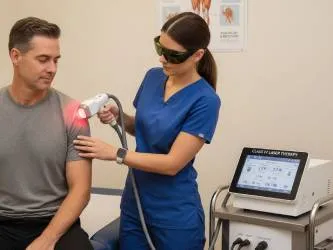
Preconditioning and tissue repair
You do not have to wait until you are in pain to use laser therapy. Many golfers use it as a way to prep their bodies before they even tee off. This preconditioning helps warm up the tissues and get blood moving to where it is needed most. Better circulation means your muscles get the oxygen they need to perform well and your joints stay loose. The laser also supports tissue repair for both old and new injuries. This is helpful for chronic issues like golfer's elbow or lower back aches that flare up on the course. Current evidence supports that this light-based care improves muscle performance and reduces soreness naturally without drugs.
What Recovery Options Are Available in Murrells Inlet?
Laser Lab Therapy in Murrells Inlet offers Class IV laser therapy, Normatec compression therapy, vibration therapy, and massage therapy. Each option targets a different aspect of recovery: laser for cellular repair and inflammation, compression for circulation and fluid movement, vibration for muscle relaxation, and massage for releasing tight trigger points.
Staying on the course in Myrtle Beach requires a smart plan for muscle care. At Laser Lab Therapy, we offer several tools to help you move well and play without pain. Our services focus on preventative wellness care to keep you active all season long.
Comparing your recovery options
Each service we provide helps the body in a unique way. Some focus on blood flow, while others target deep tissue repair. This table shows how our main tools benefit golfers.
| Service | How It Works | Benefit for Golfers | Session Length |
|---|---|---|---|
| Class IV Laser | Light energy stimulates cellular repair | Less joint pain and muscle swelling | 5 to 10 minutes |
| Normatec Compression | Air pressure moves fluid through limbs | Fresher legs and reduced soreness | 15 to 30 minutes |
| Vibration Therapy | High-speed pulses relax muscle tissue | Better range of motion and flexibility | 5 to 10 minutes |
| Massage Therapy | Manual pressure releases tight trigger points | Relief from knots and muscle tension | 30 to 60 minutes |
Focus on better circulation
Good blood flow is the key to recovery between rounds. The Normatec compression system is a top choice for golfers visiting our clinic. It uses sequential air pressure to massage your legs or arms, helping clear out waste products that build up during play. We also use vibration therapy to wake up your muscles and improve flexibility. These drug-free tools help you enjoy your golf trip without feeling worn out by the final day.
How Can You Build an Effective Between-Round Recovery Routine?
An effective between-round recovery routine includes cooling down immediately after your round, booking a professional laser or compression session, targeting tight areas with a foam roller in the evening, prioritizing seven to eight hours of quality sleep, and warming up with dynamic stretches before your next tee time.
Playing multiple rounds of golf in one trip puts high stress on your joints and muscles. To keep your swing smooth, you need a plan that starts as soon as you sink the final putt. Follow these steps to stay fresh through every round of your Myrtle Beach golf trip.
- Cool down immediately after your round. Walk at a light pace for a few minutes to let your heart rate drop gradually. This helps your blood keep moving through your legs and back while you rehydrate with electrolytes.
- Book a professional recovery session. Visit Laser Lab Therapy in Murrells Inlet for a quick five- to ten-minute laser or compression session. These treatments help reduce inflammation and muscle soreness so your body is ready for the next day.
- Target tight areas in the evening. Use a foam roller to work on your hips, spine, and shoulders. These areas often get tight after hours of swinging a club. Focus on slow, steady pressure to help your tissues relax before bed.
- Prioritize quality sleep. Aim for seven to eight hours of rest. Good sleep is one of your most powerful tools for tissue repair and mental focus before a morning tee time.
- Warm up before your next tee time. Start your day with dynamic stretches that wake up your muscles. Try hip openers, torso rotations, and bodyweight squats to find your full range of motion before the first swing.
What Additional Tools Can Support Your Golf Recovery?
Additional tools that support golf recovery include Thorne nutritional supplements for internal repair support, LED light bed therapy for full-body cellular function, and vibration therapy for muscle relaxation. These tools work alongside laser and compression to create a comprehensive recovery plan.
While laser therapy and compression are the core of most recovery plans, other tools can help you stay in top form throughout your trip. These lifestyle aids support your joints and muscles between rounds. Using preventative wellness care in Murrells Inlet helps you stay active all season.
Support from the inside
Good health starts with what you put in your body. Thorne supplements provide vitamins and nutrients that are tested for purity and safety. These tools help your body repair itself after a long day of play and work well alongside laser therapy to boost your overall wellness during multi-day trips.
Light and vibration for whole-body recovery
LED light bed therapy uses full-body light exposure to support cellular function. It is a simple way to refresh your body after 18 holes. Vibration therapy also helps relax tight muscles by delivering high-speed pulses through a platform. Research shows that light therapy improves muscular performance in active people, helping you get back to the game with less downtime between rounds.
Frequently Asked Questions About Golf Recovery in Myrtle Beach
How long do golf recovery sessions usually last?
Effective recovery sessions at Laser Lab Therapy in Murrells Inlet are often very short. You can get results in just five to ten minutes, making it easy to fit a session between rounds of golf on your trip. These brief treatments are ideal for busy golfers who need to recover between tee times.
What recovery tools should a golfer bring to Myrtle Beach?
When you pack for a golf trip, bring a foam roller and a massage ball to help with tight spots. You should also bring hydration packs with electrolytes to keep your body working well in the heat. Local clinics in Murrells Inlet offer more advanced tools like compression gear and light therapy to help reduce muscle pain and stiffness.
When is the best time to do a recovery session during a golf trip?
You can do a recovery session either before or after you play. Light therapy before you hit the links can help your muscles perform better and stay strong. Research shows that light therapy before exercise can improve muscle strength for up to two days. A session after your round helps calm inflammation and eases joint pain.
Are there golf recovery services near the Myrtle Beach courses?
Yes, you can find specialized recovery services in Murrells Inlet that focus on golfers. Laser Lab Therapy uses Class IV lasers and Normatec compression sleeves to help your body recover between rounds. These treatments are non-invasive and drug-free, making them a great way to handle the physical stress of a long golf trip without relying on medication.
Ready to Improve Your Golf Recovery in Myrtle Beach?
A long golf trip to Myrtle Beach puts heavy strain on your back, hips, and shoulders that leads to soreness if you do not act. Choosing proactive care today ensures you stay on the green with your friends instead of resting in a hotel room due to muscle aches. Our quick five- to ten-minute sessions give your body the support it needs to recover so you can finish your week of play with energy to spare. Do not let stiffness and joint pain keep you from enjoying the best courses in the Grand Strand.
Request an appointment at Laser Lab Therapy in Murrells Inlet and start recovering smarter between rounds.
Frequently Asked Questions
Is light therapy safe for athletes?

Yes, light therapy is completely safe and highly beneficial for athletes. It promotes faster muscle recovery, reduces inflammation, and supports performance without the risks of medication or downtime. That’s why professional and amateur athletes worldwide rely on it to train smarter and recover quicker.
How many sessions will I need?
The number of sessions varies depending on the type and severity of your condition. Many patients notice improvement after 3–5 sessions, while chronic conditions may require ongoing care for best results. During your initial consultation, we’ll design a personalized treatment schedule tailored to your body’s response and recovery goals.

Ready to Try Light Therapy for Recovery?