


Photobiomodulation for Arthritis: A Simple Guide
When you hear about using light as a medical treatment, it might sound like something from the future. But the science is both simple and well-established. Your body’s cells have tiny powerhouses called mitochondria that respond to specific wavelengths of light. During a photobiomodulation session, we use targeted red and near-infrared light to give these cellular engines a gentle jump-start. This process helps them produce more energy, which in turn reduces the inflammatory signals that cause arthritis pain and stiffness. Using photobiomodulation for arthritis is about giving your body the precise tools it needs to calm inflammation, support its own repair processes, and restore function to your joints, all without drugs or surgery.
Key Takeaways
- PBM works at the cellular level to fight inflammation: This therapy uses targeted light to energize your cells, helping them calm the inflammatory response that causes arthritis pain and supporting your body's natural repair process.
- You can manage pain without drugs or surgery: PBM is a non-invasive alternative that helps improve joint function and mobility, offering a way to find lasting relief without the side effects of medication or the recovery time of a surgical procedure.
- A consistent, tailored plan is key to success: The benefits of PBM build over time, so working with a professional on a customized treatment schedule is the most effective way to reduce pain and get back to the activities you love.
What Is Photobiomodulation (PBM) Therapy?
If you're looking for a way to manage arthritis pain without relying on medication or considering invasive procedures, you’ve likely come across a lot of different options. One that’s gaining well-deserved attention is Photobiomodulation, or PBM. You might also see it called low-level laser therapy (LLLT), but the idea is the same: it’s a non-invasive treatment that uses specific wavelengths of red and near-infrared light to help your body heal itself.
Think of it as a targeted jump-start for your cells. During a PBM session, a device delivers controlled light energy directly to the painful or injured area, like an arthritic knee or hand. This light penetrates through your skin to the tissue below, where it kicks off a series of helpful biological processes. It’s not a heating treatment, so you won’t feel any burning—just a gentle, therapeutic warmth at most. The goal is to reduce pain and inflammation while supporting your body’s natural repair mechanisms, helping you get back to moving more comfortably. At Laser Lab Therapy, we see it as a powerful way to work with your body, providing the tools it needs to restore function and find relief. It’s a gentle yet effective approach to managing chronic conditions like arthritis.
How PBM Works Inside Your Body
So, what’s actually happening when that light hits your cells? It all comes down to your mitochondria—the tiny powerhouses inside every cell responsible for generating energy. The light from PBM therapy is absorbed by parts of cells called mitochondria, giving them a serious energy charge. This extra energy, known as ATP, allows your cells to function more efficiently and kickstarts the healing process. It helps improve blood flow to the area, bringing more oxygen and nutrients, while also calming the inflammatory responses that cause so much of the pain and stiffness associated with arthritis. It’s a chain reaction that starts at the cellular level to produce real, noticeable relief.
The Specific Light That Promotes Healing
Not just any light can create these healing effects. PBM therapy relies on very specific, clinically studied wavelengths of red and near-infrared light. These wavelengths are special because they can penetrate deep into your body’s tissues to reach joints, muscles, and nerves. Research has identified an optimal wavelength for conditions like knee osteoarthritis, often around 808 nm to 810 nm. Studies show that light in this specific range is particularly effective at reducing the joint inflammation and cartilage damage linked to arthritis. This precision is what makes PBM a targeted and safe therapy, ensuring the light energy is delivered exactly where your body needs it most to get the job done.
How Can PBM Help with Arthritis?
If you're dealing with the daily grind of arthritis, you know that inflammation and pain are the main culprits. Photobiomodulation therapy works directly on these issues at a cellular level. Think of it as giving your body’s cells a specific set of instructions using light. This process doesn't just mask the pain; it encourages your body to manage inflammation and begin its own repair work, getting to the root of the discomfort.
PBM uses targeted light to create a cascade of positive effects within your tissues. It helps reduce the inflammatory chemicals that cause swelling and pain, gives your cells the energy they need to function properly, and supports the natural systems your body uses to heal itself. Let’s look at exactly how this light-based approach can bring you relief.
It Calms Inflammation at the Source
Arthritis is fundamentally a condition of inflammation. Your joints are filled with inflammatory chemicals, called cytokines, that send out pain signals and cause damage. PBM therapy helps to quiet this storm by reducing the number of these harmful cytokines. At the same time, it encourages an increase in helpful, anti-inflammatory signals. This process helps dial down the inflammation right at the source, leading to less swelling, stiffness, and pain in your joints. By addressing the underlying inflammation, PBM offers a path toward lasting pain management instead of just temporary relief.
It Re-Energizes Your Cells
Inside every cell in your body are tiny powerhouses called mitochondria. Their job is to create energy, known as ATP, which fuels all cellular activity, including healing and repair. In areas affected by arthritis, cells can become stressed and tired, and their energy production slows down. The specific wavelengths of light used in PBM are absorbed by these mitochondria, giving them a gentle nudge to get back to work. This helps your cells produce more energy, allowing them to function more effectively, repair damage, and keep tissues healthy.
It Supports Your Body's Natural Repair Process
Your body is always working to repair itself, but chronic conditions like arthritis can overwhelm this process. PBM therapy provides support where it’s needed most. The light energy not only helps reduce inflammation but also signals your body to clear out old, damaged cells and begin regenerating healthy new tissue. Studies show that PBM can influence how certain genes work, encouraging the growth of new bone and cartilage. This focus on tissue regeneration is a key part of preventative wellness, as it helps strengthen joints and improve their long-term function.
Is There Proof That PBM Works for Arthritis?
It’s completely fair to ask for the proof behind any treatment, and when it comes to photobiomodulation, the science is encouraging. PBM isn’t just a wellness trend; it’s a non-invasive therapy that has been the subject of numerous scientific studies for its effects on pain and inflammation. Researchers have explored its impact on both major forms of arthritis—osteoarthritis and rheumatoid arthritis—and the results are promising.
Across the board, studies point to PBM’s ability to calm inflammation at the cellular level, which is the root cause of arthritis pain. By using specific wavelengths of light, this therapy helps reduce swelling, ease discomfort, and improve joint function. For people looking for effective pain management without relying on medication or more invasive procedures, the growing body of evidence shows that PBM is a legitimate and effective option worth considering. It’s about working with your body’s natural healing mechanisms to help you move more freely and feel better.
What Studies Show for Osteoarthritis
For those dealing with osteoarthritis (OA), often called "wear-and-tear" arthritis, PBM offers a gentle way to manage symptoms. Research shows that light therapy can be an effective tool for OA because it directly targets the inflammation that causes joint stiffness and pain. Instead of just masking the discomfort, PBM works to reduce the underlying swelling.
This process helps improve joint mobility and overall function, making daily activities less of a struggle. Because it’s a non-invasive therapy, it’s becoming a promising alternative to traditional treatments, offering relief without the side effects that can come with long-term medication use. It’s a way to support your joints and find lasting comfort.
What the Research Says About Rheumatoid Arthritis
Rheumatoid arthritis (RA) is an autoimmune condition where the body’s immune system mistakenly attacks the joints. Research into PBM shows it can play a key regulatory role in calming this response. Studies have found that light therapy helps reduce the production of pro-inflammatory signals in the body while encouraging its natural anti-inflammatory processes to kick in.
Essentially, PBM helps dial down the body’s overactive inflammatory reaction. By influencing these cellular pathways, photobiomodulation therapy can significantly ease the symptoms of RA. This approach gets to the heart of the issue, offering a way to manage the condition by supporting your body’s internal systems.
The Evidence for Less Pain and Better Movement
Ultimately, what matters most is whether a treatment helps you feel and move better in your daily life. This is where the evidence for PBM is particularly compelling. Clinical studies with arthritis patients have reported significant improvements in pain levels, joint mobility, and the ability to perform everyday tasks.
One study even found that after a series of treatments, participants’ pain was reduced by more than 50%, and their physical function improved dramatically. This kind of functional recovery means getting back to activities you love, whether it’s walking, gardening, or simply moving through your day with greater ease and less discomfort.
What Does a PBM Treatment Plan Look Like?
If you're considering photobiomodulation, you might be wondering what the process actually involves. Unlike a one-size-fits-all approach, a PBM treatment plan is carefully tailored to your body and your specific needs. Think of it less like a standard prescription and more like a personalized roadmap to feeling and moving better.
Your journey with PBM is a partnership. We work with you to understand your symptoms, your lifestyle, and your goals. From there, we design a plan that focuses on three key areas: using the right kind of light, establishing a consistent schedule for your sessions, and adjusting the treatment based on your progress. This ensures you get the most effective and efficient care possible, helping you find lasting relief from arthritis pain and get back to the activities you love. Our approach to pain management is always centered around you.
Finding the Right Wavelength and Dose
The effectiveness of PBM therapy comes down to precision. We use specific wavelengths of light because different wavelengths have different effects on the body. For arthritis, research points to near-infrared light, particularly around the 808 nm to 810 nm range, as a sweet spot for reducing inflammation and pain in joints like the knee. This specific light penetrates deep into the tissue to calm irritation and support cartilage health without any reported adverse effects.
Just as important as the wavelength is the dose—the amount of light energy your tissues receive. Too little light won't create a therapeutic effect, but too much can actually hinder the healing process. Our job is to find that perfect dose that stimulates your cells to repair and regenerate effectively.
How Often You'll Need a Session
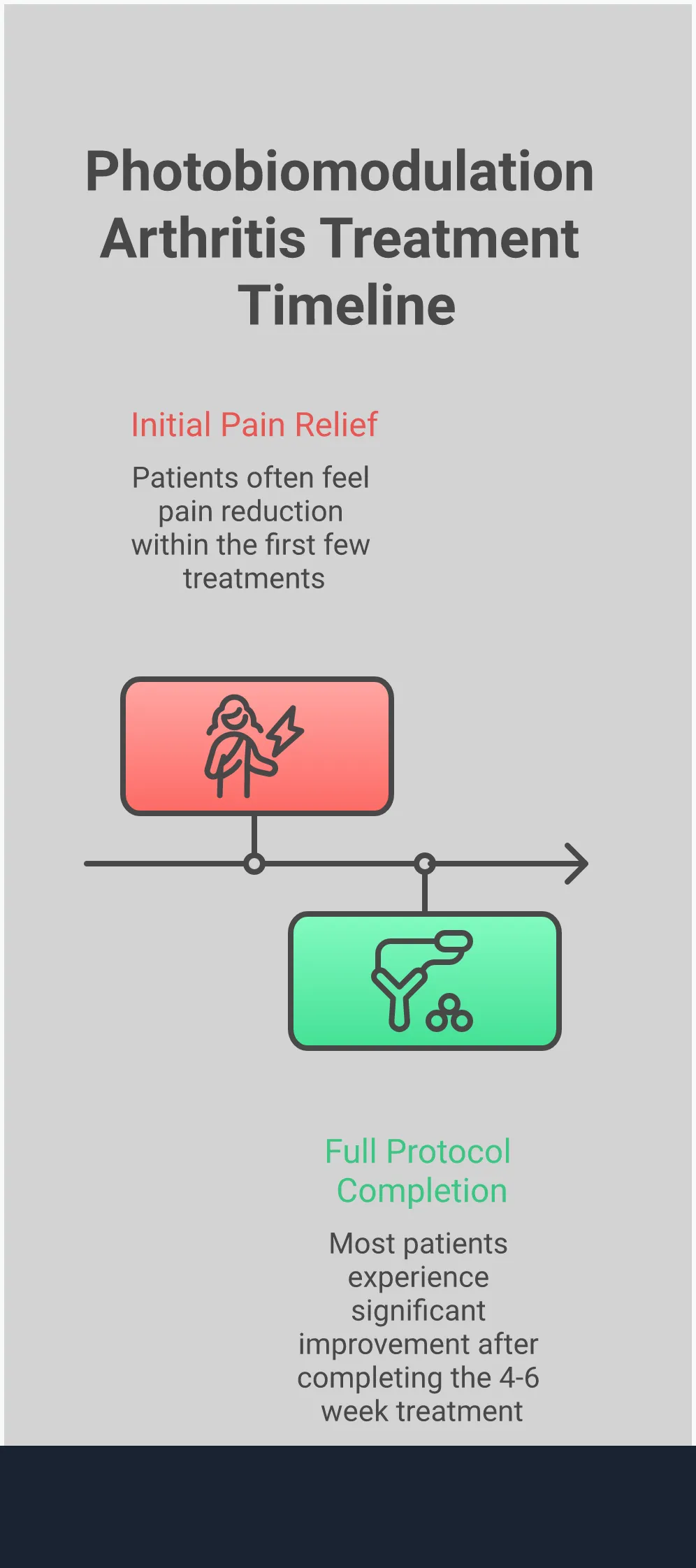
Consistency is key when it comes to PBM therapy. While many people feel some relief after just one session, the real, lasting benefits come from a cumulative effect. Most treatment plans involve a series of sessions scheduled close together, especially at the beginning. This helps build momentum in your body’s healing process, leading to significant pain reduction and improved mobility over time. Some studies have found that consistent PBM therapy can cut arthritis pain by more than half.
As your symptoms improve, we may adjust the frequency of your visits. PBM also works incredibly well alongside other therapies, like physical therapy or targeted exercises, to strengthen your joints and support long-term wellness. Our memberships are designed to make consistent care simple and accessible.
Why Your Treatment Plan Is Unique to You
No two cases of arthritis are exactly alike, which is why no two PBM treatment plans should be, either. The plan we create for you is based on a deep understanding of your unique situation. We consider the type of arthritis you have, how long you've been experiencing symptoms, which joints are affected, and your overall health. This detailed assessment allows us to customize every aspect of your treatment, from the wavelength and dose to the frequency of your sessions.
Our goal is to create a targeted, non-drug treatment that reduces inflammation, eases pain, and helps your body repair damaged tissue. By personalizing your plan, we can ensure you’re getting the precise care needed to achieve the best possible results. You can learn more about our dedicated approach on our About page.
Which Types of Arthritis Respond Best to PBM?
While photobiomodulation can help with the pain and inflammation associated with many joint conditions, research shows it’s particularly effective for certain types of arthritis. Because PBM works by calming inflammation and supporting cellular repair, it tends to work best on conditions where those factors are the primary drivers of your discomfort. Let’s look at where this therapy really shines.
Finding Relief from Osteoarthritis
Osteoarthritis (OA) is often called "wear-and-tear" arthritis, and it's the most common form. It happens when the protective cartilage that cushions your joints breaks down over time. Recent studies indicate that PBM is a promising non-invasive therapy for OA, helping to reduce pain and improve joint function. By targeting the affected joint with specific light wavelengths, PBM can help calm local inflammation and give your cells the energy they need to repair. This can make daily activities, from walking to opening a jar, feel much more manageable and offers a path toward effective pain management.
Managing Rheumatoid Arthritis Symptoms
Rheumatoid arthritis (RA) is different from OA because it’s an autoimmune disease. This means your immune system mistakenly attacks your joints, causing widespread inflammation, pain, and swelling. While PBM isn't a cure for RA, it can be a powerful tool for managing its symptoms. The therapy’s ability to reduce inflammation can help soothe the painful flare-ups associated with RA. While its effectiveness can vary from person to person, many find that PBM offers significant potential benefits for easing discomfort and improving their quality of life alongside their primary treatment plan.
How It Helps Other Inflammatory Conditions
Beyond OA and RA, PBM can be beneficial for other inflammatory joint conditions, like psoriatic arthritis or gout. The core strength of this therapy is its regulatory role in your body’s inflammatory response. It works by helping to decrease the production of pro-inflammatory molecules while encouraging your body’s natural anti-inflammatory processes. By getting to the source of the inflammation, PBM can help alleviate symptoms across various forms of arthritis. This makes it a great option for anyone interested in supporting their long-term joint health and pursuing preventative wellness.
The Key Benefits of PBM for Arthritis
When you're dealing with the daily grind of arthritis, finding a solution that works for your body and your lifestyle is everything. Photobiomodulation stands out because it offers a gentle yet powerful way to address the symptoms at their source. It’s not about masking the problem; it’s about helping your body heal itself. For many, the biggest advantages are that it’s a drug-free, non-invasive approach that delivers real, tangible results in how you move and feel. Let’s look at what that means for you.
A Drug-Free Way to Manage Pain
One of the most compelling reasons people turn to PBM is to find relief without relying on medication. Instead of pills, this therapy uses specific wavelengths of red and near-infrared light to calm the inflammation that causes so much arthritis-related pain. By targeting the affected joints directly, PBM helps reduce swelling and discomfort right at the source. This approach allows you to effectively manage pain and improve your quality of life without the potential side effects that can come with long-term medication use. It’s a way to work with your body’s natural healing mechanisms, not against them.
A Non-Invasive Alternative to Surgery
The thought of surgery can be daunting, and for many, it’s a path they’d rather avoid. PBM offers a safe, non-invasive alternative that doesn’t require any downtime or recovery. Because the therapy simply involves applying light to the skin’s surface, there are no incisions or injections involved. It’s a gentle treatment that can be used on stiff and painful joints all over the body, including the knees, shoulders, and spine. This makes it an excellent option for those seeking long-term relief and improved joint health without committing to a surgical procedure.
Better Mobility and Joint Function
Arthritis doesn’t just cause pain—it can seriously limit your ability to do the things you love. PBM therapy can help you get back to your life by improving how well your joints work. Studies have shown that it can significantly reduce the pain and stiffness that hold you back. By supporting the repair of soft tissues and reducing inflammation, PBM helps improve joint range of motion and flexibility. This means less stiffness when you wake up and more freedom to move throughout your day, whether you’re walking, gardening, or playing with your grandkids.
Is PBM Therapy a Good Fit for Everyone?
While photobiomodulation therapy is a safe and effective option for many people dealing with arthritis, it’s not a magic bullet. Like any personalized treatment, its success depends on a few key factors, including the type and severity of your arthritis, your overall health, and the specifics of the treatment itself. Because PBM works by supporting your body’s own healing mechanisms, the results can be gradual and will differ from person to person.
The good news is that PBM is incredibly versatile. It’s a fantastic option for individuals looking for a drug-free approach to pain management and for those who want to avoid more invasive procedures like surgery. The best way to find out if it’s right for you is to have a conversation with a qualified provider who can assess your specific situation. They can help set realistic expectations and design a plan that gives you the best chance at finding relief and getting back to the activities you love.
Why Results Can Vary
If you look into the research on PBM, you might notice that some studies show incredible results while others are more modest. This variation often comes down to the treatment "recipe." Scientists are still refining the exact parameters—like the ideal light wavelength, energy dose, and treatment frequency—for every specific condition. The effectiveness of PBM is highly dependent on getting these details right. This is why one person’s experience might differ from another’s and why a personalized treatment plan is so crucial. It’s not that the therapy doesn’t work; it’s that the approach needs to be tailored to you.
Considering Accessibility and Cost
One of the biggest draws of PBM therapy is that it’s a non-invasive and drug-free alternative to traditional arthritis treatments. For many, the ability to manage pain without relying on medication or facing surgery is a significant advantage. While PBM is an investment in your long-term health, it can be an accessible part of your wellness routine. At Laser Lab Therapy, we offer memberships to help make consistent care more affordable, allowing you to get the cumulative benefits of regular sessions without the financial strain. It’s a practical way to prioritize your health and feel your best.
The Importance of Standardized Treatments
Because the right "recipe" is so important, the expertise of your provider matters. A trained professional knows how to apply the correct light settings to target your specific type of arthritis effectively. For example, research suggests that treating an arthritic knee joint requires a specific dose and wavelength to achieve the best results. This isn't a one-size-fits-all therapy. Working with an experienced team ensures your treatment plan is based on proven protocols, giving you a much better chance of success than you might get with a generic approach or an at-home device.
PBM vs. Traditional Arthritis Treatments
When you're dealing with arthritis, you've likely explored a range of treatments, from over-the-counter pills to physical therapy. Photobiomodulation offers a different approach by working with your body's own healing mechanisms. It’s not about replacing your current care plan but adding a powerful, natural tool to your toolkit. Let's look at how PBM compares to and complements traditional methods.
How It Differs from Medication
Many arthritis treatments rely on medication to manage pain and inflammation. While helpful, they don't always address the root cause and can come with unwanted side effects. PBM therapy is a drug-free, non-invasive alternative that works on a cellular level. Instead of just masking symptoms, it uses specific wavelengths of light to trigger a healing response in your cells. This process helps reduce inflammation and improve joint function, offering effective pain management without the risks that can accompany long-term medication use. It’s a gentle yet powerful way to encourage your body to repair itself from the inside out, making it a safe option for many people seeking lasting relief.
Using PBM Alongside Other Therapies
Think of PBM therapy as a team player in your health journey. It works incredibly well alongside other treatments, like physical therapy and targeted exercise. By stimulating cellular repair and temporarily increasing blood flow to the affected joints, PBM can actually make your other therapies more effective. When used in combination, it helps strengthen joints, improve mobility, and speed up recovery. Integrating PBM into your routine is a key part of a holistic approach to preventative wellness, helping you build a comprehensive plan to maintain an active, pain-free lifestyle. It supports your body’s recovery so you can get back to doing what you love.
What to Expect During Your PBM Session
If you’re considering PBM therapy for arthritis, you probably have a few questions about what the experience is actually like. It’s natural to be curious about a new treatment. The good news is that sessions are straightforward, gentle, and designed to be as comfortable as possible. Let’s walk through what happens when you come in for a session and what you can expect as you move through your treatment plan.
What a Session Feels Like (and Why It's Safe)
First things first: PBM therapy is completely painless. When you arrive, you’ll get settled in a comfortable position, and a trained technician will apply the light applicator to the area being treated, like your knee, hands, or back. Most people feel a gentle, soothing warmth on their skin during the session, while others feel nothing at all. It’s a quiet and relaxing experience.
Because PBM uses specific wavelengths of light, it’s a non-invasive and safe way to get pain management support. The light energy is not strong enough to burn or damage your skin or tissues. Instead, it penetrates deep to stimulate healing at a cellular level, making it a safe option for a wide range of people.
How Soon You Might Feel a Difference
PBM therapy works cumulatively, meaning the benefits build up with each session. While some people notice a subtle improvement after their first visit, it’s more common to feel a real difference within three to six sessions, especially for mild to moderate joint pain. Your body needs time to respond to the light and kickstart its natural healing processes.
For more chronic or severe arthritis, you may need a longer series of treatments to achieve the best results. Consistency is the key. Think of it like exercise—you get stronger over time by sticking with it. We offer memberships to make it easier to stay on track with your personalized treatment plan.
Maintaining Your Results for the Long Haul
The goal of PBM isn’t just to provide temporary relief; it’s to create lasting change. By reducing the inflammation that drives arthritis, PBM helps improve your joint mobility and overall function. The ultimate aim is to help you return to an active, pain-free lifestyle.
Once you’ve completed your initial treatment plan and are feeling better, we may recommend periodic maintenance sessions. These visits can help keep inflammation at bay and manage your symptoms for the long term. It’s a proactive approach that fits perfectly into a preventative wellness routine, helping you stay ahead of flare-ups and maintain your progress.
Frequently Asked Questions
Does PBM therapy hurt, and are there any side effects? Not at all. The entire process is painless and non-invasive. Most people feel a very gentle, soothing warmth over the treatment area, but many feel nothing at all. Because we're using specific, low-level light to stimulate your body's natural healing processes, there are no known side effects. It's a safe and comfortable way to find relief without the complications that can come with medications or surgery.
How is this different from the red light devices I can buy online? That's a great question. The main differences are precision and power. The devices we use are medical-grade and allow us to deliver specific, clinically proven wavelengths of light at the exact dose needed to penetrate deep into your joint tissue. At-home devices are typically far less powerful and aren't designed to provide the targeted, therapeutic dose required to effectively manage a condition like arthritis. A professional plan ensures your treatment is tailored specifically to you for the best possible results.
How long until I see results from PBM therapy? The benefits of PBM are cumulative, meaning they build up over time. While some people report feeling a bit better after their first one or two sessions, most find significant relief after a series of consistent treatments. Your body needs time to respond to the therapy and begin its repair work. Your personalized plan will be designed to create momentum and help you achieve lasting results.
Will PBM therapy cure my arthritis? While PBM is an incredibly effective tool for managing arthritis, it is not a cure. Arthritis is a chronic condition, and our goal is to significantly reduce your pain, calm inflammation, and improve your joint function so you can get back to living your life more comfortably. Think of it as a powerful way to manage your symptoms and support your body's long-term health, rather than a one-time fix.
How long does a typical session last? Sessions are quick and easy to fit into your day. Depending on the area we are treating, a typical session usually lasts between 10 and 20 minutes. It's a simple, relaxing process where you can just sit back while the light does its work.
Frequently Asked Questions
Is light therapy safe for athletes?

Yes, light therapy is completely safe and highly beneficial for athletes. It promotes faster muscle recovery, reduces inflammation, and supports performance without the risks of medication or downtime. That’s why professional and amateur athletes worldwide rely on it to train smarter and recover quicker.
How many sessions will I need?
The number of sessions varies depending on the type and severity of your condition. Many patients notice improvement after 3–5 sessions, while chronic conditions may require ongoing care for best results. During your initial consultation, we’ll design a personalized treatment schedule tailored to your body’s response and recovery goals.

Ready to Try Light Therapy for Recovery?