


Laser Therapy for Muscle Recovery: A Guide for Athletes
The term "laser therapy" might sound intense, but the reality is a gentle, painless process that supports your body’s own healing abilities. Instead of just masking pain or physically compressing muscles, this treatment works from the inside out. It uses specific wavelengths of light to give your tired and damaged cells a direct energy infusion, helping them repair themselves more efficiently. This cellular-level support is what makes laser therapy for muscle recovery in athletes so effective. It helps improve circulation, reduce inflammation, and clear out the metabolic waste that causes soreness, allowing you to bounce back from tough workouts with less downtime and greater resilience.
Key Takeaways
- Heals muscles from the inside out: Laser therapy works at a cellular level to help your body repair itself by giving your cells more energy, improving circulation to deliver essential nutrients, and calming the inflammatory response that causes soreness.
- Use it strategically around your workouts: Timing your sessions can make a big difference. A pre-workout treatment can help improve your strength and endurance, while a post-workout session can significantly reduce muscle soreness and shorten your recovery time.
- A safe and quick addition to your routine: Professional laser therapy is a non-invasive, painless treatment with sessions typically lasting just 5 to 15 minutes, making it a simple and effective drug-free alternative to add to your recovery plan.
How Does Laser Therapy Help Muscles Recover?
When you push your body to its limits, your muscles need effective ways to repair and rebuild. While rest is essential, laser therapy offers a scientific way to accelerate that process. It works by giving your body’s natural healing mechanisms a helping hand, targeting tired and damaged cells with focused light energy. This process helps you bounce back faster, feel less sore, and get back to your training with renewed strength. Let’s explore how it works.
What Is Low-Level Laser Therapy (LLLT)?
Think of low-level laser therapy, or LLLT, as a way to give your cells a gentle, energizing pep talk. It’s a non-invasive treatment that uses specific wavelengths of light to help your body recover faster. Instead of just masking pain, LLLT works to reduce inflammation and accelerate healing right at the source. For athletes, this means a quicker return to form after a tough workout or injury. The light energy penetrates your skin without any discomfort, kickstarting cellular processes that support your body’s natural ability to repair itself. It’s a key part of any modern performance recovery plan.
The Science of How Your Cells Heal
So, how does light actually heal your muscles? It all comes down to your cells. When muscle tissue is stressed or injured, your cells get tired and don't function as well. Laser therapy delivers light energy directly to these impaired cells, which absorb it and convert it into cellular fuel. Studies show that damaged cells are more receptive to this light, so the therapy naturally targets the areas that need the most help. This process speeds up your body’s healing timeline, helping you form new, healthy tissue and restore movement sooner. You can learn more about our approach to healing and the science behind it.
Common Types of Laser Therapy for Athletes
Not all light therapy is the same, as different types use specific wavelengths to achieve different results. You might hear about red light therapy, which penetrates deep into muscle tissue to stimulate your cells' energy centers. Another common type is MLS (Multiwave Locked System) laser therapy, which is great for treating injuries in the feet and ankles. A trained professional can determine the right type of light and application for your specific needs. Whether you're dealing with a sprain or general soreness, there’s a light-based approach that can help with your pain management and recovery.
How Laser Therapy Accelerates Muscle Recovery
When you push your body to its limits, your muscles need the right support to bounce back stronger. Laser therapy works at a cellular level to give your body exactly what it needs for a faster, more effective recovery. Instead of just masking symptoms, it helps accelerate your body’s natural healing mechanisms. Think of it as giving your internal repair crew a serious upgrade. Here’s a closer look at how it helps you get back to your training schedule with less downtime.
Increasing Cellular Energy (ATP)
Every cell in your body, especially your muscle cells, runs on an energy molecule called ATP. It’s the fuel for everything from contracting a bicep to repairing tissue after a workout. Laser therapy uses specific wavelengths of light that penetrate deep into your muscle tissue and stimulate the mitochondria, which are your cells’ tiny power plants. This process helps them produce more ATP. With this extra cellular energy, your muscles have more resources to repair damage, reduce fatigue, and perform at their best. This is a key part of effective performance recovery for any athlete.
Improving Blood Flow and Oxygen to Muscles
Proper circulation is essential for healing. Your blood carries the oxygen and nutrients your muscles are crying out for after intense exercise. Laser therapy helps improve blood flow to the treated areas by encouraging the formation of new capillaries and relaxing blood vessels. This enhanced circulation acts like an express delivery service, rushing vital resources to your muscle tissues while also carrying away waste products that contribute to soreness. By ensuring your muscles get the nourishment they need, laser therapy helps speed up the repair process and provides effective pain management.
Reducing Inflammation and Muscle Stress
While a little inflammation is a natural part of the healing process, too much can lead to prolonged soreness, stiffness, and a longer recovery time. Laser therapy helps regulate the body’s inflammatory response, calming irritation at a cellular level. This helps reduce swelling and discomfort without interfering with the essential first stages of tissue repair. By keeping excessive inflammation in check, the therapy allows your body to move more efficiently into the rebuilding phase. This is a cornerstone of preventative wellness, as it helps you recover properly and avoid chronic issues.
Stimulating Collagen to Repair Tissue
Collagen is the protein that provides structure to your muscles, tendons, and other connective tissues. It’s the literal glue that holds you together. When you train hard, you create tiny micro-tears in your muscle fibers that need to be repaired. Laser therapy helps stimulate the production of collagen, which is crucial for rebuilding and strengthening this damaged tissue. By supporting this process, the therapy doesn’t just patch up the damage; it helps you build stronger, more resilient muscles that are better prepared for your next workout. This leads to more effective tissue repair and a reduced risk of future injuries.
What Are the Benefits of Laser Therapy for Athletes?
As an athlete, you’re always looking for an edge. You fine-tune your nutrition, perfect your form, and dedicate hours to training. But what about your recovery? True progress happens when your body has a chance to repair and rebuild. Laser therapy offers a powerful, non-invasive way to support this process, helping you train harder, recover smarter, and stay in the game.
This isn't just about bouncing back from an injury. It's about optimizing your body's natural healing capabilities to reduce downtime, manage soreness, and even improve your performance from the start. By working at a cellular level, laser therapy helps your muscles, tendons, and ligaments get what they need to function at their best. Think of it as a tool to help you build a more resilient body, one that’s better equipped to handle the demands of your sport. Let's look at the specific ways it can support your athletic goals.
Recover Faster Between Workouts
Consistent training is key to improving, but pushing your limits without adequate rest can lead to burnout or injury. Laser therapy helps you get back to your routine sooner by speeding up your body’s natural repair cycle. This non-invasive treatment uses specific wavelengths of light to stimulate cellular activity, which helps reduce the pain and inflammation that naturally occur after a tough workout.
By enhancing circulation and promoting cellular repair, laser therapy helps clear out metabolic waste products while delivering more oxygen and nutrients to your muscle tissues. This means your muscles can mend themselves more efficiently, shortening the time you need to rest between sessions. It’s a proactive way to support your body’s performance recovery, allowing you to maintain your training volume and intensity.
Experience Less Muscle Soreness and Stiffness
We’ve all felt it: the deep muscle ache that sets in a day or two after a demanding workout. This delayed onset muscle soreness (DOMS) can make it tough to move, let alone train again. Laser therapy can significantly reduce this post-exercise soreness. In fact, research has shown that low-level laser therapy (LLLT) applied after exercise provides substantial pain relief.
One meta-analysis of clinical trials found that athletes who received LLLT after exercise experienced a 36.9% reduction in pain compared to just 8.2% for those who received a placebo treatment. By calming inflammation and easing muscle tension, laser therapy helps you feel less stiff and sore. This allows you to stick to your training schedule with greater comfort and consistency.
Improve Your Muscle Strength and Endurance
What if you could prepare your muscles for a better workout before you even start? Laser therapy isn't just for post-workout recovery; it can also be used to prime your body for peak performance. Studies show that when LLLT is applied before exercise, it can lead to measurable gains in both strength and endurance.
The same scientific review found that pre-exercise laser therapy improved how many times a muscle could contract before fatiguing. It also significantly improved strength in lower leg muscles. By preparing your cells for the work ahead, laser therapy can help you push harder and last longer during your training sessions. This makes it a valuable tool for anyone looking to build strength and improve their overall athletic output as part of a preventative wellness plan.
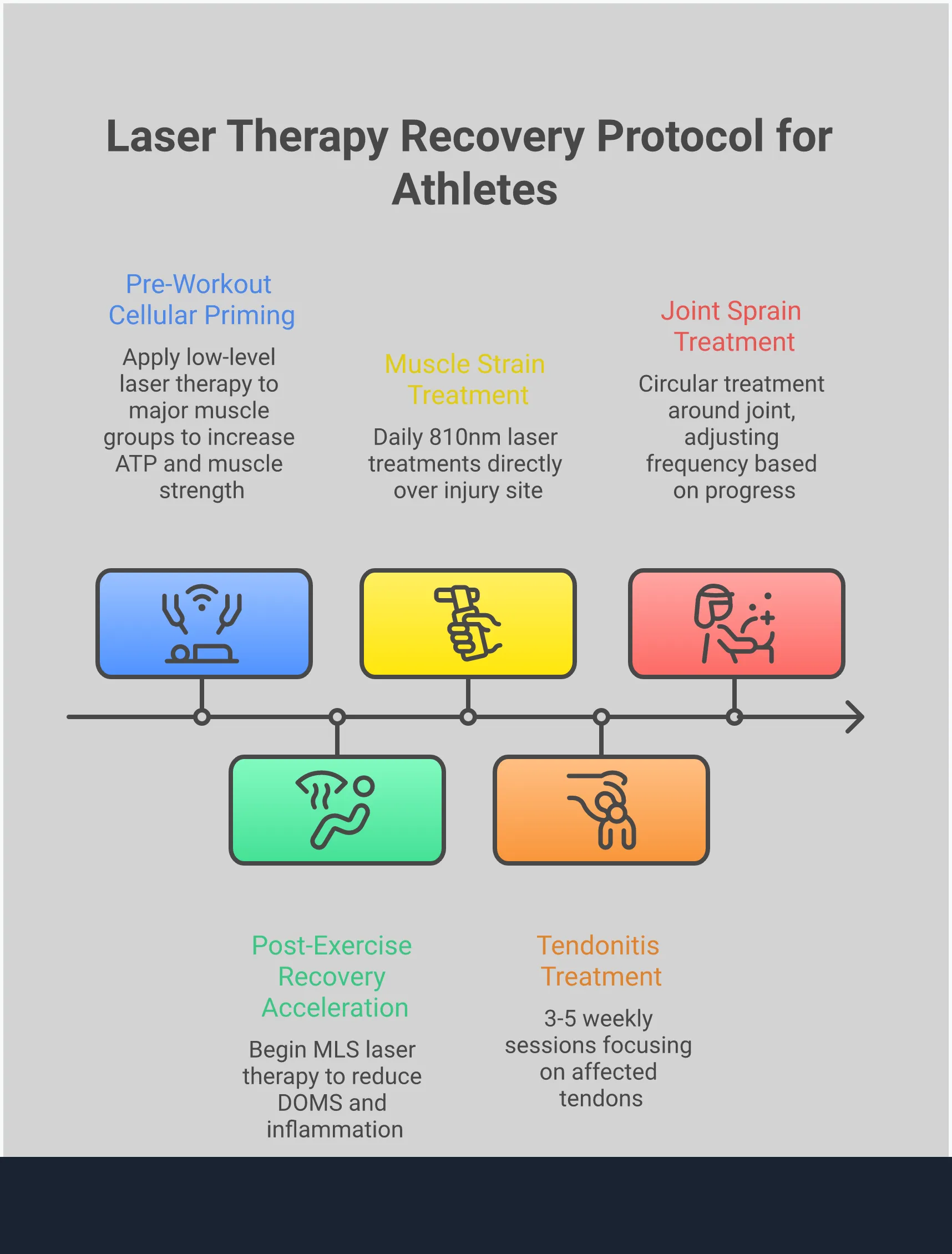
Help Prevent Overuse Injuries
One of the biggest challenges for any athlete is staying healthy. Overuse injuries, like tendonitis or stress fractures, often happen when your body can’t keep up with the repetitive stress of training. Because laser therapy helps muscles recover more quickly, it plays a crucial role in injury prevention. Well-recovered muscles are stronger, more flexible, and less prone to strains and tears.
By reducing muscle fatigue and improving tissue quality, laser therapy builds resilience in your body. Better circulation means your muscles and connective tissues are consistently well-nourished, making them better able to withstand the demands of your sport. This proactive approach to pain management helps you address minor issues before they become chronic problems, keeping you healthy and active for the long haul.
What Sports Injuries Does Laser Therapy Treat?
Any athlete knows that an injury can be more than just a physical setback; it’s a mental hurdle that keeps you from the activities you love. Whether you’re dealing with a sudden sprain or a nagging pain that just won’t quit, finding an effective recovery method is key. Laser therapy is a remarkably versatile treatment that can address a wide range of common sports injuries. Because it works at the cellular level to reduce inflammation and speed up tissue repair, it can be applied to muscles, tendons, and joints alike.
This approach is particularly helpful for athletes because it’s non-invasive and drug-free, meaning you can support your body’s natural healing processes without unwanted side effects. It’s not about masking the pain; it’s about helping your body resolve the root cause of the injury. From acute muscle tears to chronic tendonitis, laser therapy offers a targeted way to get you back on your feet and performing at your best. Let’s look at some of the specific injuries that respond well to this treatment.
Muscle Strains and Tears
A pulled hamstring or a strained quad can sideline you for weeks. These injuries happen when muscle fibers are overstretched or torn, leading to pain, swelling, and limited movement. Laser therapy helps accelerate the healing of these tissues by stimulating cellular repair and increasing blood flow to the injured area. This process delivers more oxygen and nutrients right where you need them, helping your body rebuild damaged muscle fibers more efficiently. Many athletes have found it effective for performance recovery, with some studies showing how it helps reduce recovery time even in cases of severe strains.
Tendonitis and Tendon Injuries
Tendonitis, or the inflammation of a tendon, is a classic overuse injury that plagues athletes in sports ranging from tennis (tennis elbow) to running (Achilles tendonitis). Tendons have a limited blood supply, which is why these injuries can be so stubborn and slow to heal. Laser therapy is a safe and effective treatment that directly addresses this by improving circulation to the affected tendon. This enhanced blood flow helps flush out inflammatory byproducts and provides the building blocks needed for repair. The result is often significant pain reduction and a quicker, more complete recovery.
Joint Inflammation and Sprains
When you sprain an ankle or twist a knee, your body’s first response is inflammation, which brings on swelling and pain. While this is a natural part of the healing process, too much of it can slow you down. Laser therapy helps manage this response by reducing both pain and swelling associated with joint injuries. By calming inflammation at the source, it allows you to regain mobility and function more quickly. This means you can often return to your sport with less discomfort and a lower risk of re-injury, making it a valuable tool for acute pain management.
Chronic Pain in Athletes
Sometimes, an injury doesn’t fully heal and turns into a chronic issue that affects your performance day after day. This lingering pain is often tied to persistent, low-grade inflammation and tissues that never had a chance to repair completely. Laser therapy can help break this cycle. By penetrating deep into the tissue, it stimulates healing and decreases inflammation that has built up over time. For athletes dealing with chronic pain, this can be a game-changer, helping to finally resolve old injuries and improve overall physical function so you can train consistently again.
When Should You Use Laser Therapy for the Best Results?
Timing your laser therapy sessions around your training schedule can make a big difference in your results. Whether you’re looking to get more out of your workouts or recover faster, you can use light therapy to support your goals. Think of it as a strategic tool in your athletic toolkit, helping you prepare, perform, and repair. By understanding the best times to schedule a session, you can align the therapy’s benefits with your body’s needs, helping you stay on top of your game.
Before Your Workout to Improve Performance
Using laser therapy before you exercise can help prime your muscles for action. It works by stimulating your cells and improving blood flow, which can prepare your body for the demands of a tough workout. Research shows that when athletes used low-level laser therapy before exercise, it significantly improved strength in their lower leg muscles. A pre-workout session can give you an edge, helping your muscles perform more efficiently and potentially reducing your risk of injury. This is a great strategy to use before a big competition or a particularly challenging training day to help you perform at your peak.
After Your Workout to Speed Up Recovery
One of the most popular times to use laser therapy is after a workout. This is when your muscles are tired and starting the repair process. A post-workout session can help accelerate that process by reducing inflammation and easing muscle soreness. Studies have found that laser therapy after exercise provides significant pain relief and can dramatically lower that next-day stiffness. This means you can bounce back faster between training sessions, feeling more refreshed and ready to go. It’s an essential part of any serious athlete’s performance recovery plan.
How Often Should You Get Treatment?
Consistency is key when it comes to laser therapy, especially if you're treating a specific injury or working toward a performance goal. The ideal frequency depends on your individual needs, but general treatment guidelines often recommend a series of sessions scheduled closely together. For an acute issue, this might mean daily treatments for a couple of weeks or sessions every other day for three to four weeks. For general wellness and recovery, a less frequent schedule might work. Our team can help create a plan that fits your goals, and our memberships make it easier to stay consistent.
How to Add Laser Therapy to Your Recovery Routine
Integrating laser therapy into your existing routine is simple. It doesn’t replace other recovery methods like stretching or proper nutrition; it enhances them. Many professional athletes use laser therapy as a core part of their strategy to heal faster and get back in the game with less downtime. You can schedule sessions on your rest days to focus on repair or fit them in before or after your workouts as needed. The best way to start is by talking with a professional who can assess your training load and recovery needs to build a personalized plan.
Laser Therapy vs. Traditional Recovery Methods
As an athlete, you’re probably familiar with the go-to recovery methods. But how does laser therapy stack up against the classics? While traditional approaches have their place, laser therapy works on a deeper, cellular level to not just manage symptoms but to accelerate your body’s natural healing processes. It’s a powerful tool that can complement your existing routine and give you an edge in your training and recovery. Let's look at how it compares to some of the most common methods you might already be using.
Why It's Different from Ice Baths and Compression
Ice baths and compression gear are staples in many athletes' toolkits. They work by applying external forces, cold and pressure, to reduce swelling and inflammation. Think of them as mechanical solutions: ice constricts blood vessels to limit inflammation, while compression physically squeezes fluid out of your muscles. Laser therapy, on the other hand, works from the inside out. It’s a non-invasive treatment that uses specific wavelengths of light to stimulate cellular activity. Instead of just managing inflammation, it helps your cells produce more energy to actively repair damage, making it a key part of any performance recovery plan.
How It Compares to Massage and Stretching
A good massage or stretching session can feel incredible for releasing tight muscles and improving flexibility. These methods manually manipulate muscle tissue to relieve tension and increase range of motion. Laser therapy offers a different, yet complementary, benefit. It speeds up your body’s natural healing process right from the start, helping to form new cells and tissues to restore movement sooner. While massage addresses the physical knots and tightness, laser therapy gives your cells the energy they need to repair the underlying micro-tears and damage. This can lead to more effective pain management and a quicker return to peak function.
A Drug-Free Alternative to Pills and Injections
When you’re dealing with a nagging injury, it can be tempting to reach for anti-inflammatory pills or consider injections for quick relief. While these can temporarily mask the pain, they often come with side effects and don’t address the root cause of the injury. Laser therapy offers a safe, effective, and drug-free alternative. It’s a pain-free treatment with minimal side effects that helps your body heal itself. By reducing inflammation and stimulating tissue repair at the source, it provides a sustainable solution for long-term health and preventative wellness, helping you stay in the game without relying on medication.
What to Expect During a Laser Therapy Session
Stepping into a new type of therapy can feel a little uncertain, but a laser therapy session is straightforward, quick, and comfortable. The goal is to help your body heal itself, and the process is designed to be as relaxing as possible. When you come in, you’ll work with a trained professional who will guide you through every step, from identifying the target areas to applying the light. We’ll make sure you understand what’s happening and feel at ease the entire time. Think of it as a dedicated, high-tech recovery session that fits easily into your day. It’s a simple, non-invasive way to give your muscles the support they need to repair, recover, and get stronger without any downtime.
How Long Does It Take and What Does It Feel Like?
One of the best parts about laser therapy is how quick and easy it is. Most sessions last between five and 15 minutes, depending on the size of the area we’re treating and your specific goals. This makes it easy to fit into a lunch break or on your way home from the gym. As for how it feels, you can expect a gentle, soothing warmth over the treatment area, though many people feel nothing at all. It’s completely painless and non-invasive. For athletes dealing with nagging injuries, many report feeling a reduction in their pain management needs soon after their first few sessions, especially for chronic issues that have lingered for a while.
Professional Treatment vs. At-Home Devices
You might see red light therapy devices for sale online, but they aren’t the same as professional laser therapy. The equipment used in a clinical setting is far more powerful and precise, allowing the light to penetrate deeper into your muscle tissues for more effective results. A trained technician also knows exactly where to apply the laser and for how long to target your specific injury or recovery goals. This customized approach ensures you get the right dose of therapy for optimal performance recovery. With an at-home device, you’re often left guessing, and you may not get the power or accuracy needed to make a real difference in your muscle repair and overall healing process.
Fitting Treatments Into Your Training Schedule
Consistency is key when it comes to getting the most out of laser therapy. The right treatment schedule depends entirely on your goals. If you’re recovering from an acute injury, you might come in every other day for a few weeks to accelerate healing. For general maintenance and performance, a weekly session might be perfect to keep inflammation down and muscles ready for action. We’ll work with you to create a plan that complements your existing training and competition schedule. Because sessions are so short, it’s easy to make them a regular part of your routine. Our flexible memberships are designed to help you stay on track with your recovery without adding stress to your busy life.
Is Laser Therapy Safe?
It’s completely normal to have questions about any new treatment, especially when the word "laser" is involved. You might picture something out of a sci-fi movie, but the reality is much gentler and grounded in science. Laser therapy is a well-established treatment that has been used for decades to help people manage pain and recover from injuries without invasive procedures. It’s a trusted tool for athletes who need to get back in the game safely and effectively. The key is understanding how it works and why its safety profile is so strong. Let's clear up some common concerns and talk about what makes this therapy a reliable part of a modern recovery plan.
Understanding the Low-Risk Profile
One of the biggest advantages of laser therapy is that it's a safe and non-invasive treatment option for athletes. This means there are no needles, no incisions, and no lengthy downtime. Instead of forcing a change, the therapy works by supporting your body’s natural healing processes at a cellular level. Because it’s so gentle, it offers minimal side effects and a pain-free recovery process from injuries. You can think of it as giving your cells the specific energy they need to repair themselves more efficiently. This approach makes it an excellent choice for pain management and helps you avoid the risks that can come with medications or more aggressive treatments.
Debunking Common Safety Myths
Let's tackle the biggest myth right away: many people assume that because it involves lasers, it must be painful or hot. In truth, there is no pain associated with a laser treatment. The technology we use is often called "low-level" or "cold laser" therapy precisely because it doesn't produce heat or burn the skin. You might feel a very gentle, soothing warmth in the treatment area, but that’s it. The light energy is calibrated to penetrate your tissue and stimulate cellular activity, not to cause damage. Our trained professionals ensure every session is comfortable, safe, and tailored to your specific needs, so you can relax while your body gets to work healing.
When to Talk to a Professional First
While laser therapy is incredibly safe for a wide range of conditions, it’s always smart to start with a professional consultation. A trained therapist can properly assess your injury, discuss your performance goals, and determine if laser therapy is the right fit for your recovery plan. It’s effective for both sudden injuries and chronic issues, but a personalized approach ensures the best results. This is your chance to ask questions and build a treatment schedule that works with your training. Before you begin, we recommend you contact us for a consultation to create a plan that helps you feel and perform your best.
How to Choose the Right Laser Therapy Provider
Finding the right laser therapy provider is just as important as the treatment itself. You want a partner who understands your athletic goals and has the expertise to help you achieve them safely and effectively. When you’re vetting potential clinics, focus on their qualifications, the technology they use, and their willingness to answer your questions directly. A great provider will be transparent and make you feel confident in your recovery plan.
Look for Qualifications and Certifications
First things first, make sure you’re in qualified hands. Laser therapy is a specialized field, and the person operating the equipment should have specific training and certification. Don’t be shy about asking about their background and experience, especially with athletes. A knowledgeable practitioner ensures your treatment is not only effective but also completely safe. After all, laser therapy is a safe and non-invasive treatment option for athletes, offering a pain-free recovery process. When you work with our team of specialists, you can feel confident you’re getting expert care designed for your body’s needs.
Ask About Their Equipment and Protocols
Not all laser therapy devices are created equal. The quality and type of equipment a clinic uses can significantly impact your results. Ask what kind of laser they use and why they chose it. A reputable provider will use state-of-the-art, FDA-cleared technology. They should also have clear treatment plans. Established protocols for session length, frequency, and equipment settings are key to ensuring consistent and predictable results for your performance recovery. A provider who can clearly explain their process is one who has invested in getting it right.
Key Questions to Ask Your Provider
Your initial consultation is the perfect time to get clarity and see if a provider is the right fit. Come prepared with a few questions to guide the conversation.
Here are some good ones to start with:
- What kind of results can I expect for my specific injury or goal?
- How many sessions do you think I will need?
- What does the treatment feel like?
Many people worry that "laser" means pain, but in reality, laser therapy is a non-invasive and painless procedure. It’s also a common myth that it only works for chronic issues. The truth is that laser therapy has significant potential for acute injury management, too. A great provider will happily answer your questions and help you understand exactly how the therapy works. If you have questions for us, we’re always ready to help you get in touch.
Frequently Asked Questions
What does a laser therapy session actually feel like? Most people are surprised by how simple and comfortable the treatment is. You won’t feel any pain. At most, you might notice a gentle, soothing warmth over the area being treated, but many people feel nothing at all. The sessions are also quick, usually lasting just five to 15 minutes, so you can easily fit them into your day without any downtime.
How soon can I expect to feel a difference? This really depends on your body and what you're treating. Some people feel a reduction in pain and inflammation after just one or two sessions, especially for more recent issues. For deeper tissue repair or chronic conditions, the benefits are cumulative. You’ll likely notice gradual improvements in soreness, stiffness, and recovery speed over a series of treatments as your cells get stronger.
Is this only for major injuries, or can it help with regular workout soreness? It’s for both. Laser therapy is incredibly effective for accelerating the healing of specific injuries like muscle strains or tendonitis. It’s also a fantastic tool for managing the general soreness and fatigue that comes with consistent training. Using it regularly can help you recover faster between workouts, reduce stiffness, and prevent minor issues from turning into bigger problems.
Does laser therapy replace other recovery methods like icing or stretching? Think of laser therapy as a powerful addition to your recovery toolkit, not a replacement. While methods like stretching or massage work on a mechanical level to release muscle tension, laser therapy works on a cellular level to give your cells the energy they need to repair themselves. Combining these approaches gives your body comprehensive support for a faster, more effective recovery.
What's the real difference between professional laser therapy and the red light devices I can buy online? The main differences are power, precision, and professional guidance. The lasers we use in our clinic are much more powerful than consumer-grade devices, allowing the light to penetrate deeper into muscle tissue for more significant results. A trained professional also customizes the treatment to your specific needs, ensuring the right dosage is applied to the right areas to help you reach your recovery goals.
Frequently Asked Questions
Is light therapy safe for athletes?

Yes, light therapy is completely safe and highly beneficial for athletes. It promotes faster muscle recovery, reduces inflammation, and supports performance without the risks of medication or downtime. That’s why professional and amateur athletes worldwide rely on it to train smarter and recover quicker.
How many sessions will I need?
The number of sessions varies depending on the type and severity of your condition. Many patients notice improvement after 3–5 sessions, while chronic conditions may require ongoing care for best results. During your initial consultation, we’ll design a personalized treatment schedule tailored to your body’s response and recovery goals.

Ready to Try Light Therapy for Recovery?