

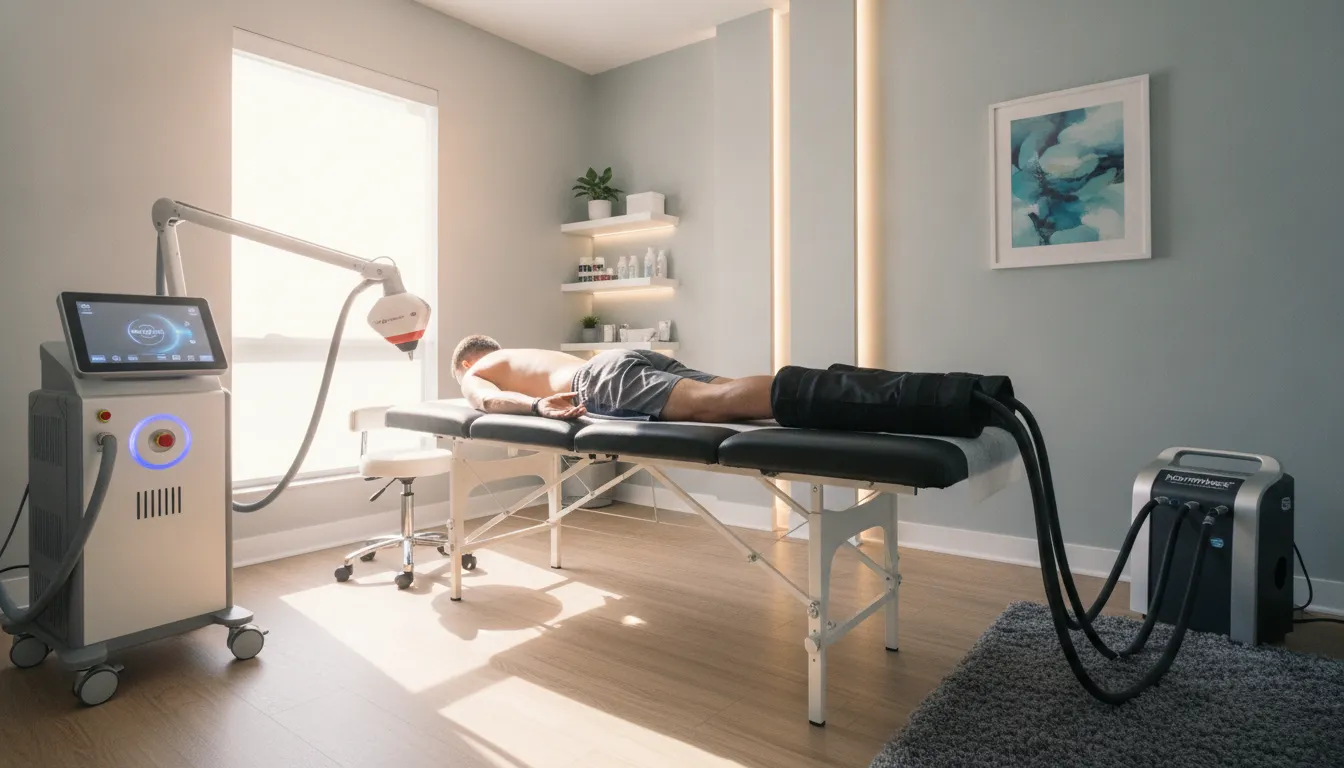
Combining Laser and Compression Therapy for Effective Recovery
Combining laser and compression therapy offers a dual way to heal by helping your body at both the cellular and physical levels. Laser therapy uses safe beams of light to boost the power centers in your cells, which helps create more energy and reduce inner pain. At the same time, dynamic air compression uses rhythmic pressure to act like a natural pump. This helps your muscles move out waste and reduce local swelling. A study on clinicaltrials.gov recently looked at how light therapy compares to compression and massage. Many find that using both together builds a better path for healing. This drug-free mix is a top choice for people in Murrells Inlet who want to manage pain or recover from exercise.
How Laser Therapy Accelerates Recovery at the Cellular Level
Laser therapy uses certain light energy to help your body heal. This process is called photobiomodulation. The light travels through the skin to reach the tissue below. At Laser Lab Therapy, we use a Class IV laser for these treatments. This type of care is a natural way to handle pain without drugs or surgery. It works by giving your cells the energy they need to fix themselves.
How Mitochondria Drive Cellular Repair
The main way laser therapy works is by hitting the mitochondria in your cells. These act like small power plants for your body. When the light hits them, it helps create more ATP. This is the energy source cells use to repair damage. By increasing this energy, the laser supports an effective recovery from within. Many people find that laser therapy for muscle recovery is a key part of their wellness plan.
When the light energy enters the cell, it starts a chain of events. This helps lower the levels of proteins that cause swelling. By reducing this inflammation, the laser helps the body move through the repair process. This cellular work happens quickly during your visit. Most people do not feel any pain during the treatment. Instead, you may feel a warm, soothing feeling as the laser moves over your skin.
Reaching Deep Tissue with Many Wavelengths
The Summus P4 laser uses four different light wavelengths. Each one does a special job to help your body. The light can reach up to 10 centimeters deep into your tissue. This reach allows it to treat areas that other methods might miss. When you are combining laser and compression therapy, you treat recovery from two different angles at once.
The four wavelengths used in our sessions include:
- 650nm for surface-level healing and skin health
- 810nm to increase ATP production in the cells
- 915nm to help carry more oxygen to the muscles
- 980nm to help improve local blood flow and handle pain
The 10-centimeter reach of the Summus P4 is vital for reaching deep muscles and joints. This is much deeper than standard red light beds can go. By targeting deep tissues, the laser can help with chronic issues in the back, hips, or knees. This deep reach ensures that the light energy gets to the source of the pain. It is why many athletes in Murrells Inlet choose this tool to help their recovery.
FDA-Cleared Relief and Session Details
This tool is FDA-cleared for several specific uses. It provides temporary relief for minor muscle and joint aches. It also helps with arthritis, muscle spasms, and stiffness. We use it to help pain management by boosting local blood flow to the area being treated. Each laser session is quick and usually takes only 5 to 10 minutes. Research found on clinicaltrials.gov shows how light therapy can support recovery for active people.
This quick care fits easily into a busy day. You do not need to set aside hours for your visit. Most people can stop by our clinic in Murrells Inlet during a lunch break or after a workout. Because there is no downtime, you can go back to your day right after your session. This makes the laser an ideal tool for those who want to stay active without long breaks for recovery.
How Normatec Compression Therapy Supports Muscle Recovery
Normatec compression therapy offers an outward way to help your body heal from stress. While laser therapy works deep inside your cells, compression works on the outside to move fluid and blood. This process is a key part of our performance recovery services in Murrells Inlet. It helps people feel better after a hard workout or a long day on their feet. Many patients enjoy how this treatment feels while it works on their limbs.
How dynamic compression works
Normatec uses a special pulsing system that sets it apart from simple sleeves. This system mimics the natural pump of your muscles to push fluid away from your hands or feet. It moves in a sequence that starts at the bottom and works its way up. This outward movement helps reduce swelling and stiffness in the joints. By clearing out extra fluid, it makes space for better blood flow in the area.
This pulsing action is not just for comfort. It helps the body move lymph fluid that can get stuck after an injury or a long run. When you use this tool, you are helping your veins do their job. It is a safe and good way to manage the aches that come from an active life. Many people in the Grand Strand area use this to stay moving.
Flushing waste from your muscles
When you work out, your body makes metabolic waste like lactate. If this waste stays in your muscles, it can make you feel sore or tired for days. Normatec helps flush this waste out of your system by using air pressure. Experts often study how this method compares to other tools like massage or ice baths.
For example, a study on clinicaltrials.gov looked at how athletes heal using different paths. Moving waste out of your limbs allows fresh, oxygen-rich blood to flow back into the tissue. This new blood brings the fuel your body needs to fix small tears in the muscle. This is a big reason why pro athletes use these tools every day.
What to expect during your session
A normal session at Laser Lab Therapy lasts between 15 and 30 minutes. You can sit back and relax in a chair while the boots or sleeves do the work. It is a form of passive recovery that requires no effort from you. You just need to wear loose clothes and let the air pressure do the rest. This makes it an easy thing to add to your day.
For more detail on how this helps, see our Normatec compression therapy guide. This treatment is a great choice when combining laser and compression therapy for better recovery. While the laser works on a specific spot, the compression helps your whole limb feel light and fresh. It is a smart way to help your body heal from the inside and out.
Why Combine Laser and Compression Therapy Together
Combining laser and compression therapy is a smart move for people who want to feel better. These two tools use different paths to help your body heal. Laser therapy works deep inside your cells, but compression therapy works on the outside of your muscles. Using both gives you a full plan that covers the needs of your cells and your blood flow.
How they work together
When you use these tools together, you help two parts of the healing path. Laser therapy uses light to help your cells fix themselves. It targets the parts of the cell that make energy. At the same time, Normatec compression therapy uses air to move fluid through your arms or legs. This push helps flush out waste and lowers swelling.
There is no known clash between these two ways to heal. Laser therapy is a light-based change, and compression is a physical one. Since they work in such different ways, they do not stop each other from working. Instead, they give you a better mix for performance recovery services. Many people choose to use both in one visit to get the best results.
Two goals for one recovery
Laser therapy is good at lowering pain and swelling at the source. It helps cut down on the markers that tell your body to stay sore. Research from the National Institutes of Health shows that light-based care can help tissues heal. While the laser handles the deep parts of the muscle, compression therapy works on the fluid and blood flow.
Right now, no big study has tested these two tools against each other in a side-by-side trial. Still, many clinics use them together because they help you from two different sides. This paired plan is a top choice for athletes and people with long-term pain who want a steady way to heal. You can find more tips on how to use these tools in our laser therapy athlete guide.
Laser vs. Compression Therapy: A Side-by-Side Comparison
Laser therapy and compression recovery offer different paths to wellness. One uses light to help cells, while the other uses pressure to move fluid. Many patients find that combining laser and compression therapy gives the best results. Each tool plays a clear role in your care plan.
How the methods work
Class IV laser therapy is a light-based tool. It sends light deep into your body to reach the mitochondria. This process helps your cells make more ATP, which is the fuel for repair. In contrast, compression is a physical tool. It uses air pressure to mimic how your muscles pump blood and lymph. You can read more in our Normatec compression therapy guide.
Session time and goals
Laser sessions are short and fast. Most last just 5 to 10 minutes because the light energy is so strong. Compression sessions take 15 to 30 minutes. The goal of laser is to reduce inflammation and help cells heal. Compression aims to flush waste and reduce swelling. This study on laser therapy shows how it supports recovery at a cellular level.
| Feature | Laser Therapy | Compression Therapy |
|---|---|---|
| Main Action | Light-based | Physical Pressure |
| Session Time | 5 to 10 minutes | 15 to 30 minutes |
| Primary Goal | Repair cell damage | Flush metabolic waste |
| Best For | Pain and inflammation | Soreness and swelling |
| Physical Feel | Soothing warmth | Gentle pulsing squeeze |
| Evidence | High (FDA cleared) | High (Clinical use) |
Choosing the right mix
Many patients use both tools to get back to their best. If you have sharp pain, laser may be the first choice. If you feel heavy or sore after a long run, compression can help. Our laser therapy athlete guide has more tips on timing. Dr. Hinshelwood and our team can help you pick the right plan for your needs.
What a Combined Recovery Session Looks Like at Laser Lab
Combining laser and compression therapy is a simple way to help your body feel better. You do not need to spend all day at a clinic to see results. At Laser Lab Therapy, we use a clear process to get you back to your life fast. Most people find that these two tools work well when you use them in one visit. This dual approach helps you move better and stay active without surgery or drugs.
Your first steps at the clinic
When you arrive, you will meet with our team. We talk about your pain or your fitness goals. This short chat helps us pick the best settings for the laser and the air sleeves. We look at where you hurt and how long you have felt that way. This helps make sure the care you get is right for your body. You will not have to wait long before the session starts.
The goal is to give you a smooth and easy visit. You will sit or lie down in a quiet space. Our staff will show you each part of the work before they start. Many patients find the room calm and helpful for their healing. Once we have a plan, we move right into the first part of your care.
The recovery session in order
Each visit follows a set path. This helps you get the most out of every minute you spend with us. Here is how we use both tools in a single session:
- The laser session. We start with the Class IV laser treatment. The staff moves the laser head over your skin in the area where you have pain. This part only takes 5 to 10 minutes. Most people feel a mild, warm feeling during this step.
- Switching to compression. After the laser work is done, you will move to the compression area. You will put on the Normatec sleeves for your legs, arms, or hips. These sleeves use air to pulse around your limbs in a set pattern.
- The air pulse session. You will relax while the air cuffs do their work. A typical session for compression lasts 15 to 30 minutes. The pulsing feels like a firm massage that moves up your limb.
- Checking out. Once the sleeves go flat, you are done. There is no downtime after your visit. You can walk out and go back to your day or even a gym session.
Creating a plan for lasting relief
One visit can help you feel better, but lasting change takes time. Most people see the best results when they follow a full plan. A typical recovery path lasts from two to six weeks. During this time, we often suggest that you come in two or three times each week. This helps your body stay on track as it repairs itself.
A clinical study looked at how light care and air pulsing work for recovery. This study helped show how these tools can support your health. We use this data to build plans that work for you. Many people choose to join one of our membership plans to make care low cost. This makes it easy to stick to your plan and get the relief you need.
Who Benefits Most from Combining Laser and Compression Therapy
Combining laser and compression therapy helps many people reach their health goals in different ways. At Laser Lab Therapy, we serve neighbors across the Grand Strand, from Myrtle Beach to Pawleys Island. Our patients report a 98% satisfaction rate because we use tools that work well together. By using light energy and physical pressure at the same time, we create a better path for your body to heal. Every plan we build has oversight from a medical doctor to keep you safe and on track.
Athletes and active adults
Athletes often deal with sore muscles and tight joints after a long day of play. Folks in Conway and Surfside Beach use our recovery tools to stay active. Combining laser and compression therapy is a great way to reduce the time you spend on the sidelines. The laser reaches deep into the tissue to help at a cellular level. Then, the compression system helps flush out the waste that builds up during a hard workout. This two-part approach helps you get back to the gym or the golf course with less pain.
Active adults also find that these sessions help them keep their movement. As we age, our bodies can take longer to bounce back from physical tasks. Regular sessions can help you feel fresh and ready for your next hobby. Many of our members use these services as part of a weekly wellness routine. This proactive care helps stop small aches from turning into bigger problems later on. You do not have to be a pro athlete to enjoy the benefits of elite recovery tools.
Chronic pain and post-surgical patients
People living with long-term pain often find relief through our pain management services. We use Class IV laser technology that has FDA clearance for the temporary relief of minor muscle and joint aches. This care also helps with arthritis, muscle spasms, and stiffness. While the laser works on pain, compression helps manage the physical stress on your limbs. It is a powerful way to help with discomfort from two different angles at once.
Patients recovering from surgery also see great value in this pair of therapies. After a procedure, swelling can slow down your progress and cause extra pain. The Normatec system reduces swelling by mechanically moving excess fluid from the limbs. Research hosted by the National Institutes of Health shows that dynamic compression helps boost blood flow and lowers muscle soreness. By keeping fluid moving and helping cells heal, you may find that your path to wellness feels much smoother.
Regular care and medical oversight
To get the most out of these tools, you need a plan that fits your life. A typical laser treatment plan at our clinic lasts for 2 to 6 weeks. Most people visit us for 2 to 3 sessions per week to see the best change. Our medical director, Dr. Heather Hinshelwood, oversees these plans to ensure they meet high standards. This level of expert care is why so many people in Murrells Inlet trust us with their health.
We know that every person has a unique set of needs. That is why we do not use a one-size-fits-all approach for our recovery services. Your plan will be built to match your specific goals and physical state. Whether you want to finish a race or just walk the beach without pain, we are here to help. Our team works hard to make sure you feel better and move better after every visit.
Frequently Asked Questions
Can you combine laser therapy and compression therapy in the same visit?
Yes, combining laser and compression therapy in one visit is a common recovery practice. These two methods use different ways to help the body. Laser therapy works at the cellular level through light-based effects to support repair. Dynamic air compression works on fluid to reduce swelling and improve blood flow. Because they use different paths, they do not conflict. You can learn more about how they work together in our Normatec compression therapy guide.
Which goes first: laser therapy or compression therapy?
While experts often recommend getting laser therapy first, there is no strict rule. This order allows the laser to support cellular activity before the compression boots help move fluid and flush out waste. Although no studies have tested the exact order of these tools, many clinics follow this plan. According to Lumaflex research, both methods work well together. You can use them back-to-back without losing the benefits of either treatment during your recovery session.
How long does a combined laser and compression session take?
A combined treatment session typically takes between 25 and 45 minutes at Laser Lab Therapy. A Class IV laser therapy session is fast, usually taking only 5 to 10 minutes to complete. A session in the dynamic compression boots typically lasts between 15 and 30 minutes, depending on your goals. This short time frame makes it easy for busy adults to get care. You still receive the full benefits of both recovery tools in one visit.
Is there scientific evidence supporting combining laser and compression therapy?
Both methods have strong individual research, but few studies have tested the combination directly. According to clinicaltrials.gov, a study recently compared these tools with other recovery modes like massage for athletes. While no published trial has tested the two side-by-side against a single therapy, they work through different paths. Laser therapy targets the mitochondria for cellular energy, while compression targets fluid movement. Many clinics use them together because their different ways support a full recovery environment.
Ready to set up your custom care plan today?
Waiting to treat muscle pain can lead to long weeks of stiffness and slow your return to the sports you love. Every day without care is a day your body works twice as hard to clear waste and fix tissue. Starting now gives your cells the energy they need to help your body flush out fluid that causes swelling. This simple step helps you stay ahead of the pain so you can get back to golf or tennis much sooner. Taking no action now may mean you face more aches that keep you on the sidelines for months to come. You can choose a path that supports your health and helps you move without the fear of your pain coming back. Our team is here to help you find a plan that fits your goals and gets you back to your active life.
Ready to request your care? Request an appointment to get your health plan started.
Frequently Asked Questions
Is light therapy safe for athletes?

Yes, light therapy is completely safe and highly beneficial for athletes. It promotes faster muscle recovery, reduces inflammation, and supports performance without the risks of medication or downtime. That’s why professional and amateur athletes worldwide rely on it to train smarter and recover quicker.
How many sessions will I need?
The number of sessions varies depending on the type and severity of your condition. Many patients notice improvement after 3–5 sessions, while chronic conditions may require ongoing care for best results. During your initial consultation, we’ll design a personalized treatment schedule tailored to your body’s response and recovery goals.

Ready to Try Light Therapy for Recovery?