

Post-Surgical Recovery Murrells Inlet: Questions to Ask
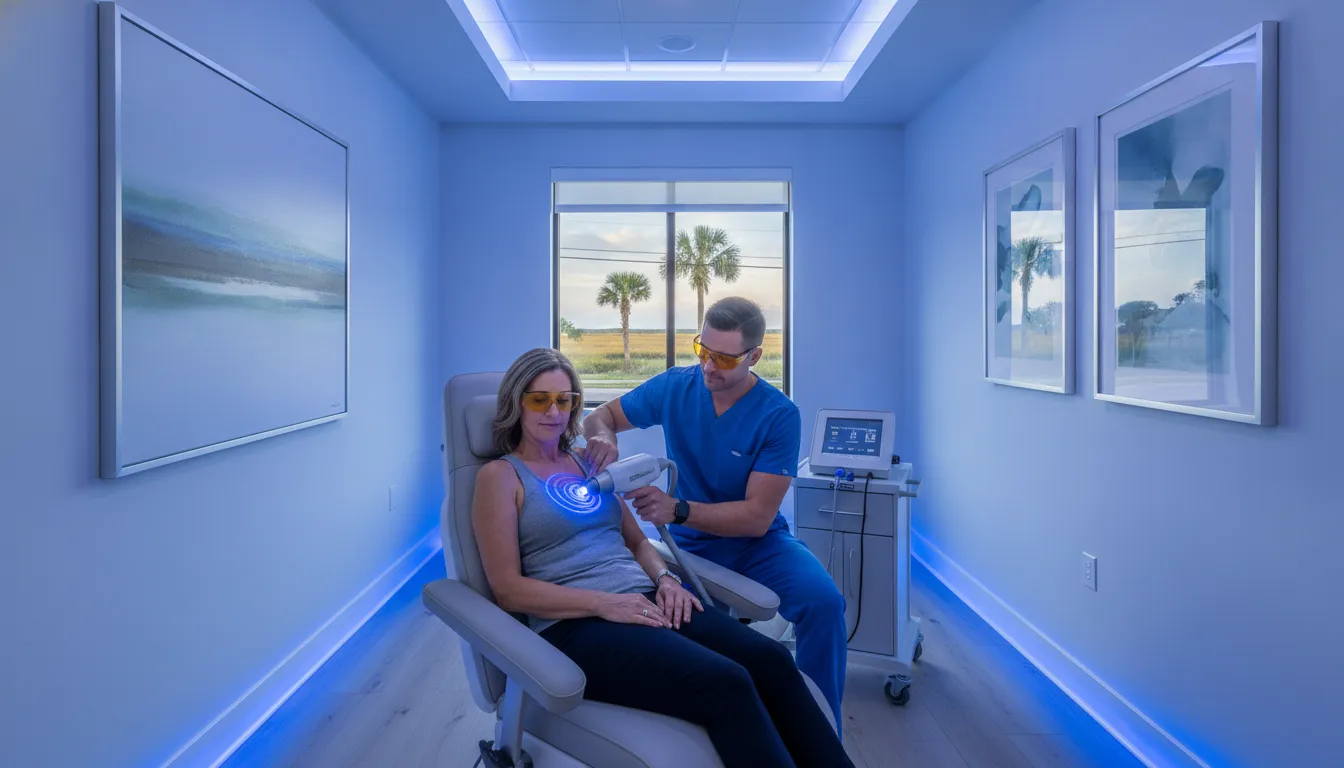
Effective post-surgical recovery murrells inlet requires a layered approach that helps both movement and cellular health. While physical therapy focuses on strength, Class IV laser therapy provides non-invasive support by using light to reach deep tissue. According to Medical Director Dr. Heather Hinshelwood, MD, this process helps manage the swelling that follows a surgical procedure. The FDA-cleared technology delivers energy deep into the body to help blood flow and provide relief for minor aches. By adding these short 10-minute sessions to a recovery plan, patients can manage the stress of surgery without using more drugs. You must always talk to your surgeon before you start any new care to make sure the timing is right for your surgery.
Post-surgical Recovery Murrells Inlet: Why Post-Surgical Patients in Murrells Inlet Ask About Light-Based Care
Many people in Murrells Inlet look for supportive ways to handle recovery after a procedure. While standard physical therapy is common, some local residents now ask for more focused options. Laser Lab Therapy is the only clinic in the Grand Strand area that focuses solely on Class IV laser therapy. This makes it a unique stop for people who live in Myrtle Beach, Pawleys Island, or Surfside Beach. For those dealing with post-surgical recovery in Murrells Inlet, this technology offers a drug-free way to address discomfort.
Focused Care for Local Residents
Our clinic at 11871 Plaza Drive serves a 25-mile area including Conway and the Grand Strand. We see a wide range of patients, but those recovering from surgery make up about 10 to 15 percent of our patient base. Most of these people want a natural way to support their body as it heals. They often turn to our preventative wellness programs because they want to stay active without using heavy drugs. Our team helps them find the right path under medical oversight from Dr. Heather Hinshelwood, MD.
High Satisfaction with Light-Based Support
Patients often choose this care because it is non-invasive and takes very little time. Each session lasts just 5 to 10 minutes, which fits easily into a busy day. This approach has led to a 98% satisfaction rate among the people we serve. The FDA has cleared this Class IV technology for the temporary relief of minor muscle and joint aches. This status helps people feel sure about the safety and standards of the tools we use in our office. It is one reason why so many people in the local area now ask about light-based options during their recovery journey.
How Photobiomodulation Supports the Healing Process
Understanding the science behind light-based care helps you see how it fits into your plan for post-surgical recovery in Murrells Inlet. This process, known as photobiomodulation (PBM), uses light to help the body at a cellular level. It is a drug-free way to find relief without more surgery or downtime.
Stimulating cellular energy
The main way PBM works is by acting on the mitochondria in your cells. These tiny parts are like the power plants of your body. When the laser light hits these cells, it helps them produce more energy, or ATP. This extra energy gives your cells the fuel they need to handle the stress of healing.
By boosting this energy, PBM helps your body manage the natural tasks that follow a surgical event. You can read more in our complete guide to Class IV laser therapy to see how this process works for pain. This cellular support is a key part of our results-driven care.
Managing inflammation and flow
After surgery, the area often has high levels of swelling. PBM helps by reducing certain chemicals that cause this. It also helps with vasodilation, which means it lets blood vessels open up. This allows more blood to reach the site of your care.
Better blood flow brings fresh nutrients to the tissue. It also helps move waste products out of the area. This support for local blood flow is one reason why clinical studies show that PBM is an effective tool for tissue health. Our team uses these methods to help you find relief.
Deep tissue penetration
At LaserLab Murrells Inlet, we use the Summus P4 Class IV laser. This tool is strong enough to reach up to 10cm into your tissue. It uses four distinct wavelengths (650nm, 810nm, 915nm, and 980nm) to target different depths. This range allows us to help with both surface issues and deep joint aches.
This tech has been in use across the globe since the 1950s. It uses over 1,300 protocols to match your specific needs. While the technology is complex, the sessions are simple. Each visit only takes 5 to 10 minutes and does not require you to take time off from your normal daily tasks.
Critical Questions About Timing and Surgeon Approval
Before you start any care for post-surgical recovery in Murrells Inlet, you must talk to your surgeon. While light-based care is a non-invasive tool, it must work within your main recovery plan. Your surgeon knows your specific case best and must give the green light before your first session.
Safety first for post-op care
We work with your surgical team to make sure our care fits your needs. Most people start care between two and six weeks after their procedure, but this window depends on how your body heals. Getting a clear "yes" from your surgeon is a vital first step to ensure your safety.
- When can I start light-based care? Most plans start once the initial acute phase of healing ends. While laser therapy is safe for most, your surgeon will set the exact date based on your surgery type and health.
- Is my incision ready for treatment? The skin must be closed and free from active infection before we apply light to the area. A quick check of your healing status ensures the laser can work without any risk to your stitches or staples.
- How does this fit with my physical therapy? Light-based care often works well alongside other rehab. Since our sessions only take five to ten minutes, you can often do them on the same day as your PT.
- Are my medications a concern? Some drugs can make your skin more sensitive to light. Tell your surgeon and our team about all your meds so we can adjust our protocols for your comfort.
- Will my metal implants be an issue? Many post-surgical patients have screws, plates, or joint replacements. Research from the National Institutes of Health shows that laser energy passes safely through these metal parts without heating them.
Setting your recovery plan
Once you have approval, we set a clear path for your care. Most people visit our clinic two to three times a week for a few weeks to see the best results. These quick sessions help manage local discomfort and support your body's natural healing process as you get back to your daily life.
Each plan is unique to the patient and their goals. We look at the type of surgery you had and how your body is reacting to recovery. This data helps us pick from over 1,300 protocols to find the one that fits your needs. You can learn more in our guide to Class IV laser therapy to see how the tech works.
Safety Considerations and Contraindications You Should Discuss
Before you start any care for your post-surgical recovery in Murrells Inlet, you must talk to your surgeon. Getting their approval is a key step. Our team works with your doctors to make sure your care is safe. While light-based care is non-invasive, we check for specific health factors first.
When to avoid light-based care
Some health issues make light therapy a poor choice for now. We call these contraindications. You should not use this care if you have an active infection or cancer in the area. It is also not for people with uncontrolled bleeding or those who are pregnant over the treatment spot. These rules keep you safe while your body heals after surgery.
The FDA has cleared this tech for specific uses. It is used for the temporary relief of minor muscle and joint aches. It can also help with arthritis, muscle spasms, and stiffness. By increasing local blood flow, it helps with muscle relaxation. You can learn more in what to know about laser therapy safety before your first visit.
Metal implants and safety
Many people have metal pins, plates, or joint replacements after surgery. You might worry that laser energy will heat the metal. But Class IV laser energy passes through metal without making it hot. This makes it safe to use near most implants. It is a helpful tool for those recovering from knee or hip replacements who need drug-free relief.
Our medical director, Dr. Heather Hinshelwood, MD, oversees our safety rules. She is a board-certified doctor who makes sure every plan fits your health needs. We aim to give you the best path to feel better. Our team is here to answer any questions about how this care fits your plan. You can find more details in our complete guide to Class IV laser therapy to see how it works.
Light-Based Care vs. Physical Therapy: How They Work Together
Most people in Murrells Inlet look for physical therapy after a surgery. Local offices like PAR Physical Therapy and Low Country Physical Therapy provide care for mobility and strength. These programs use exercise to help you move better as you heal. But light-based care works in a different way to support your body. It targets your cells to help manage pain and blood flow during your recovery.
How the methods differ
Physical therapy focus is on movement and muscle strength. You may spend 45 to 60 minutes in each visit. Most people use insurance to pay for these sessions. In contrast, laser therapy sessions are quick. They last just 5 to 10 minutes. Our clinic uses a membership model instead of insurance. This allows for focused care without the wait times or long visits found in a typical rehab gym.
Our Class IV laser works at the cellular level. It uses specific light wavelengths to help the body. The NIH reports that this type of therapy can trigger a response in the mitochondria. This process helps your body manage local swelling. It also aids in the temporary relief of minor muscle and joint aches. While PT builds strength, laser care provides the comfort needed to keep you moving through those exercises.
Using both for better care
You do not have to choose one or the other. Many patients find that using both methods lead to good results. You can use light-based care to lower pain levels before or after your PT work. This makes it easier to finish your physical therapy tasks. We also suggest Normatec compression therapy for post-surgical recovery to help with leg blood flow and comfort.
Always talk to your surgeon before starting any new care after a procedure. Once you have their okay, our team can set up a plan that fits your needs. Our medical director, Dr. Heather Hinshelwood, ensures that every session meets high standards. We work to provide a safe and professional space for your recovery in the Grand Strand area.
| Feature | Physical Therapy | Light-Based Care |
|---|---|---|
| Primary Focus | Exercise and mobility | Cellular pain relief |
| Session Time | 45-60 minutes | 5-10 minutes |
| Payment Model | Insurance-based | Membership plans |
| Key Mechanism | Strength training | Light wavelengths |
| Local Options | Many local offices | Laser Lab Therapy only |
What to Ask About Treatment Plans and Membership Options
Your tailored healing plan
Post-surgical recovery in Murrells Inlet often needs a set path to follow. We build each care plan around your exact surgery type and health status. Most plans last for two to six weeks. During this time, you will visit our clinic two or three times each week. Every session is short and takes about five to ten minutes. This pace helps your body get the support it needs while you heal. We find that this rhythm works well for most people who have just left the hospital. Our team looks closely at where you are in your healing journey. We use this data to set up the best care path for your body. As shown by FDA rules, light tools give short relief for joint aches and muscle spasms. We follow these rules to keep you safe and happy. You should always ask your surgeon if this type of care is right for your stage of healing.Medical oversight and care tools
We use the Summus P4 Class IV laser for all of our care. This tool has four wavelengths and over 1,300 set paths. These paths help us target your exact needs after a large surgery. Our Medical Director, Dr. Heather Hinshelwood, MD, leads all care paths at the clinic. She is a board-certified doctor who makes sure your plan meets high medical standards. Her watch ensures that your care is both safe and good. Patients often report a high level of success with these care steps. Data shows that 98% of patients are happy with their care at our clinic. This high mark comes from our focus on safe care that does not use drugs. We work to provide a path that fits into your busy life without any downtime. You can get back to your day right after your visit ends.Membership tiers for steady care
Healing does not always end with one set of visits. Many people choose to keep using light care to stay well and feel their best. You can view our membership plans to see how to keep your results for the long term. We offer three levels to fit different needs and health goals. The Silver plan gives you eight visits each month. The Gold plan is our most popular choice and gives you twelve visits per month. For those who want the most care, the Platinum plan offers twenty visits. You can even share the Platinum plan with your family members. We do not list our prices on the web. You will get a full price list during your first meeting so we can match the plan to your exact needs.Frequently Asked Questions
Can I use light-based care after my surgery in Murrells Inlet?
You can use light-based care as a helpful choice after surgery. You must first get the go-ahead from your surgeon. When you start depends on how your wound heals and your health. Our team at Laser Lab Therapy helps you find the right date. We follow the plan your doctor sets for you.
What does FDA clearance mean for this care?
FDA clearance means the tool is safe to use for set needs. For our laser, this covers the short-term relief of minor muscle and joint aches. It also covers muscle spasms, stiffness, and better local blood flow. It does not mean the laser is a cure for any health state. We use these care tools to help manage your comfort as you heal from surgery.
Is laser therapy safe if I have metal screws or plates?
Yes, light-based care is safe if you have metal parts in your body. The laser light passes through metal plates, screws, and new joints without making them hot. This means you can get care over the area once your skin heals. Please tell us about your past surgeries during your first visit. This helps us give you the best care for your needs.
Does light-based care replace my physical therapy sessions?
No, light-based care does not take the place of physical therapy. It is a helpful tool that works with your current plan. While the laser helps your tissue heal at a cell level, you still need your normal rehab. Those exercises help you get back your strength and range of motion after surgery.
Request an appointment to discuss your recovery options
Getting back on your feet after a big health event is a big step that needs time and a clear plan. If you skip treating minor muscle spasms or lasting joint stiffness, you may face delays in your life that you could avoid. Proven care for these issues helps you manage your health well from the start. Waiting too long to get help can lead to more pain that gets in the way of your favorite tasks. By starting a program as soon as your doctor says it is okay, you put your comfort first. This choice helps you keep your local blood flow healthy and stays true to your health goals. Do not let small aches keep you from the life you love in Murrells Inlet.
Ready to request an appointment to discuss how light-based care can support your healing? Request an appointment online to talk to a certified laser technician at our local clinic.
Frequently Asked Questions
Is light therapy safe for athletes?

Yes, light therapy is completely safe and highly beneficial for athletes. It promotes faster muscle recovery, reduces inflammation, and supports performance without the risks of medication or downtime. That’s why professional and amateur athletes worldwide rely on it to train smarter and recover quicker.
How many sessions will I need?
The number of sessions varies depending on the type and severity of your condition. Many patients notice improvement after 3–5 sessions, while chronic conditions may require ongoing care for best results. During your initial consultation, we’ll design a personalized treatment schedule tailored to your body’s response and recovery goals.

Ready to Try Light Therapy for Recovery?