


Your Guide to High Intensity Laser Therapy Contraindications
You are your own best health advocate. Seeking out natural, non-invasive treatments like High Intensity Laser Therapy shows you’re committed to finding solutions that work in harmony with your body. Part of being a proactive patient is doing your research to feel fully informed and confident in your care. While HILT offers incredible benefits for pain relief and recovery, its safe application depends on your individual health profile. To help you in your research, we’ve created this guide to explain the specific instances where this therapy is not recommended. Understanding the complete list of high intensity laser therapy contraindications is a critical piece of the puzzle, ensuring your path to wellness is both safe and successful.
Key Takeaways
- HILT works with your body to heal from within: This non-invasive therapy uses focused light to reach deep into your tissues, reducing inflammation and speeding up your body's natural repair process without drugs or surgery.
- Your safety is a team effort: For the best results, be completely open with your provider about your medical history, including any health conditions, past surgeries, and all medications or supplements you take.
- The process is safe and straightforward: Side effects are very uncommon, and most people only feel a gentle warmth during treatment. Your provider will guide you through simple safety steps, like wearing protective eyewear, to ensure a comfortable session.
What Is High Intensity Laser Therapy (HILT)?
If the name "High Intensity Laser Therapy" sounds a little intimidating, let me put your mind at ease. HILT is a special treatment that uses focused light energy to help your body heal itself from the inside out. It’s completely non-invasive, which means no cuts, needles, or surgery are involved. Think of it as a powerful, targeted tool that gives your body’s natural repair systems a major helping hand. The "high intensity" part simply means the light is strong enough to penetrate deep into your body’s tissues, reaching the muscles, nerves, and cartilage that other treatments can't.
This isn't a futuristic concept; it's a safe, proven, and drug-free way to find relief from pain and accelerate healing. At Laser Lab Therapy, we use this advanced technology to address the root cause of your discomfort, not just mask the symptoms. Our team of specialists is dedicated to creating a comfortable experience and a personalized plan that helps you feel and move better. We believe in partnering with you and your body to restore function, improve your quality of life, and get you back to doing what you love without relying on heavy medications. It’s a holistic approach centered on your long-term well-being.
How Does HILT Work?
So, how does a beam of light actually help you heal? It’s a fascinating process. The HILT device sends waves of light energy deep beneath the surface of your skin, sometimes reaching up to 10-12 centimeters. When this light energy reaches your damaged cells, it triggers a response that reduces pain, swelling, and inflammation. At the same time, it helps improve blood flow to the area. This increased circulation is crucial because it delivers more oxygen and nutrients to the injured tissue, which speeds up the natural healing of muscles, nerves, and cartilage. This is the core of our pain management philosophy: supporting your body’s ability to repair itself effectively.
What Can HILT Treat?
One of the best things about HILT is how versatile it is. Because it works at a cellular level to reduce inflammation and promote healing, it can be used for a wide range of conditions. We see it help people with chronic issues like arthritis, nagging lower back problems, sciatica, and tendonitis. It’s also incredibly effective for acute injuries, whether from a weekend warrior mishap or a more serious accident. This includes things like shoulder pain, hip bursitis, tennis elbow, plantar fasciitis, and sprains. HILT is an excellent tool for anyone looking to speed up performance recovery and get back in the game faster, without relying on medication.
When Is HILT Not Recommended?
High Intensity Laser Therapy is a fantastic option for natural pain management and healing, but it isn’t the right fit for everyone. Your safety is our top priority, so we’re always transparent about situations where HILT should be avoided. These are known as contraindications, which are specific conditions where the treatment could pose a risk. Being open with your provider about your health history is key to a safe and successful treatment plan.
If You're Pregnant
We always err on the side of caution with pregnancy. Since the effects of high-intensity laser on a developing baby aren't fully known, we do not perform this therapy on expectant mothers. This is a simple precaution to protect the health of both you and your child. We can explore other supportive care options with you or welcome you for treatment after your baby arrives.
If You Have Active Cancer
HILT works by stimulating cellular activity to promote healing. While great for repairing tissue, this is not recommended for areas with active cancer. The laser energy could potentially encourage the growth of cancerous cells. For this reason, we avoid applying HILT directly over or near any known malignant tumors to ensure your treatment supports your overall health without interference.
If You Have Electronic Implants
If you have an electronic implant like a pacemaker, defibrillator, or neurostimulator, HILT is not recommended. The powerful light energy from the laser could potentially interfere with the electronic functioning of these life-sustaining devices. Your safety is paramount, so we avoid any treatment that could disrupt your medical implant. We can discuss other therapies that won't compromise your device.
If You Have Bleeding Disorders
HILT improves circulation to speed up healing, but this can be a concern for some. For individuals with bleeding disorders or those taking blood-thinning medications, this increased circulation could pose a risk by making it harder for blood to clot. We always review your medications and conditions to prevent any complications and ensure your preventative wellness plan is safe.
If You Have Epilepsy
For some individuals with epilepsy, bright or flashing lights can trigger seizures. Since HILT uses a concentrated beam of light, we avoid this treatment for anyone with a history of epilepsy as a necessary precaution. Your comfort and well-being are our main concerns, and we are committed to providing a safe environment for every person who walks through our doors.
When to Use HILT with Caution
While High Intensity Laser Therapy is a safe and effective option for many people seeking pain management, some health conditions require a little extra attention. This doesn’t necessarily mean HILT is off the table for you. It just means we need to have an open conversation and work together to ensure your treatment plan is perfectly suited to your body’s needs. Your safety and well-being are our top priorities, and a thorough review of your medical history allows us to provide the best possible care. Being transparent about your health helps us tailor the therapy to support your goals without causing any unwanted issues.
Diabetes
If you have diabetes, it’s important to let your provider know. Because HILT can influence circulation and metabolic processes, it could potentially place extra stress on certain organs. We want to ensure your treatment complements your overall health management plan, not complicates it. By understanding your condition, we can adjust the therapy parameters to make sure your sessions are both safe and effective. A collaborative approach ensures we’re supporting your body in the best way possible.
Autoimmune Disorders
HILT works by encouraging your body’s natural healing mechanisms, which includes stimulating the immune system. If you have an autoimmune disorder, this stimulation needs to be handled with care. We want to avoid triggering an unwanted immune response or flare-up. A detailed discussion about your specific condition allows us to determine if HILT is the right fit and how to proceed cautiously. Our goal is always to reduce inflammation and pain, not add to it.
Active Infections or Open Wounds
We will never apply the laser directly over an area with an active infection or an open wound. Introducing high-intensity light to these spots could interfere with the body's natural healing process or even risk spreading the infection. Your safety comes first, so we will always work around these areas or wait until they have properly healed before beginning treatment on that specific spot. We can still treat other parts of your body to help you find relief.
Photosensitizing Medications
Certain medications can make your skin much more sensitive to light, a condition known as photosensitivity. These can include some antibiotics, acne treatments, heart medications, and even herbal supplements like St. John's Wort. It is crucial to provide us with a complete list of all medications and supplements you are taking. This helps us prevent any adverse skin reactions, such as burns or blistering, and ensures your HILT session is a comfortable and positive experience.
Thyroid Conditions
If you have a known thyroid condition, you can still benefit from HILT for issues in other parts of your body. However, standard safety protocols require that the laser is never applied directly over the thyroid gland, which is located in the front of your neck. We are trained to be precise with our application and will carefully avoid this sensitive area during your treatment to ensure your thyroid function is not affected.
Recent Surgery or Metal Implants
Let us know if you've recently had surgery or have any implants. While HILT is generally safe to use over metal implants like pins, screws, or joint replacements, we must avoid treating over electronic implants. Devices like pacemakers, cochlear implants, or neurostimulators could be affected by the laser's energy. We will customize your treatment to work around these devices and any recent surgical sites to support your healing journey safely.
Heart or Neurological Conditions
For individuals with significant heart or neurological conditions, it’s always a good idea to have a conversation with your specialist before starting a new therapy like HILT. We want to be a supportive part of your complete wellness team, and that means ensuring our treatments are a good fit for your overall health. We are happy to coordinate with your doctor to make sure everyone is on the same page and you feel confident moving forward.
How Medications Can Impact Your HILT Session
High Intensity Laser Therapy is a gentle and non-invasive treatment, but its effectiveness and safety are closely tied to your unique health profile. Because the therapy uses concentrated light to stimulate healing deep within your tissues, it can sometimes interact with medications you might be taking. This isn't a reason to worry; it's simply a reason for a good conversation. Think of it this way: your body is a unique ecosystem, and everything you put into it, from prescriptions to supplements, can influence how it responds. When we introduce the powerful, healing energy of light therapy, we want to make sure it works in harmony with everything else.
This is a standard part of ensuring your treatment is personalized. Some medications can make your skin more sensitive, while others might affect circulation. By understanding what you're taking, we can adjust the laser's intensity or duration to prevent any unwanted reactions and maximize the therapeutic benefits. Our goal is to support your body's natural healing processes safely. Being open about your medications and supplements ensures your provider can tailor the treatment perfectly for you, making sure every session is both safe and effective. It’s all about creating a partnership for your health and ensuring you get the best possible results from your care.
Common Medications to Discuss
Certain medications can change how your body responds to light therapy. For example, some antibiotics, diuretics, and even certain heart medications can make your skin more sensitive to light. This is called photosensitivity, and it could increase the risk of skin irritation during a session. It's something we can easily manage by adjusting your treatment, but we need to know about it first. Similarly, if you take blood thinners, it's important to mention them. HILT naturally improves circulation, and we want to ensure your pain management plan is completely safe without any risk of increased bleeding.
Tell Your Provider Everything
To get the best results, we need the full picture of your health. This means being completely open about everything you take, not just prescription drugs. Please let us know about any over-the-counter medications, vitamins, or herbal supplements you use. Things you might not think are important can sometimes play a role in how your body responds to treatment. Your transparency allows us to assess any potential risks and customize your therapy sessions. Think of it as teamwork: the more information you share with us, the better we can support your journey toward preventative wellness and feeling your best.
Are There Side Effects with High Intensity Laser Therapy?
One of the best things about High Intensity Laser Therapy (HILT) is its excellent safety profile. Because the treatment is non-invasive and works with your body’s natural healing abilities, side effects are minimal and uncommon. Most people find the experience to be comfortable and relaxing. When administered by a trained professional who conducts a thorough screening, the risk of adverse reactions is extremely low.
The goal of HILT is to help you feel better, not worse. Any sensations you feel during or after a session are typically mild and temporary. Understanding what to expect can give you peace of mind as you begin your journey toward pain management and recovery. Below, we’ll walk through the common reactions, the rare exceptions, and when you should reach out to your provider.
Common, Temporary Reactions
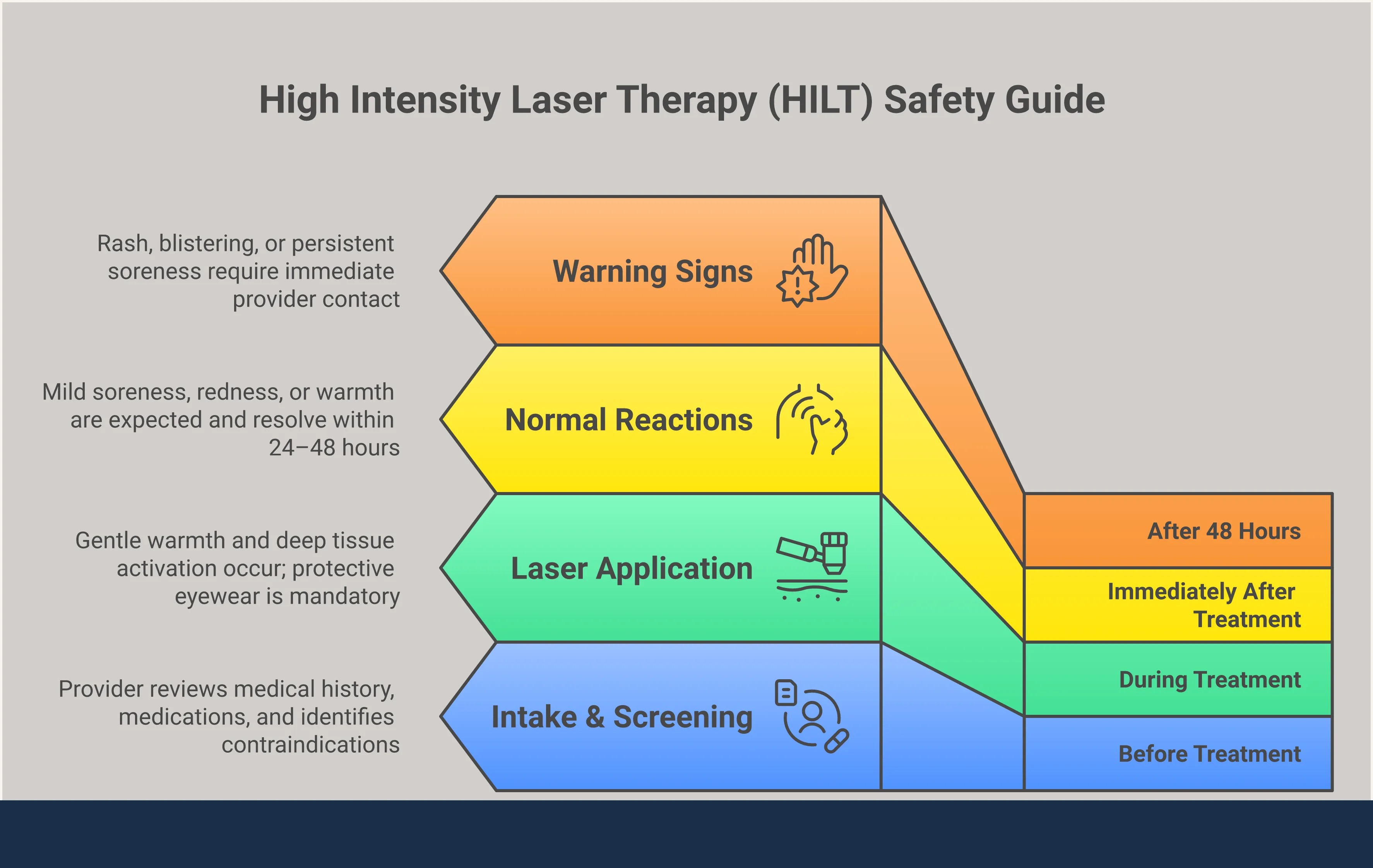
Most people describe feeling a gentle, soothing warmth in the treatment area during a HILT session. This is a completely normal and expected sensation as the laser energy interacts with your cells to stimulate circulation and reduce inflammation. Following your appointment, you might experience some mild soreness or tenderness. Think of it as similar to the feeling after a good stretch or a light workout. This is a positive sign that the therapy has activated your body’s healing process. These temporary reactions usually fade within 24 to 48 hours, leaving you feeling better than before.
Rare but Serious Side Effects
Serious side effects from HILT are very rare. They typically only occur when safety protocols are ignored or when a patient has a contraindication that wasn't shared with their provider. This is why a comprehensive health history and proper screening are so important. At Laser Lab Therapy, your safety is our top priority. Our team is highly trained to identify any potential risks before your treatment begins. By choosing an experienced provider who is committed to your well-being, you can feel confident that you are in good hands. You can learn more about our commitment to safe and effective care.
When to Call Your Provider
Open communication is key to a successful treatment plan. While significant side effects are unlikely, you should always listen to your body. If you experience anything that feels unusual or concerning after your session, don't hesitate to get in touch. This could include skin irritation, a rash, or any soreness that lasts longer than a couple of days. We want to hear from you. Your feedback helps us ensure your treatment is perfectly tailored to your needs. When in doubt, a quick phone call can provide clarity and reassurance. You can always contact our team with any questions you have before or after your appointment.
Debunking Myths About HILT Safety
It's completely normal to have questions when you're considering a new type of therapy. When it comes to High Intensity Laser Therapy, a few common myths can cause unnecessary worry. Let's clear the air and separate fact from fiction so you can feel confident about your care. Your safety is always our first priority, and that starts with having all the right information.
Myth: A History of Cancer Rules Out HILT
This is a concern we hear often, and it’s an important one to address. While HILT is not used on or near active cancerous tumors, having a history of cancer does not automatically mean you can't receive treatment for other conditions. Many people with a past diagnosis find relief with HILT for issues like joint pain or muscle injuries. The most critical step is to have a conversation with your oncologist. They can help determine if laser therapy is appropriate for your specific individual health circumstances. We will always work with your medical team to ensure your treatment plan is safe and effective.
Myth: You Can't Get HILT if You Take Medication
Worried your medications might get in the way of treatment? For the most part, they won't. While certain photosensitizing medications require us to be cautious, taking medication does not mean you are ineligible for HILT. This is why a thorough review of your health history is a standard part of our process. By discussing all your medications with your provider, we can tailor the therapy to your needs, ensuring a safe experience. This open communication is key to effective pain management and helps us create a plan that works in harmony with your existing health regimen.
Myth: Laser Therapy is Dangerous
The word "laser" can sound intense, but the reality of HILT is much gentler than you might think. Side effects are quite rare, and when they do occur, they are typically mild and temporary. Most people just feel a soothing warmth in the treatment area. Some might experience slight soreness afterward, similar to how you might feel after a deep tissue massage, but this usually fades quickly. HILT is a non-invasive therapy designed to work with your body's natural healing processes, making it a safe tool for everything from injury recovery to preventative wellness.
Your Safety Checklist for HILT
Be Open About Your Medical History
Think of your provider as your partner in health. The best way to ensure your High Intensity Laser Therapy is both safe and effective is to be completely open about your health history. This isn't the time to be shy. We need to know about any chronic conditions, past surgeries, or health concerns you have. It’s also crucial to share a full list of medications you take, including over-the-counter drugs, vitamins, and supplements, as some can affect how your body responds to light therapy. This transparency allows us to tailor the treatment specifically for you, avoiding any potential complications and maximizing your results. Your safety is our top priority, and a complete picture of your health is the first step to a successful outcome.
Always Wear Protective Eyewear
This one is a simple, non-negotiable rule for every single HILT session: you must wear protective eyewear. The lasers used in HILT are powerful and concentrated, and direct exposure can cause serious, permanent damage to your eyes. We will provide you with specially designed glasses that block the specific wavelength of light used during your treatment. It’s important that you, your provider, and anyone else in the room wears them for the entire duration the laser is active. We take this safety measure very seriously, and it’s a critical part of our protocol to protect you while you receive the incredible benefits of HILT. So, just sit back, relax, and rock the cool glasses.
Understand Your Personalized Treatment Plan
Your journey with HILT is unique to you. There is no one-size-fits-all approach here. Based on your medical history and your specific goals, we will create a personalized treatment plan. This plan outlines the recommended number of sessions, their frequency, and what we aim to achieve together, whether it's pain management for a nagging injury or accelerated performance recovery after a tough workout. We want you to feel empowered and informed, so don't hesitate to ask questions. How long will each session last? What sensations should I expect? Understanding your plan helps you become an active participant in your healing process and sets clear expectations for the road ahead.
Watch for Reactions After Your Session
After your HILT session, it’s normal to feel a gentle warmth in the treated area. Some people might also notice slight redness, a temporary increase in soreness, or mild bruising. Think of it as a sign that your body’s healing process is kicking into gear. These reactions are typically mild and should fade within 24 to 48 hours. It’s helpful to pay attention to how your body responds so you can report back at your next session. If you experience anything that seems unusual or if a reaction lasts longer than a couple of days, please don't hesitate to contact us. We are here to support you every step of the way, even after you’ve left our clinic.
Is High Intensity Laser Therapy Right for You?
Deciding to try a new therapy is a big step, and it’s completely normal to have questions. High Intensity Laser Therapy is a powerful tool for healing, but it’s not the right fit for everyone. Your unique health profile is the most important factor in determining if HILT is a safe and effective option for you. The best way to find out is to have an open, honest conversation with a qualified provider. We believe in empowering you with the right information so you can feel confident and secure in your care decisions. Think of this as a partnership. You bring your health history and your goals, and we bring our expertise in light therapy. Together, we can determine if this is the best path forward for you. To help you prepare for that conversation, we’ll cover some key topics to discuss and outline our own commitment to your well-being.
Key Questions to Ask Your Provider
Before your first session, it’s helpful to know what to discuss with your provider. Certain conditions, known as contraindications, mean HILT should be avoided. For example, the therapy is not recommended for anyone who is pregnant, has an electronic implant like a pacemaker, or has active tumors. It's also important to discuss if you have an autoimmune disorder, a blood clotting disorder, or are taking blood thinners, as HILT can stimulate the immune system and increase blood flow. Being upfront about these conditions allows your provider to confirm if HILT is a safe path for your pain management and recovery goals.
Our Commitment to Your Safety
Your safety is our top priority, and it guides every step of our process. We begin with a detailed review of your medical history to ensure we have a complete picture of your health. During every session, we provide mandatory protective eyewear for both you and your therapist to safeguard against the powerful light. We also believe that open communication is the cornerstone of effective care. We encourage you to share any concerns and ask questions at any point. Our goal is to create a personalized treatment plan that aligns with your specific needs, ensuring a safe and positive experience as you work toward preventative wellness.
Frequently Asked Questions
What does a High Intensity Laser Therapy session actually feel like? Despite the "high intensity" name, the treatment is surprisingly gentle and most people find it very relaxing. During your session, you will feel a soothing, deep warmth in the area we are treating. There are no needles or invasive procedures involved. The sensation is simply the light energy working to increase circulation and stimulate healing deep within your tissues. It’s a comfortable experience, and you can just lie back while the laser does its work.
How quickly can I expect to see results from HILT? This really depends on your specific condition, how long you've had it, and your body's unique response to the therapy. Some people with acute injuries report feeling relief after just one or two sessions. For more chronic or long-standing issues, it may take a series of treatments to achieve lasting results. The effects of HILT are cumulative, meaning each session builds on the last to support your body's natural healing process.
Is HILT safe if I have metal implants like screws or a joint replacement? Yes, HILT is completely safe to use over metal implants. The light energy used in the therapy is not attracted to or affected by metal, so things like pins, screws, plates, or artificial joints do not pose a risk. However, it is important to distinguish this from electronic implants, such as pacemakers or neurostimulators, which are not compatible with HILT. We will always review your full health history to ensure your safety.
Why is it so important to tell my provider about all my medications, even supplements? Your safety and comfort are our main priorities, and a complete picture of your health helps us provide the best care. Certain medications, and even some herbal supplements like St. John's Wort, can make your skin more sensitive to light. By knowing everything you take, we can adjust the treatment settings to prevent any skin irritation and ensure your session is both effective and comfortable. Think of it as teamwork; your transparency helps us create the perfect treatment plan for you.
What's the difference between HILT and other treatments like cold laser therapy? The primary difference is the power and depth of the treatment. As the name suggests, High Intensity Laser Therapy uses a more powerful, concentrated light that can penetrate deeper into the body's tissues. This allows us to reach and treat underlying muscles, nerves, and cartilage that are often the source of chronic pain. Cold laser therapy is less powerful and works on more superficial issues, while HILT provides a stronger therapeutic effect for a wider range of conditions.
Frequently Asked Questions
Is light therapy safe for athletes?

Yes, light therapy is completely safe and highly beneficial for athletes. It promotes faster muscle recovery, reduces inflammation, and supports performance without the risks of medication or downtime. That’s why professional and amateur athletes worldwide rely on it to train smarter and recover quicker.
How many sessions will I need?
The number of sessions varies depending on the type and severity of your condition. Many patients notice improvement after 3–5 sessions, while chronic conditions may require ongoing care for best results. During your initial consultation, we’ll design a personalized treatment schedule tailored to your body’s response and recovery goals.

Ready to Try Light Therapy for Recovery?