


4 Golfers Elbow Exercises to Avoid (And Why)
Dealing with the stubborn pain of golfer's elbow can feel like taking one step forward and two steps back, especially at the gym. You want to stay strong and active, but many common upper-body workouts seem to trigger that familiar inner elbow ache. The truth is, healing this type of tendon injury requires a strategic retreat. It’s not about stopping all movement, but about being selective. To truly let your body repair itself, you first need to remove the activities causing the strain. Let’s get into the critical golfers elbow exercises to avoid and how you can modify your routine for a smarter recovery.
Key Takeaways
- Stop the movements that cause pain: To heal golfer's elbow, you must first stop overloading the injured tendons. Avoid exercises like pull-ups and heavy curls, along with daily tasks that involve forceful gripping or twisting, to give the tissue time to repair.
- Listen for serious warning signs: Pay close attention to your body's signals. Sharp pain, new or increased swelling, or a sudden drop in grip strength are red flags telling you to stop your activity immediately to avoid further damage.
- Heal actively and prevent future injury: Recovery involves more than just rest; incorporate gentle stretches and strengthening exercises to rebuild resilience. To keep the pain from returning, always warm up properly and increase your workout intensity gradually.
What Is Golfer's Elbow and What Causes It?
Golfer's elbow, known medically as medial epicondylitis, is a condition that causes pain and inflammation in the tendons connecting your forearm to the inside of your elbow. Despite its name, you don’t have to play golf to experience it. This injury happens when repetitive movements cause tiny tears and damage to the common flexor tendon. This is the tough, fibrous cord that attaches your wrist and forearm muscles to the bony bump on the inside of your elbow, called the medial epicondyle.
Think of it as the anchor point for all the muscles that allow you to grip, flex your wrist, and twist your forearm. When this anchor point gets overworked, it becomes irritated and painful. The pain often starts right at that inner elbow point and can radiate down your forearm toward your wrist. It’s a classic overuse injury, meaning it develops over time from repeated stress rather than a single, traumatic event. This gradual onset can make it tricky to pinpoint the exact cause, but the result is the same: a nagging ache that interferes with daily activities. If you're dealing with this kind of persistent discomfort, exploring non-invasive pain management options can be a great first step toward finding relief without resorting to medication or more intensive procedures.
Know the Telltale Symptoms
Recognizing golfer's elbow usually comes down to a few key signs. The most obvious symptom is pain and tenderness on the inside of your elbow. You might also feel soreness when you try to grasp or pull on things, like turning a doorknob or picking up something heavy. For some, it can even be difficult to straighten the elbow all the way without discomfort. A telltale sign of this type of tendon injury is that the pain gets worse when you perform repetitive activities but tends to feel better when you rest the arm. For many people, exploring laser therapy services for elbow pain can be part of a broader plan to reduce discomfort and support healing.
How Repetitive Motions Lead to Injury
This injury is all about repetitive strain. It’s caused by tasks and activities that involve repeated gripping and forceful movements of your hand and wrist. Any motion that requires you to bend your wrist toward your palm or twist your forearm can put too much stress on the flexor tendon. While a golf swing is a perfect example of this motion, many other activities can be the culprit. Think about pitching a baseball, carrying a heavy suitcase, using a hammer, or even extensive typing. This kind of strain is common among athletes, which is why proper pain management for golfer’s elbow is so important for preventing minor issues from becoming chronic ones. Long-term habits that support preventative wellness for joint and tendon health can also help reduce the risk of repeat strain.
Exercises to Avoid With Golfer's Elbow
When you’re dealing with that nagging inner elbow pain, the last thing you want to do is make it worse at the gym. While staying active is a key part of recovery, certain exercises can put far too much strain on your inflamed tendons, effectively hitting the brakes on the healing process. The goal isn't to stop moving altogether, but to be strategic about which movements you temporarily sideline. Golfer's elbow, known medically as medial epicondylitis, occurs when the tendons connecting your forearm muscles to the inside of your elbow become inflamed from repetitive stress. Giving your arm a break from these specific high-impact activities is crucial because it allows the tiny micro-tears in your tendon to finally repair. Think of it as creating the ideal environment for your body to heal itself. Pushing through the pain with the wrong exercises will only lead to more inflammation, increased discomfort, and a much longer, more frustrating recovery period. To help you heal effectively, it's important to identify which movements are counterproductive. Let’s walk through the main exercises to put on hold so you can get back to your routine safely, with better performance recovery for elbow strain and without unnecessary setbacks.
Pull-Ups and Chin-Ups
Pull-ups and chin-ups are fantastic for building upper body strength, but they are particularly tough on your forearms and grip. The intense gripping required to hold onto the bar directly engages the forearm muscles connected to your inner elbow. Chin-ups, which use a palm-up (supinated) grip, are especially problematic because they place a heavy, direct load on the exact tendons affected by golfer's elbow. This pulling motion can easily aggravate the existing injury and prevent it from healing properly. It’s best to sideline these exercises completely until your pain and inflammation have significantly subsided, allowing the tendons the uninterrupted time they need to recover.
Heavy Bicep Curls and Rows
Much like pull-ups, heavy bicep curls and rows rely on a strong grip and the forearm flexor muscles. Every time you curl a dumbbell or pull a cable row, you’re contracting the very muscles that need to rest and repair. Placing these already-irritated tendons under the stress of heavy weight can worsen the inflammation and seriously delay your performance recovery. If you feel a twinge of pain on the inside of your elbow during these movements, it’s a clear signal from your body to stop. For now, it's essential to avoid any heavy pulling or curling exercises that cause even minor discomfort.
Wrist Curls and Grip-Heavy Lifts
This one might seem obvious, but it’s worth repeating: avoid exercises that directly mimic the motion causing the pain. Wrist curls, where you flex your wrist toward your forearm, isolate the exact tendons that are inflamed in golfer's elbow. Adding weight to this movement is a recipe for setbacks. Similarly, any lift that requires a sustained, powerful grip, like heavy deadlifts or farmer's walks, overloads the forearm tendons. To allow for proper healing, health experts recommend you avoid movements that cause pain on the inside of the elbow or strain the forearm muscles.
Overhead Presses and Push-Ups
Overhead presses and push-ups might not seem like direct culprits, but they can place significant stress on the elbow joint. These exercises require a great deal of stability from your wrists and forearms, and they involve deep bending of the elbow while under a load. This combination can compress and irritate the inflamed tendon on the inside of your elbow. Push-ups, in particular, can transfer a lot of pressure through the wrist and into the elbow joint, especially if your form isn’t perfect. It’s wise to pause these exercises to give the injured tissue a chance to heal without this added, and often overlooked, stress.
Why These Exercises Make Things Worse
When you’re dealing with a nagging injury like golfer’s elbow, it’s tempting to try and “work through” the pain. But continuing with certain exercises doesn’t just slow down your recovery; it can actively make the inflammation worse. Understanding why these movements are problematic is the first step toward healing intelligently. It’s not about stopping all activity, but about choosing movements that support your body’s repair process instead of fighting against it.
The exercises we’ve flagged all share a few common problems: they put too much direct strain on the inflamed tendons, involve repetitive motions that caused the injury in the first place, and place heavy loads on tissue that desperately needs a break. Let’s look at exactly how this happens.
They Overload Your Inner Elbow Tendons
At its core, golfer's elbow is an overuse injury. The medical term, medial epicondylitis, points to inflammation of the tendons connecting your forearm muscles to the bony bump on the inside of your elbow. These tendons are already overworked and irritated. When you perform exercises like heavy bicep curls or pull-ups, you’re asking those same inflamed tendons to manage a significant load.
This repeated strain prevents the tissue from resting and repairing itself. Instead of healing, the micro-tears in the tendon can worsen, leading to more pain and a much longer recovery time. Effective pain management starts with removing the source of the overload so your body can finally begin to heal.
They Involve Too Much Gripping and Twisting
Many of the exercises to avoid, from rows to wrist curls, have one thing in common: a powerful grip. To help your elbow heal, it’s important to avoid repetitive gripping and pulling motions. When you clench your hand around a dumbbell or barbell, you activate the very forearm muscles that attach to your inner elbow. This constant tension directly pulls on the sore spot.
Twisting motions, like those in certain types of curls or even everyday activities, also aggravate the injury. These movements mimic the exact patterns that likely contributed to the golfer’s elbow in the first place. Continuing to perform them is like picking at a scab; it disrupts the healing process and keeps the area in a constant state of irritation, which is counterproductive for anyone focused on performance recovery.
They Place Heavy Stress on Injured Tissue
When a tendon is inflamed, it’s in a vulnerable state. Pushing it with heavy loads is a recipe for setbacks. Exercises that involve significant elbow bending under load, such as overhead presses or heavy rows, place immense stress on the already-damaged tissue. This can deepen the existing micro-tears and intensify the inflammatory response.
Think of it this way: you wouldn’t run a marathon on a sprained ankle. Similarly, you shouldn’t ask a damaged tendon to lift heavy weights. Reducing the load is critical for allowing the tissue to rebuild. Focusing on preventative wellness means learning to listen to your body and giving it the conditions it needs to repair itself, ensuring you can return to your activities stronger and without pain.
Daily Activities to Modify While You Heal
Healing from golfer's elbow isn't just about what you do at the gym; it's also about what you don't do throughout the day. Many everyday movements can unknowingly strain your inner elbow, slowing down your recovery. By making a few simple adjustments to your daily habits, you can give your tendons the break they need to heal properly.
Everyday Gripping and Twisting to Pause
Think about how often you grip, twist, or pull things. Opening a stubborn jar, wringing out a dishcloth, or even carrying heavy grocery bags can put a lot of stress on your forearm muscles and tendons. For now, it’s best to take a break from these repetitive or forceful gripping motions. This includes tasks like using hand tools, gardening, or carrying a heavy briefcase. The goal is to reduce the constant tugging on your inner elbow. Asking for help with heavy tasks or finding alternative ways to do things that don't require a forceful grasp are key parts of your overall pain management plan and can make a huge difference in your healing.
How to Adjust Your Lifting Technique
When you do need to lift something, how you do it matters. Try to avoid lifting heavy objects, especially with your palm facing up, as this position directly engages the tendons involved in golfer's elbow. Instead, try to lift with your palms facing each other or facing down. Whenever possible, use both hands to distribute the weight and keep the object close to your body to reduce the strain on your arms. If you’re an athlete, this is a great time to focus on form and technique for a safe performance recovery. The idea isn't to stop moving entirely, but to move smarter while your body heals.
Common Wrist Movements That Hinder Healing
Your wrist and elbow are closely connected, so certain wrist movements can easily aggravate golfer's elbow. Be mindful of activities that involve repeatedly bending your wrist forward (like you might while typing) or twisting your forearm so your palm faces down. Simple chores like using a screwdriver, hammering, or even mowing the lawn can put your elbow in a vulnerable position. According to health experts, these common movements can stress the tendon and delay healing. Pay attention to any movement that causes a twinge of pain in your forearm and try to find a different way to do it. Giving these specific motions a rest allows the inflammation in your elbow to calm down, which is the first step toward feeling better.
Red Flags: When to Stop Exercising Immediately
When you’re working through an injury like golfer’s elbow, it can be tough to know the difference between the “good” kind of discomfort that comes with healing and the “bad” kind that signals a problem. Listening to your body is your most important job during recovery. Pushing through the wrong kind of pain can set you back weeks or even months.
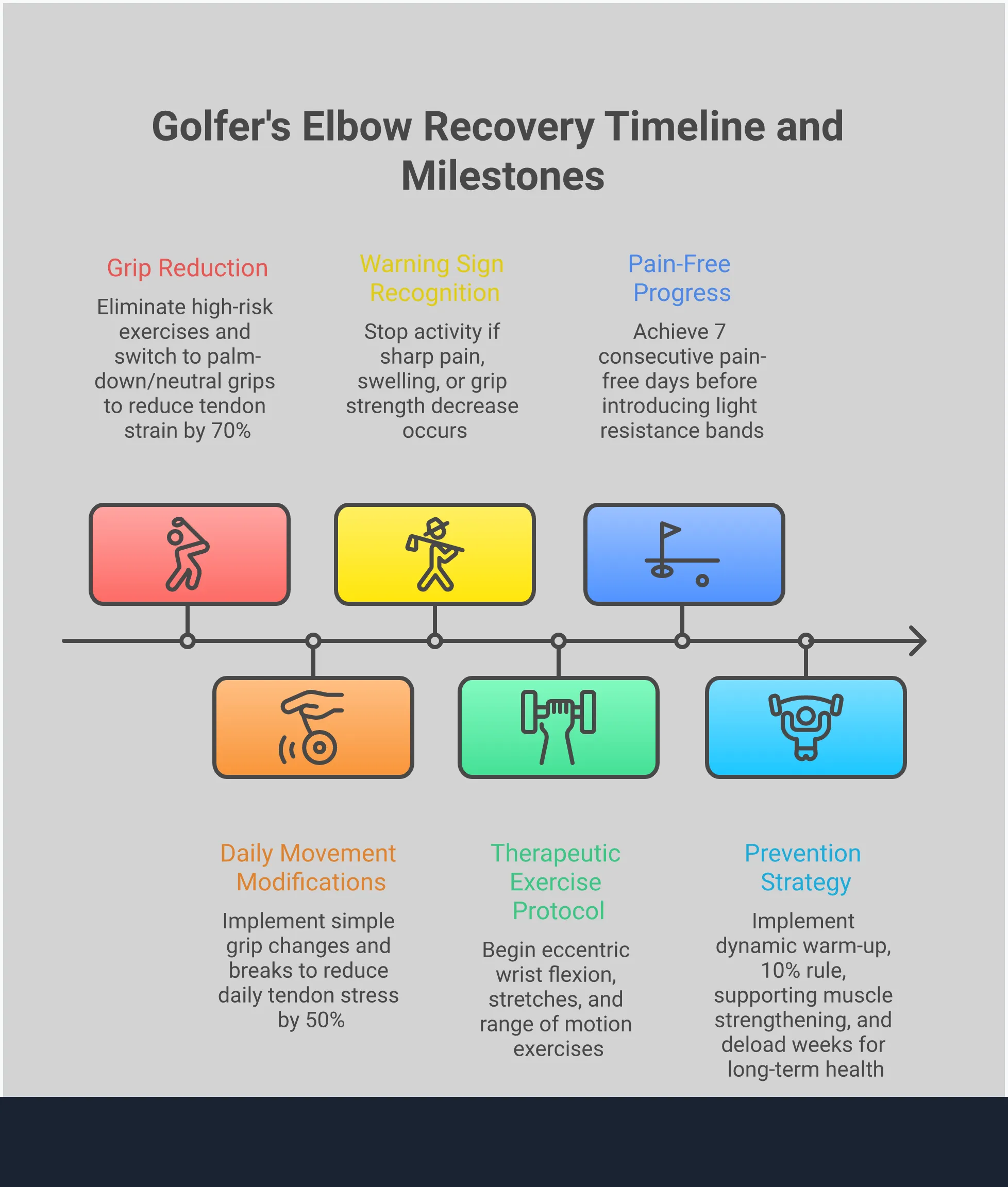
Certain symptoms are your body’s way of waving a big red flag, telling you to stop what you’re doing immediately. Ignoring these signs can worsen the inflammation, increase tissue damage, and prolong your healing time. If you experience sharp pain, new swelling, or a sudden loss of strength, it’s time to hit pause. These aren’t signs of progress; they’re warnings that the exercise is doing more harm than good. Understanding these red flags will help you protect your elbow and support a smoother, safer recovery.
Sharp or Worsening Pain
A mild, dull ache during or after rehabilitative exercises can be a normal part of the healing process. However, a sharp, stabbing, or shooting pain is not. If an exercise causes your pain to spike or feel worse than when you started, that’s a clear signal to stop. Pushing through this kind of discomfort can cause further damage to the already-irritated tendons in your elbow.
Think of it as your body’s alarm system. According to experts, you should cease activities that make your elbow hurt to prevent further injury. If a specific movement triggers that sharp sensation, don’t try to finish your set. Instead, stop the exercise, rest, and reassess. Continuing will only aggravate the condition, making effective pain management more difficult down the road.
New or Increased Swelling
Swelling is a direct sign of inflammation. If you notice new or increased puffiness, warmth, or tenderness around your inner elbow after exercising, your body is telling you that the tissue is irritated. This often means the activity was too strenuous or performed too soon in your recovery. Continuing to exercise with new swelling can worsen the underlying condition and delay healing.
Health professionals at HSS note that if you see new or increased swelling, it’s a sign your condition may be getting worse. While applying ice can help temporarily, the most important step is to stop the exercises that are causing the reaction. Pay attention to how your elbow looks and feels after a workout to catch this red flag early.
A Sudden Drop in Grip Strength
A sudden, noticeable decrease in your grip strength is one of the most serious red flags. If you suddenly find it difficult to hold a coffee mug, turn a doorknob, or grasp objects you could hold just fine before, you need to stop your exercises immediately. This can indicate that the tendon has been significantly strained or that the injury is more severe than you realized.
This isn't just about feeling a little weaker; it's a functional change that signals a problem. A sudden drop in grip strength can point to a serious issue that requires professional attention. Don’t try to "work through" it. Instead, halt your routine and consider getting it checked out. Prioritizing proper performance recovery means knowing when to rest just as much as knowing when to work.
Safe Exercises to Support Your Recovery
Avoiding certain exercises doesn’t mean you have to stop moving altogether. In fact, the right kind of movement is essential for healing. Gentle, targeted exercises can help strengthen the tendons, improve flexibility, and get you back to your routine without causing more harm. The key is to listen to your body and focus on movements that support the healing process instead of straining it. These exercises are designed to rebuild strength safely, helping you manage your pain and recover more effectively.
Gentle Eccentric Wrist Exercises
One of the most effective ways to strengthen injured tendons is with eccentric exercises, which focus on the lengthening phase of a muscle contraction. For golfer's elbow, try eccentric wrist flexion. You can do this by sitting with your forearm resting on your thigh, palm facing up, and your wrist hanging over your knee. Hold a very light weight (like a can of soup) and slowly lower your hand toward the floor, taking about three to five seconds. Use your other hand to lift the weight back to the starting position. This method helps strengthen the tendons without overloading them, making it a safe and productive part of your recovery.
Modified Upper Body Workouts
You can still work on your upper body strength, but you’ll need to adjust your approach. Instead of pushing yourself to fatigue, stop a few reps short of failure. This strategy allows your muscles to get the work they need without putting excessive strain on your healing elbow. By avoiding complete exhaustion, your body can recover more efficiently between workouts, letting you stay consistent with your fitness routine. This smarter approach is crucial for long-term performance recovery and helps prevent the frustrating cycle of re-injury.
Simple Range-of-Motion Activities
Stiffness can be a major issue when you’re dealing with golfer’s elbow, so simple range-of-motion activities are your best friend. To gently stretch your wrist flexors, hold your affected arm straight out in front of you with your palm facing down. Use your other hand to gently bend your wrist upward, as if you’re signaling someone to stop. You should feel a light stretch in your forearm. Hold this for about 15 seconds, then relax. Repeating this a few times a day can help reduce stiffness, improve your flexibility, and encourage blood flow to the injured area to promote healing.
How Natural Therapies Can Help You Heal
Avoiding the wrong exercises is a huge step toward healing golfer's elbow, but what should you be doing instead? True recovery involves a proactive approach that combines rest, targeted treatments, and gentle movement. By focusing on natural therapies, you can support your body’s healing process without relying on medication or invasive procedures. This approach helps calm the immediate irritation in your elbow and builds a stronger, more resilient foundation to prevent the injury from returning. Let's walk through a few key strategies that can make a real difference in how you feel and move.
The Role of Rest and Smart Modifications
The first and most important step in healing is to give your inflamed tendons a break. This doesn’t mean you have to stop moving entirely, but it does mean you need to stop doing the things that cause pain. Pushing through the discomfort can turn a minor issue into a chronic problem. You’ll want to avoid activities that involve heavy lifting, repetitive wrist flexing, and intense gripping. Think of this as an active rest period where you’re making smart choices to protect your elbow. By consciously modifying your daily activities and workouts, you create the space your body needs to begin the repair process.
Using Light Therapy to Calm Inflammation
While rest helps prevent further damage, you can also take steps to actively reduce inflammation and accelerate healing. While ice packs can offer temporary relief, advanced options like light therapy can target the source of the pain. This therapy uses specific wavelengths of light to penetrate the skin and stimulate your cells’ natural healing mechanisms. It’s a gentle, non-invasive way to decrease inflammation, improve circulation, and get drug-free pain relief. By calming the irritation in the tendon, light therapy helps create the ideal environment for your body to repair the damaged tissue more effectively.
Incorporating Gentle Stretches for Mobility
Once the initial sharp pain begins to subside, you can start reintroducing gentle movement. Stretching is key to restoring flexibility and preventing the muscles and tendons in your forearm from becoming stiff and tight. A physical therapist can show you specific movements, but a common one is a simple wrist flexor stretch. According to experts, a consistent stretching routine improves your range of motion, while strengthening exercises help rebuild function. The goal isn't to push through pain but to gently encourage movement. Listen to your body, go slow, and focus on gradually helping your elbow feel normal again as you work to rebuild your strength.
How to Prevent Golfer's Elbow From Coming Back
Once the pain from Golfer's Elbow starts to fade, it’s tempting to jump right back into your old routine. But this is where a smart, preventative approach becomes your best friend. The goal isn't just to heal; it's to build resilience so this nagging injury doesn't make a comeback. By making a few key adjustments to how you prepare, train, and strengthen your body, you can protect your elbows for the long haul. Think of it as a long-term investment in your health and a core part of preventative wellness. These strategies will help you stay active and pain-free, whether you're on the golf course, at the gym, or working in the yard.
Create a Solid Warm-Up Routine
Skipping a warm-up is one of the fastest ways to reinjure yourself. Your muscles and tendons need to be prepared for the work you're about to ask them to do. A proper warm-up increases blood flow to the area, making the tissues more pliable and less susceptible to strain. Start with five to ten minutes of light cardio, like jogging or jumping jacks, to get your heart rate up. Then, move into dynamic stretches that mimic the movements you're about to perform. Think arm circles, torso twists, and gentle wrist rotations. This prepares your joints and muscles for activity far more effectively than holding a static stretch before your body is warm.
Progress Your Training Intensity Gradually
It’s easy to get excited when you feel better, but pushing too hard, too soon is a classic mistake. Your tendons heal best with a balance of rest and gentle tension. Instead of going all out in every workout, focus on gradual progress. A great rule of thumb is to leave a few reps in the tank at the end of each set. This approach allows you to train more consistently because your body can recover faster between sessions. By slowly increasing the weight, reps, or intensity over time, you give your tendons the chance to adapt and grow stronger without overloading them and causing another flare-up.
Focus on Strengthening Supporting Muscles
Golfer's Elbow pain is centered on your inner elbow, but the problem often stems from weakness in the surrounding muscles. Strengthening your forearms, wrists, and even your core is essential for prevention. Your core provides a stable foundation for all your movements, which takes a significant amount of pressure off the smaller muscles and tendons in your arms. Incorporate simple exercises like eccentric wrist curls and extensions with a very light weight. Adding core work like planks and bird-dogs will also make a huge difference. Building up these supporting players is key to better performance recovery and a more resilient body.
Frequently Asked Questions
How long will it take for my Golfer's Elbow to heal? There isn't a one-size-fits-all timeline for recovery. Healing can take anywhere from a few weeks to several months, depending on how severe the injury is and how diligent you are about resting the tendon. The most important factors are consistently avoiding activities that cause pain and giving your body the proper conditions to repair itself. Being patient and listening to your body is far more effective than trying to rush the process.
Can I still lift weights or work out with Golfer's Elbow? Yes, you can and should stay active, but you'll need to be strategic. You can focus on lower body and core exercises without any issue. For upper body work, you’ll want to avoid the specific high-strain movements mentioned, like pull-ups and heavy curls. Instead, you can incorporate the modified exercises and gentle strengthening work that supports recovery without overloading the inflamed tendon.
What's the difference between Golfer's Elbow and Tennis Elbow? It's a great question, as they're often confused. Both are overuse injuries affecting the forearm tendons, but they impact different sides of the elbow. Golfer's Elbow causes pain on the bony bump on the inside of your elbow, while Tennis Elbow causes pain on the outside. Think of it this way: Golfer's Elbow affects the muscles you use to flex your wrist, and Tennis Elbow affects the ones you use to extend it.
Is it okay to feel some discomfort when doing the 'safe' exercises? You might feel a gentle stretch or a sense of muscle fatigue, which is generally fine. However, you should never feel sharp, stabbing, or worsening pain. If an exercise causes that kind of discomfort, or if you notice new swelling or a sudden drop in your grip strength afterward, that's a clear sign to stop immediately. The goal is to encourage healing, not to push through pain.
What should I do if my elbow pain isn't getting better with rest and modified exercises? If you've been carefully modifying your activities and trying gentle exercises for a few weeks without seeing improvement, it might be time to seek a professional opinion. Sometimes, persistent inflammation needs more targeted support. Therapies like light therapy can be very effective at calming inflammation and promoting tissue repair when rest alone isn't cutting it.
Frequently Asked Questions
Is light therapy safe for athletes?

Yes, light therapy is completely safe and highly beneficial for athletes. It promotes faster muscle recovery, reduces inflammation, and supports performance without the risks of medication or downtime. That’s why professional and amateur athletes worldwide rely on it to train smarter and recover quicker.
How many sessions will I need?
The number of sessions varies depending on the type and severity of your condition. Many patients notice improvement after 3–5 sessions, while chronic conditions may require ongoing care for best results. During your initial consultation, we’ll design a personalized treatment schedule tailored to your body’s response and recovery goals.

Ready to Try Light Therapy for Recovery?