


How Much Does Deep Tissue Laser Therapy Cost? A Breakdown
Living with pain has its own costs, from missed workdays to sitting on the sidelines of your favorite activities. When you start looking at treatments, the financial side can feel just as overwhelming. You want a solution that works without creating more stress. So, how much does deep tissue laser therapy cost when you weigh it against the alternatives? This therapy is a non-invasive, drug-free option that can help you avoid the high expenses and long recovery times associated with surgery or a lifetime of medication. We’ll explore the real value behind the price, showing you how investing in your body’s natural healing process can be the most cost-effective decision you make for your health.
Key Takeaways
- Understand the cost factors: The price for a session isn't random; it's based on your location, the technology used, and your specific treatment plan, typically falling between $50 and $150.
- Consider the total value: Think beyond the session price and weigh the cost against expensive alternatives like surgery or long-term medication, which laser therapy can help you avoid.
- Make your care affordable: You can lower the overall cost by asking about session packages, looking into monthly memberships, and using your pre-tax HSA or FSA funds for payment.
What Is Deep Tissue Laser Therapy?
If you're dealing with persistent pain, you've probably heard about different treatment options. Deep tissue laser therapy is a non-invasive treatment that uses focused light to reach muscles, ligaments, and tissues far below the skin's surface. Think of it as a way to give your body a helping hand, encouraging it to heal itself from the inside out. Unlike surgeries or medications that often come with side effects, this therapy works with your body’s natural healing processes to reduce pain and inflammation.
It’s a gentle yet powerful approach that can make a real difference in your daily comfort and mobility. Whether you're an athlete looking to get back in the game or someone struggling with chronic pain that just won't quit, laser therapy offers a path toward effective pain management and recovery. It’s all about targeting the source of the problem to help you feel and move better, faster.
How Does It Work?
So, how can light possibly heal your body? It’s a process called photobiomodulation, but you can just think of it as giving your cells a major energy charge. The targeted light from the laser penetrates deep into your tissue and stimulates your cells. This process increases blood flow to the injured area, delivering more oxygen and nutrients right where they're needed.
At the same time, it helps your body flush out swelling and inflammation that cause pain. The light energy also prompts your cells to produce more of a molecule called ATP, which is essentially cellular fuel. With more energy, your cells can repair and regenerate more efficiently. Research shows that this process helps injuries heal faster, making it a trusted tool for performance recovery and pain relief.
What Can It Help With?
One of the best things about deep tissue laser therapy is its versatility. It’s not just for one type of injury or condition; it can address a wide range of muscle and joint problems. Many people find significant relief from common issues like back and neck pain, sciatica, and stubborn tendinitis. It’s also highly effective for repetitive strain injuries like carpal tunnel syndrome and tennis elbow.
If you’re dealing with painful sprains, strains, or plantar fasciitis, laser therapy can help speed up your healing. It even provides relief for those with chronic conditions like rheumatoid arthritis and osteoarthritis by reducing inflammation and pain. Studies show it has a high success rate for tendon issues, muscle strains, and chronic back pain, making it a reliable option for many people seeking lasting relief.
How Much Does Laser Therapy Cost?
Let's talk about the numbers. When you're considering a new treatment for your health, the cost is always a major factor. The price of deep tissue laser therapy can vary quite a bit based on where you go and what you need, but it's helpful to think of it as an investment in your long-term well-being. Unlike temporary fixes that just mask symptoms, laser therapy is designed to address the root cause of your pain by promoting healing at a cellular level. This approach can save you money, time, and discomfort in the long run by reducing the need for other costly interventions, frequent doctor's visits, or long-term reliance on medication. It's about getting you back to feeling like yourself, for good.
Whether you're looking for targeted pain management for a nagging injury or want to incorporate treatments into your preventative wellness routine, understanding the potential costs is the first step. It allows you to plan and find a solution that fits your budget without sacrificing quality care. In the next few sections, we'll break down what you can generally expect to pay, from single sessions to money-saving packages. This way, you can feel confident and prepared as you contact us to discuss your specific needs and create a plan that works for you.
Single Session Costs
If you're just testing the waters or need a one-off treatment, you'll likely pay per session. Nationally, a single deep tissue laser therapy session can range from $50 to $150, though some clinics might charge as low as $40 or as high as $200. The exact price depends on factors like the clinic's location and the specific technology they use, which we'll get into more detail on later. A single session can be a great way to experience the therapy and see how your body responds before committing to a full treatment plan.
Packages and Discounts
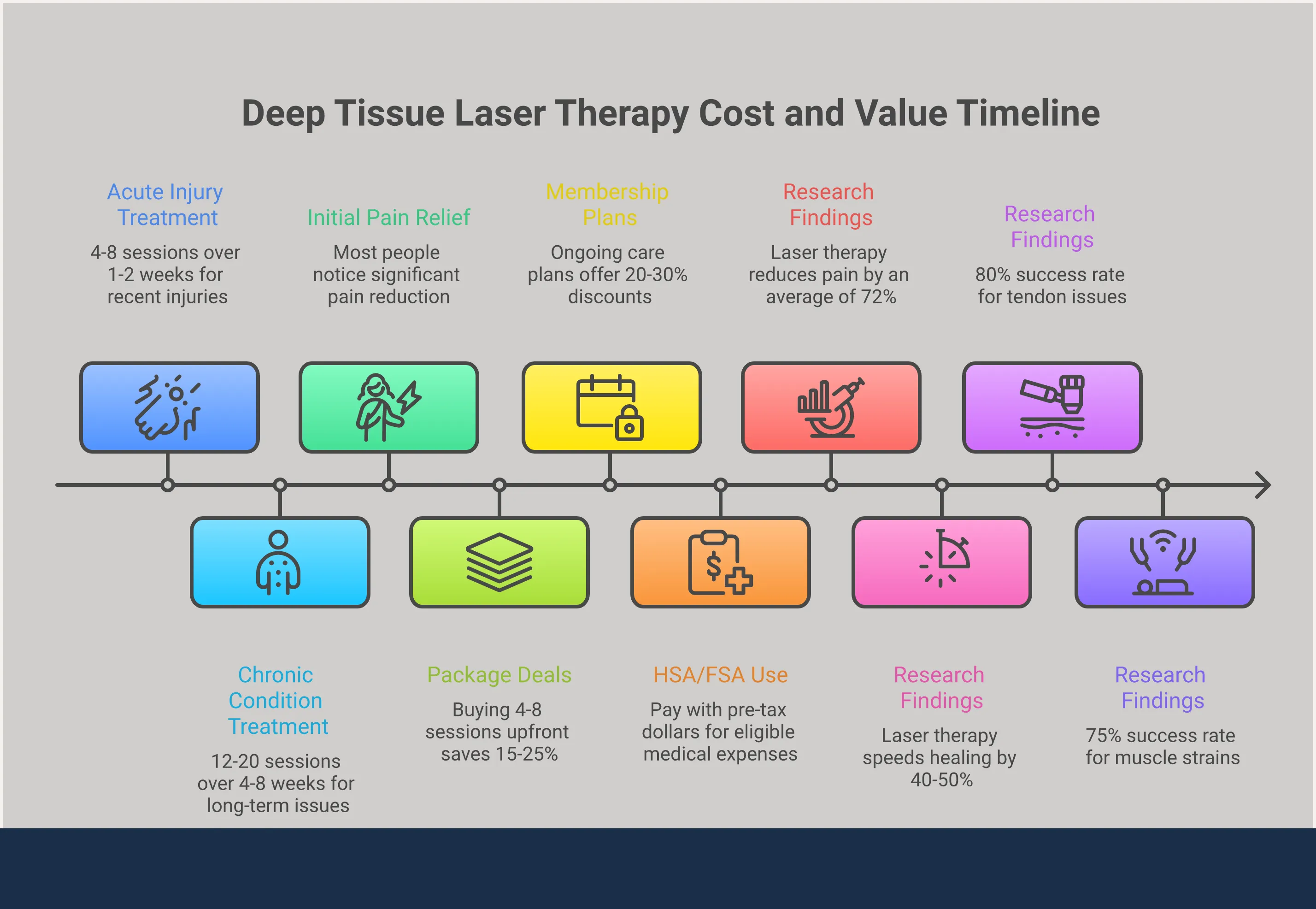
For conditions that require more than one treatment, buying a package is almost always the most cost-effective route. Most clinics offer bundles of sessions at a discounted rate, which can significantly lower the per-session cost. For example, a plan of four to eight sessions for a new injury might save you 15% to 25% compared to paying for each one individually. This is a fantastic option if you and your provider have mapped out a treatment plan for a specific issue. When you have your consultation, always ask about package deals to see how you can get the most value from your investment.
Membership Options for Ongoing Care
If you're focused on long-term health, performance recovery, or managing a chronic condition, a membership plan can be a game-changer. Many clinics, including ours, offer memberships that provide regular treatments at a substantially lower price, often saving you 20% to 30% each month. This makes consistent care more affordable and predictable. Memberships are perfect for athletes who need routine recovery sessions or anyone committed to preventative care. Plus, you can often use your Health Savings Account (HSA) or Flexible Spending Account (FSA) to pay for treatments, making it even more accessible. It's a smart way to prioritize your health without breaking the bank.
What Influences the Cost?
When you’re looking into deep tissue laser therapy, you’ll find that the price isn’t a simple, one-size-fits-all number. The total cost depends on a few key factors that are unique to you and your treatment plan. Understanding these variables will help you get a clearer picture of the investment required for your care. Think of it less like a fixed price tag and more like a personalized plan designed to get you the best results. Let’s walk through the main elements that shape the cost of your therapy sessions.
Your Location and Clinic
Just like the cost of living varies from one city to another, so does the price of laser therapy. Clinics in major metropolitan areas often have higher overhead costs (like rent and utilities), which can be reflected in their pricing. A clinic in a smaller town might have different rates. At Laser Lab, we are transparent about our pricing and believe in making care accessible. You can always reach out to our clinics directly to get specific details based on your location and needs.
Provider's Experience
The skill and expertise of the person performing your therapy play a significant role in the cost. A highly experienced practitioner who has spent years mastering advanced techniques will likely have different rates than someone newer to the field. When you choose a provider, you're investing in their knowledge and the quality of care they deliver. We believe that our team's expertise is fundamental to achieving great outcomes, ensuring you receive safe, effective, and professional treatment every step of the way.
The Technology Used
Not all lasers are created equal. The type of technology a clinic uses is a major factor in the cost. More advanced systems, like the Class IV lasers we use at Laser Lab, are designed to penetrate deep into tissues for more effective results. This powerful technology represents a significant investment for the clinic, which influences the session price. Weaker lasers used for more superficial issues may come at a lower cost, but they might not provide the same level of relief for deep-seated pain, making advanced technology crucial for effective pain management.
Your Specific Treatment Area
The nature of your condition directly impacts the cost. Treating a small, specific area like your wrist for a minor sprain will generally be less expensive than addressing a larger, more complex issue like chronic lower back pain. The size of the treatment area and the severity of your condition determine how much time and energy is needed for each session. Your practitioner will assess your specific needs during your consultation to create a treatment plan that targets the problem area efficiently.
Session Length
Finally, the duration of each therapy session will affect the price. A quick 10-minute session for a minor issue will cost less than a more intensive 30-minute session designed for a chronic condition. The length of your sessions isn't arbitrary; it’s carefully determined by your provider to ensure the targeted tissue receives the optimal amount of light energy needed to stimulate healing. Your personalized treatment plan will outline the recommended session length to give you the best possible results.
How Many Sessions Will I Need?
This is one of the most common questions we hear, and the answer really depends on your body and what you’re coming in for. The number of sessions you’ll need is tailored to your specific goals, whether you’re dealing with a brand-new injury or a pain that’s been with you for years. We’ll work with you to create a plan that makes sense for your situation, ensuring you get the right amount of care to feel your best.
Treating Acute vs. Chronic Conditions
The first step is figuring out if your condition is acute or chronic. An acute injury is something recent, like a sprain from a weekend run or a sudden back tweak. For these issues, your body often responds quickly, and you’ll likely see significant improvement in about 4 to 8 sessions, usually scheduled over one to two weeks. On the other hand, chronic conditions are those long-term pains that have stuck around for months or even years. Addressing this kind of deep-seated issue requires a more comprehensive approach to pain management, typically involving 12 to 20 sessions over four to eight weeks to help your body truly heal and find lasting relief.
Calculating Your Total Investment
Once we have an idea of your session plan, we can talk about your total investment. For a full treatment plan targeting a new, acute injury, you might expect the total to be between $300 and $600. For a more persistent chronic condition, a complete plan could range from $900 to $2,000. Think of this as an investment in your long-term health and mobility, one that often helps you avoid the much higher costs of surgery or long-term medication. To make consistent care more accessible, we also offer memberships that can help make your wellness journey more affordable. We’re committed to finding a plan that fits both your health needs and your budget.
Does Insurance Cover Deep Tissue Laser Therapy?
Figuring out what your insurance will and won’t cover can feel like a puzzle. When it comes to innovative treatments like deep tissue laser therapy, the answer isn't always a simple yes or no. While the healthcare world is starting to embrace drug-free pain solutions, insurance policies can be slow to catch up. But don't let that discourage you. There are several avenues you can explore to make your treatment plan affordable, whether through specific insurance exceptions or other payment tools. Let’s walk through what you need to know.
The Reality of Insurance Coverage
Let’s get straight to the point: most standard health insurance plans do not yet cover deep tissue laser therapy. However, the tide is turning. As more people seek effective, non-invasive alternatives to medication and surgery, many insurance companies are recognizing laser therapy as a valuable treatment for pain management. They see it as a legitimate way to help patients without relying on pharmaceuticals. This shift is promising, but for now, it’s best to assume you’ll be paying out-of-pocket and be pleasantly surprised if your plan offers some coverage. Always start by calling your provider to confirm the details of your specific plan.
Exceptions to the Rule
While broad coverage is still rare, there are important exceptions. Some specific types of plans are more likely to cover deep tissue laser therapy. For instance, certain Medicare, workers' compensation, or PPO plans have been known to include it in their benefits. Some major commercial carriers like Aetna, Cigna, and UnitedHealthcare have also started covering laser therapy in certain situations. The key is to be proactive. When you speak with your insurance representative, ask specifically about coverage for "photobiomodulation" or "deep tissue laser therapy." Getting a clear answer directly from the source is the only way to know for sure where your plan stands.
Using Your HSA or FSA
If your insurance doesn't cover the treatment, your Health Savings Account (HSA) or Flexible Spending Account (FSA) is your next best friend. These tax-advantaged accounts are designed specifically for out-of-pocket medical expenses, and deep tissue laser therapy typically qualifies. Using your HSA or FSA allows you to pay for your sessions with pre-tax dollars, which can result in significant savings. It’s a smart and simple way to invest in your health and make your care more manageable. Check your account guidelines to confirm eligibility, but this is a very common and accepted use for these funds.
Flexible Payment Options
We believe that financial constraints shouldn't stand in the way of your health. That’s why many clinics, including ours, offer flexible ways to pay. One of the most popular options is purchasing a package of sessions, which often comes with a discount of 15% or more compared to paying one session at a time. We also offer memberships that provide ongoing care at a predictable monthly rate. These options make it easier to commit to a full treatment plan so you can achieve the best possible results. Don’t hesitate to contact us to discuss which payment structure works best for your budget and your wellness goals.
Common Myths About Laser Therapy Costs
When you’re dealing with pain, the last thing you need is more stress, especially about money. It’s easy to get tangled up in misconceptions about the cost of different treatments. You might hear things from friends or find conflicting information online that makes you second-guess what’s best for your health and your wallet. Let’s clear the air and look at a few common myths about the cost of deep tissue laser therapy, so you can make a decision based on facts, not fear. Understanding the real value and how the pricing works can help you see the path to relief more clearly.
Myth: More Sessions Always Cost More
It seems like simple math: the more appointments you have, the higher your final bill will be. But this isn't always the case. The goal of any effective treatment is to get you better, not to keep you coming back forever. A more advanced and powerful laser therapy might have a higher price per session, but it often requires far fewer visits to achieve lasting results. Think of it this way: would you rather have 20 sessions that provide slow relief or 8 sessions that get you back on your feet faster? Sometimes, investing a bit more upfront for a higher-quality treatment can lead to a lower total cost for your pain management plan.
Myth: It Only Works for Some People
It’s natural to be skeptical, especially if you’ve tried other treatments without success. You might wonder if laser therapy is just another shot in the dark. The truth is, deep tissue laser therapy is a science-backed treatment with a high rate of success. Studies have shown it can reduce pain by an average of 72% and speed up the body’s natural healing process by 40-50%. It’s not a magical cure, but it is a reliable tool that helps a wide range of people with both new injuries and long-standing chronic conditions. It’s particularly effective for athletes and active individuals looking for faster performance recovery and a quicker return to their sport.
Myth: The Results Aren't Worth the Price
When you compare the cost of laser therapy to doing nothing, it can seem like a big expense. But when you weigh it against other medical interventions, it often emerges as a very smart investment. Consider the costs of surgery, which include the procedure itself, anesthesia, hospital stays, and weeks or months of lost work. Or think about the ongoing expense and side effects of long-term medication or injections. Laser therapy is a non-invasive, drug-free alternative that can help you avoid those more expensive and risky options. By making ongoing care more accessible through memberships, you can get the long-term relief you need in a way that fits your budget.
Does Deep Tissue Laser Therapy Really Work?
When you’re dealing with persistent pain, it’s natural to be skeptical of any treatment that promises relief. You’ve likely tried a lot of things already, and the idea of yet another "miracle cure" can feel exhausting. So, let's get straight to the point: does deep tissue laser therapy actually work? The simple answer is yes, and its effectiveness isn't based on wishful thinking. It's a science-backed therapy that uses specific wavelengths of light to stimulate your body's natural healing processes at a cellular level.
This isn't a temporary fix that just masks the symptoms. Instead, it targets the source of inflammation and injury to promote genuine, long-term healing. We believe in providing care that delivers real, measurable results, which is why we've built our practice around this proven technology. The evidence points to four key benefits that make a significant difference in our clients' lives: tangible pain relief, a faster recovery timeline, reduced dependence on medication, and an outstanding safety profile. Let's look at what the research says about each of these areas.
Real-World Pain Relief
Living with chronic or acute pain can feel like it takes over your entire life. The goal of any effective treatment should be to give you that life back. Deep tissue laser therapy has a strong track record of doing just that. In fact, some studies show it can reduce pain by a staggering 72% while speeding up the body's healing process by 40% to 50%. This means you’re not just feeling better, you’re actually getting better, faster. For anyone seeking effective pain management, these numbers represent a clear path toward relief without invasive procedures or drugs. It’s about turning down the volume on your pain so you can focus on what truly matters.
Quicker Recovery, Fewer Visits
One of the most frustrating parts of an injury is the feeling that your life is on hold. You want to get back to your routine, your workouts, and your hobbies as quickly as possible. Laser therapy helps shorten that recovery window. While every person's healing journey is unique, most people begin to feel a noticeable improvement after just three or four sessions. According to one clinical guide, a full treatment plan for lasting results typically involves 12 to 20 sessions. This structured approach helps you achieve better results with fewer total visits compared to some traditional therapies, making it an efficient path to performance recovery and a return to your active lifestyle.
Less Reliance on Medication
If you’re tired of relying on painkillers to get through the day, you’re not alone. While medication can offer temporary relief, it often comes with unwanted side effects and doesn't address the root cause of the pain. Deep tissue laser therapy offers a powerful, drug-free alternative. By reducing inflammation and promoting healing directly at the source of injury, it can significantly decrease your need for pain medication. This not only saves you money but also helps you avoid the potential long-term health issues associated with over-the-counter or prescription drugs. It’s a proactive step toward preventative wellness and taking back control of your health.
A Safe Alternative with Minimal Side Effects
When considering any new treatment, safety is always a top concern. Fortunately, deep tissue laser therapy has an excellent safety record. It is a non-invasive, FDA-approved treatment with no known side effects. Unlike surgery, it requires no downtime, and unlike injections, it doesn't involve needles. Most people don't feel any pain during a session; instead, they report a gentle, soothing warmth over the treatment area. This makes it a comfortable and stress-free experience. If you have any concerns or questions about what to expect, our team is always here to walk you through the process. You can always contact us for more information.
Is Deep Tissue Laser Therapy a Worthwhile Investment?
Thinking about the cost of any health treatment is smart. When you're dealing with pain, you want a solution that not only works but also makes financial sense. So, let's talk about whether deep tissue laser therapy is a good investment for you. The price tag is one thing, but the real value comes from what you get in return: lasting relief, fewer long-term expenses, and a better quality of life. It’s about finding a path to wellness that doesn't involve invasive procedures or a lifetime of medication.
When you compare the costs, it’s important to look at the whole picture. Think about what you’re currently spending on managing your pain, both in money and in time. Consider the co-pays for specialist visits, the price of prescriptions, and the days you’ve had to miss work or can’t enjoy your hobbies. Laser therapy is an investment in getting back to your life. It’s a proactive approach that helps your body heal from the inside out, which can be far more valuable than temporary fixes. We believe in transparent care, so let's break down how the cost of laser therapy stacks up against other options and what you can expect in the long run.
Cost vs. Surgery and Other Treatments
When you see the price of a laser therapy package, it’s easy to get sticker shock. But it’s helpful to put that number in context. The total cost for treating a chronic issue with laser therapy often falls between $900 and $2,000. Now, compare that to the cost of surgery, which can easily run into the tens of thousands, not to mention the associated costs of anesthesia, hospital stays, and extensive rehabilitation. Even less invasive options like steroid injections can add up over time, offering only temporary relief. Laser therapy is a non-invasive treatment for pain management that avoids the risks, recovery time, and high expenses of surgery, making it a financially sound choice for lasting results.
The Long-Term Savings
One of the biggest financial benefits of laser therapy is its potential to reduce your reliance on other costly treatments. By addressing the source of your inflammation and pain, it can help you cut back on or even eliminate the need for prescription painkillers, saving you hundreds of dollars a year and sparing you from potential side effects. A single treatment package could prevent the need for more expensive interventions down the road. Think about it: fewer co-pays, less money spent on medication, and less time away from work. Our memberships are designed to make ongoing care even more affordable, helping you maintain your results and save money over time.
Balancing Cost with Your Quality of Life
What is it worth to you to wake up without pain? To get back to hiking, golfing, or playing with your grandkids? This is where the true value of laser therapy shines. Studies show it can speed up healing by 40-50% and significantly reduce pain, often with an 80% success rate for tendon issues and a 75% success rate for muscle strains. It’s a safe, drug-free way to help your body heal itself. Investing in your health with laser therapy is about more than just your wallet; it’s about investing in your happiness and your ability to live life to the fullest. It’s a commitment to your long-term preventative wellness and an active, vibrant future.
Finding a Provider That Fits Your Budget
When you're looking into a new treatment like deep tissue laser therapy, one of the first questions is usually about cost. It’s smart to think about your budget from the start. Nationally, you can expect a single session to cost somewhere between $50 and $150. More advanced treatments, like Class IV laser therapy, often fall in the $75 to $125 range per session. This investment goes toward helping you find lasting relief and get back to the activities you love.
So, why the wide price range? Several things can affect the final price tag. The provider’s level of experience, the quality of the laser equipment they use, the length of each session, and the total number of sessions in your treatment plan all play a role. A quick treatment for a new injury will naturally cost less than a more extensive plan for a chronic condition that has been bothering you for years.
The good news is that many clinics offer ways to make treatment more affordable. Buying a package of six or twelve sessions, for instance, can often lower the price per visit. For those interested in ongoing preventative wellness or managing a chronic issue, some clinics also have membership options. These plans provide consistent care at a predictable monthly cost, making it easier to fit into your budget long-term.
When you’re exploring your options, don’t be shy about asking direct questions. Ask about the cost per session, what packages are available, and if there are any other discounts. A good provider will be happy to walk you through their pricing to help you find a plan that works for your health goals. You can always contact our team to discuss what a personalized treatment plan might look like for you.
Frequently Asked Questions
What does a laser therapy session feel like? Does it hurt? Not at all. Most people find the experience quite relaxing. During the treatment, you will feel a gentle, soothing warmth over the area we’re working on. There are no needles or invasive tools involved, so you can just lie back and let the light energy do its work. It’s a comfortable and pain-free process from start to finish.
How long does a typical session last, and what happens during the appointment? Your appointment will be quick and straightforward, making it easy to fit into your day. Most sessions last between 10 and 20 minutes, depending on the size of the area we are treating and the specific condition. During that time, you’ll get comfortable while a practitioner applies the laser applicator directly to your skin over the target area, moving it around to ensure complete coverage.
How quickly will I feel better? This really depends on your body and the nature of your injury. Some people feel a noticeable reduction in pain after just a few sessions, while others with more chronic conditions may need a bit more time. Healing is a cumulative process, so the benefits build with each treatment. The key is consistency, as sticking to your recommended plan gives your body the best chance to repair itself for lasting relief.
Is this therapy safe for everyone? Are there any restrictions? Deep tissue laser therapy is an FDA-approved treatment with an excellent safety profile. However, it isn't recommended for everyone. We avoid treating directly over areas with active cancer, and as a precaution, we do not perform it on pregnant women. During your initial consultation, we will go over your complete health history to make sure this therapy is a safe and appropriate choice for you.
Why should I choose a clinic with a Class IV laser over other options? The type of laser used makes a significant difference in the results you can expect. Class IV lasers, which we use at our clinic, are more powerful and can penetrate deeper into the body’s tissues. This allows us to effectively treat deep-seated pain in muscles, ligaments, and joints. While other, less powerful lasers might be fine for superficial issues, a Class IV laser is essential for addressing the root cause of more significant or chronic pain.
Frequently Asked Questions
Is light therapy safe for athletes?

Yes, light therapy is completely safe and highly beneficial for athletes. It promotes faster muscle recovery, reduces inflammation, and supports performance without the risks of medication or downtime. That’s why professional and amateur athletes worldwide rely on it to train smarter and recover quicker.
How many sessions will I need?
The number of sessions varies depending on the type and severity of your condition. Many patients notice improvement after 3–5 sessions, while chronic conditions may require ongoing care for best results. During your initial consultation, we’ll design a personalized treatment schedule tailored to your body’s response and recovery goals.

Ready to Try Light Therapy for Recovery?