


Laser Therapy Contraindications: A Physiotherapy Guide
Taking an active role in your health journey means being an informed partner in your own care. When you’re considering a treatment like laser therapy, one of the most empowering things you can do is understand not only how it works, but also when it shouldn't be used. This knowledge allows you to ask smart questions, choose a responsible provider, and feel confident that your safety is the top priority. The official term for these safety guidelines is contraindications. Learning the contraindications of laser therapy in physiotherapy isn't just for the experts; it’s for you. It gives you the tools to advocate for yourself and ensure you’re on the safest, most effective path to recovery.
Key Takeaways
- Understand the safety rules: Laser therapy is not for every situation. Some conditions, like pregnancy or active cancer, are absolute stops for treatment in certain areas, while others, such as tattoos or specific medications, simply require your practitioner to make careful adjustments.
- Share your full health story: Your safety is a partnership. Being open about your complete medical history, including all medications and past conditions, is the most important step you can take to ensure your practitioner can create a secure and effective plan for you.
- Look for non-negotiable safety protocols: A professional clinic will always prioritize your well-being. This includes conducting a thorough health review before starting, requiring specialized protective eyewear for everyone in the room, and maintaining a controlled, private treatment space.
What Is Laser Therapy?
When you hear the word "laser," your mind might jump to science fiction movies or industrial cutting tools. But in the world of physical therapy and wellness, a laser is a gentle, powerful tool for healing. The term itself stands for Light Amplification by Stimulated Emission of Radiation, which sounds complex, but the concept is straightforward. Laser therapy, also known as photobiomodulation, uses specific, focused wavelengths of light to interact with your body’s tissues. It’s a non-invasive, drug-free approach that helps kickstart your body's natural healing abilities.
Unlike the lasers that cut or burn, therapeutic lasers operate without creating heat, sound, or vibration. This is why it's sometimes called "cold laser therapy." Think of it as a way to give your cells a helping hand. The light energy penetrates the skin and stimulates a response at the cellular level. This process can help reduce pain, decrease inflammation, and accelerate recovery from injury. It’s a safe and effective way to address discomfort and improve your overall function, getting you back to feeling and moving better without surgery or medication. It's a cornerstone of our approach to holistic care at Laser Lab Therapy.
How It Works for Pain and Recovery
So, how does a beam of light actually help you heal? It all happens at a microscopic level. The therapeutic laser emits a special kind of light that travels in a straight, organized beam. This allows it to pass through your skin and reach injured tissues underneath. Your cells, particularly their tiny "powerhouses" called mitochondria, absorb this light energy. This absorption gives your cells more energy to work with, allowing them to repair themselves faster, regenerate tissue more effectively, and reduce inflammation in the surrounding area. This process also improves circulation, bringing more oxygen and nutrients to the injury while helping to clear out waste products. It’s an incredible way to support your body’s own journey toward performance recovery.
Conditions It Can Help With
Because laser therapy works by supporting your body’s fundamental healing mechanisms, it can be used for a surprisingly wide range of issues. It’s a versatile tool that offers effective pain management for both chronic and acute problems. Many people find relief from conditions like osteoarthritis in the knee or hip, nagging lower back pain, and nerve pain like sciatica. It’s also excellent for soft tissue injuries, including tendonitis (like tennis elbow), shoulder bursitis, and plantar fasciitis. Beyond just treating injuries, laser therapy can be a key part of your health routine, helping to reduce inflammation and support preventative wellness so you can stay active and feel your best.
When Laser Therapy Is Not an Option: Absolute Contraindications
While we are passionate about the incredible benefits of laser therapy for pain management and recovery, your safety and well-being are always our top priority. That’s why it’s essential to have an open conversation about contraindications. These are specific conditions or circumstances where a treatment should not be used because it could be harmful. Think of them as non-negotiable safety rules. At Laser Lab Therapy, we classify these into two groups: absolute and relative. Absolute contraindications are the definite "no-go" situations where laser therapy is not an option under any circumstance.
Identifying these factors is a crucial part of our process and the reason we begin every new client relationship with a thorough health history review. This isn't meant to be alarming; instead, it’s a sign of a responsible and professional practice that puts you first. Our commitment to holistic care means we look at your entire health picture to ensure any treatment we provide is not only effective but also completely right for you. Understanding these boundaries ensures that when you do proceed with treatment, you can relax and feel confident that you are in safe hands.
Direct Eye Exposure
This is the most important safety rule in laser therapy, and it’s one we take very seriously. The lasers we use are powerful, concentrated beams of light. If this light were to shine directly into someone’s eye, it could cause serious and permanent retinal damage. Because of this, we have a strict protocol: everyone in the treatment room, including the practitioner and the client, must wear specialized safety glasses at all times. There are no exceptions to this rule. The glasses are designed to filter out the specific wavelength of light used by our equipment, ensuring your eyes are completely protected. This simple but critical step allows us to deliver treatment safely while eliminating any risk to your vision.
Active Cancer or Tumors
Laser therapy works by stimulating cellular activity, encouraging cells to repair and regenerate. This process is fantastic for healing muscles, ligaments, and other tissues. However, when it comes to active cancer, this same mechanism is a cause for caution. Because the therapy promotes cellular proliferation, there is a theoretical risk that it could stimulate the growth of malignant cells. To eliminate this risk, we do not perform laser therapy directly over known cancer or suspicious tumors. Your safety is paramount, so if you have a history of cancer or are currently undergoing treatment, it's vital to discuss this with us and your oncologist before considering laser therapy for any condition.
Over the Thyroid Gland
The thyroid is a small, butterfly-shaped gland located at the front of your neck, and it plays a huge role in regulating your body’s metabolism. It's a sensitive and highly vascular area. The focused light and energy from laser therapy could potentially alter its function, either by over-stimulating or suppressing hormone production. To avoid any interference with this vital gland's delicate balance, standard safety protocols require that we do not apply laser treatment directly over the thyroid gland. We can safely treat surrounding areas like the neck and shoulder muscles, but we will always avoid the immediate area of the thyroid itself to protect your overall health.
During Pregnancy
When it comes to pregnancy, the guiding principle for any treatment is always caution. The simple truth is that the effects of laser therapy on a developing fetus are unknown, as this is not something that can be ethically studied. To ensure the health and safety of both mother and baby, we consider pregnancy an absolute contraindication for treatment in areas near the fetus. This means we will not perform laser therapy over the abdomen, lower back, or pelvic region. While a client might be able to receive treatment for an unrelated issue like a wrist or ankle injury, we avoid any area where the laser could potentially affect the womb or a developing baby.
Active Bleeding Sites
Laser therapy is excellent at promoting circulation by causing vasodilation, which means it widens blood vessels to bring more oxygen-rich blood to an area. This is a key part of the healing process for chronic injuries. However, in a situation involving an active bleed or a fresh, open wound, this same effect can be problematic. Increased blood flow to a site that is already bleeding can interfere with the body’s natural clotting process and make the bleeding worse. Furthermore, using a laser over an open wound could potentially spread infection or stop healing by disrupting the delicate tissue formation process. We wait until bleeding has stopped and a wound has properly closed before beginning treatment.
When to Use Caution: Relative Contraindications
While some conditions are clear-cut reasons to avoid laser therapy, others fall into a gray area. We call these "relative contraindications." This simply means that laser therapy isn't automatically off the table, but we need to proceed with extra care and awareness. Think of it as a yellow light, not a red one. It’s a signal to have a more in-depth conversation about your health history so we can create a treatment plan that is both safe and effective for you.
Your safety is our top priority. This is why our initial consultation is so thorough. By understanding the full picture of your health, we can adjust our techniques, modify treatment parameters, or focus on different areas to help you achieve your goals for pain management or recovery. Open communication is the key to a successful partnership, and we are here to listen and work with you every step of the way.
Photosensitive Medications or Skin
Certain medications can make your skin more sensitive to light. This includes some antibiotics, acne medications like isotretinoin, and even certain herbal supplements like St. John's Wort. When you take these, your skin can have a stronger-than-usual reaction to light therapy, potentially leading to irritation, redness, or discomfort. It’s nothing to be alarmed about, but it’s crucial information for us to have. By letting us know about every medication and supplement you take, we can adjust the laser's intensity and duration to ensure your skin stays happy and your treatment remains completely safe.
Autoimmune Disorders
If you live with an autoimmune condition like rheumatoid arthritis or lupus, your body's immune system can be in a delicate balance. Since laser therapy works by stimulating cellular activity and local immune responses to promote healing, we need to be mindful of how it interacts with your system. For many, it can be incredibly helpful in managing inflammation and pain associated with their condition. However, our approach will be carefully considered to ensure the therapy supports your body without triggering an unwanted immune flare-up. This is a perfect example of where a personalized treatment plan is essential.
Epilepsy or Seizure Disorders
For individuals with a history of photosensitive epilepsy, certain frequencies of flashing light can pose a risk of triggering a seizure. While many laser therapy applications use a continuous, non-flashing beam of light, some protocols may involve pulsing light. This is why it is absolutely critical to share any history of epilepsy or seizure disorders with your practitioner. Knowing your history allows us to select the appropriate, non-pulsing settings and take every precaution to create a safe, comfortable, and effective treatment environment for you. Your well-being is always the primary focus.
History of Blood Clots
Laser therapy is excellent at improving circulation and increasing blood flow to the treated area, which is a key part of how it accelerates healing. However, if you have a history of deep vein thrombosis (DVT), other blood clotting disorders, or are taking blood-thinning medication, this increase in circulation needs to be handled with care. Applying laser therapy directly over an area with a known blood clot could be risky. Sharing this part of your medical history allows us to tailor your treatment, possibly by avoiding certain areas, to ensure your session is both beneficial and completely safe.
Tattoos or Darkly Pigmented Skin
Dark colors absorb more light energy than lighter colors. This principle applies to your skin, too. If you have tattoos, the dark ink can absorb a significant amount of laser energy, which can heat the skin and potentially cause a burn or blistering. Similarly, naturally darker skin tones absorb more light. Our experienced practitioners are trained to account for this. We can easily avoid treating directly over a tattoo or adjust the laser's settings to a safe level for your specific skin type, ensuring you get all the therapeutic benefits without any unwanted side effects.
Infected Areas or Open Wounds
Applying laser therapy directly over an active infection or an open wound is not recommended. The therapy stimulates cellular activity and increases blood flow, which could unfortunately help spread the infection to surrounding tissues. It can also interfere with the body's initial, natural stages of wound healing. However, we can often treat the areas around the wound or infection to help reduce inflammation and support the overall healing process in the region. Once the infection is resolved or the wound has closed, we can then re-evaluate treating the area directly.
Age-Related Health Factors
When it comes to our younger clients, we take special precautions. Laser therapy is not used over the "growth plates" in the bones of children and adolescents who are still growing. These areas, also known as epiphyseal plates, are made of cartilage and are responsible for bone lengthening. Applying energy that stimulates cellular activity in these specific spots could potentially interfere with natural bone development. This is a standard safety protocol in the field of light therapy to ensure the long-term skeletal health of our younger population.
Severe Organ Conditions
Your body is an interconnected system. After a laser therapy session, your body works to process the cellular changes and clear out inflammation, a job that involves major organs like the liver and kidneys. If you have a severe, pre-existing condition affecting these organs, we need to be mindful not to put any extra stress on them. Our goal is to support your body's journey toward preventative wellness, not to tax it. A transparent conversation about your overall health ensures that we choose a therapeutic path that is truly beneficial and supportive of your entire system.
What Are the Potential Risks and Side Effects?
It’s smart to understand the full picture of any health treatment you’re considering. While laser therapy is known for being exceptionally safe and non-invasive, it’s helpful to know about the potential side effects. The good news is that they are typically very mild and short-lived. Think of them not as problems, but as signs that your body is responding to the therapy and kicking its natural healing abilities into gear. Knowing what to expect can help you feel confident and prepared as you begin your journey toward feeling and moving better.
Mild Skin Reactions
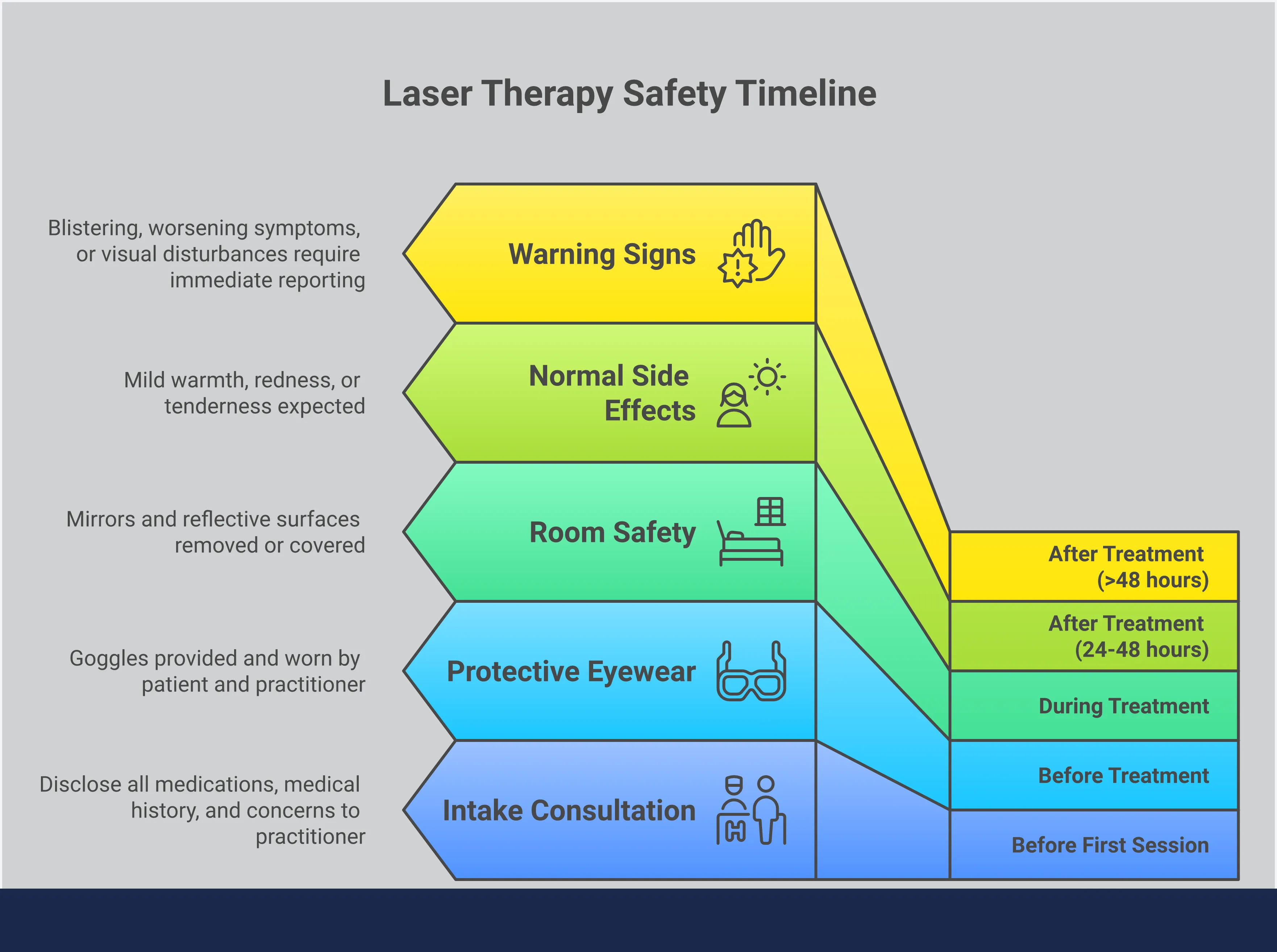
After a session, it’s possible to feel a little something in the area we treated. Some people describe a gentle warmth, slight redness, or a feeling of tenderness, similar to a bruise. You might even feel a temporary increase in the familiar pain you came in to treat. This is completely normal. It’s a signal that the light energy is increasing circulation and stimulating cellular activity. These sensations are your body’s way of saying, “Okay, I’m getting to work!” These effects are almost always temporary and tend to disappear within 24 to 48 hours. We always encourage you to share your feedback, as it helps us tailor the treatment perfectly for you.
Temporary Flare-Ups of Old Injuries
Have you ever had an old injury that just never seemed to heal completely? Sometimes, after a laser therapy session, you might notice that old, nagging injury feels a bit achy or sore for a day or two. While it might seem counterintuitive, this is actually a positive sign. It often means the therapy is successfully “waking up” the healing process in an area where it had stalled. The light energy helps address chronic inflammation and brings new life to the repair process. This temporary soreness is a known part of the healing journey for a chronic injury and a strong indicator that your body is finally getting back to the business of healing itself.
Eye Safety Precautions
Your safety is our absolute top priority, and that starts with protecting your eyes. The therapeutic lasers we use are powerful, concentrated beams of light. Direct exposure could harm the retina, which is why we take eye safety so seriously. But the solution is simple and completely effective: wearing protective eyewear. During your treatment, both you and your practitioner will wear specialized safety glasses designed to block the specific wavelength of light being used. This simple step eliminates the risk, allowing you to relax and enjoy your session with total peace of mind. Professional clinics strictly follow these eye safety protocols to ensure every treatment is a safe one.
Neuropathy and Sensation Issues
It’s incredibly important that we have a complete picture of your health history before beginning treatment. Certain conditions require us to take extra care. For example, if you have a history of seizures or epilepsy, we need to know. The pulsating light from some lasers can be a potential seizure trigger for photosensitive individuals. Similarly, if you have neuropathy or reduced sensation in the area we plan to treat, it’s crucial information. Without full sensation, it can be harder for you to give feedback on the warmth of the laser. By knowing this ahead of time, we can adjust our technique to ensure your skin is always safe and comfortable. Open communication is the key to a safe and effective treatment plan.
Is Laser Therapy Safe?
It’s one of the first questions we hear, and it’s a great one: is laser therapy safe? The short answer is yes. When administered by a trained professional, laser therapy is widely considered a safe and effective treatment for pain, inflammation, and recovery. At Laser Lab Therapy, your safety is our absolute top priority, and it’s a responsibility we take seriously. We use advanced light therapy technology that can reach deep into tissues to promote healing, which is why following strict safety protocols is a non-negotiable part of our practice.
Think of it like any other powerful tool; in the right hands, it can achieve amazing results. Our team is highly trained to ensure every session is not only effective but also completely safe for you. We believe that feeling confident and comfortable is part of the healing process. That’s why we’re always open to discussing how our technology works and the measures we take to protect your well-being. Understanding the safety behind the science is the first step toward trusting the process and starting your journey toward pain relief and better movement. It’s all about combining powerful technology with expert, compassionate care. The lasers used in therapeutic settings are not the same as those used for surgery; they are designed to stimulate cellular activity, not cut or burn tissue. This distinction is key to understanding its excellent safety profile.
Are Contraindications a Cause for Alarm?
When you hear the word "contraindication," it can sound a little intimidating. But really, these are just specific, well-understood situations where laser therapy should be avoided to ensure your safety. They aren’t a reason to be alarmed about the treatment itself. For example, some key clinical safety guidelines include avoiding application directly over the eyes, over known cancerous tumors, on the thyroid gland, or over a pregnant uterus. These are clear rules that every qualified practitioner follows. A thorough health assessment before your first session is how we identify any of these factors, ensuring the treatment is right for you. It’s all part of a professional and responsible approach to care.
Common Myths About Laser Therapy Safety
Misinformation can create unnecessary worry, so let’s clear up a couple of common myths. One is the idea that if you’ve had cancer in the past, you can never receive laser therapy. This isn’t always true. For many, getting treatment on an unrelated part of the body is perfectly safe, though we always recommend consulting with your oncologist first. Another myth is that all contraindications are set in stone forever. In reality, some historical contraindications are now considered outdated. We stay on top of the latest scientific research to distinguish between valid safety measures and fiction, ensuring our care is based on current, evidence-backed knowledge.
How We Ensure Your Safety
Your well-being is our absolute priority. While photobiomodulation is a remarkably safe and gentle therapy, we follow strict, multi-layered safety protocols to ensure every session is secure and effective. We believe that feeling safe is a key part of the healing process. Our team is committed to upholding the highest standards of care, so you can relax and focus on your health goals, whether that's pain management or preventative wellness. Here’s a look at the specific steps we take to protect you during every visit.
Reviewing Your Full Medical History
Before we even begin your first session, we sit down with you for a thorough review of your medical history. This conversation is essential because it helps us identify any potential contraindications that could affect your treatment. We need to know about any existing conditions, medications you're taking, or past health issues. This isn't just a formality; it's the foundation of your personalized and safe care plan. By understanding your complete health picture, we can tailor the therapy to your specific needs and ensure you get the best possible results without any complications. Your honesty and openness here allow us to proceed with confidence.
Requiring Protective Eyewear
You’ll notice that the moment you step into the treatment room, we’ll hand you a pair of specialized goggles. This is a non-negotiable safety rule. Everyone in the room, including your practitioner, is required to wear protective eyewear during the entire session. The lasers we use are powerful, and direct exposure can be harmful to your eyes. These aren't just any sunglasses; the goggles are specifically designed to block the exact wavelength of light used in your therapy. It’s a simple but critical step that guarantees your eyes are completely protected while the laser works its magic on your target treatment area.
Maintaining a Controlled Treatment Space
We conduct all our laser therapy sessions in a private, controlled environment. Your treatment will take place in a dedicated room where we can limit access and prevent interruptions. We also take care to manage the space by covering or removing any reflective surfaces, like mirrors or even shiny jewelry. This prevents the laser beam from accidentally reflecting in an unintended direction. Creating this controlled setting ensures that the therapeutic light is focused precisely where it’s needed for your performance recovery or wellness goals. It’s all part of providing a professional, secure, and calming atmosphere for your treatment.
Appointing a Laser Safety Officer
To ensure we consistently meet and exceed safety standards, our clinic has a designated Laser Safety Officer (LSO). This team member is specially trained in all aspects of laser safety and is responsible for our clinic's safety program. The LSO oversees everything from routine equipment maintenance and staff training to ensuring all protocols are followed to the letter during every single treatment. Having a dedicated expert focused on safety provides an extra layer of accountability and ensures our practices are always up-to-date. You can learn more about our dedicated team and our commitment to your care.
Performing Daily Equipment Checks
Our commitment to safety starts before you even walk through the door. Every morning, we run through a detailed daily checklist to ensure our equipment and treatment areas are in perfect working order. This includes verifying that all warning signs are in place, the treatment room is secure, and our lasers are cleaned and calibrated correctly. We also confirm that all protective eyewear is sanitized and readily available. This routine is essential for preventing any issues and making sure your session for preventative wellness is not only effective but also completely safe from start to finish.
Could Laser Therapy Be Right for You?
Deciding if laser therapy is the right path for your health goals is a conversation, and it’s one we have with every person who walks through our doors. While this therapy is a fantastic, non-invasive option for many people seeking relief from pain or a way to support their overall wellness, it isn’t a one-size-fits-all solution. The key to a safe and successful outcome is a partnership between you and your practitioner, built on open communication and trust. Your unique body and health history are the most important factors in determining the best course of action.
To figure out if laser therapy is a good fit, we need to look at your complete health profile. This involves an open discussion about your medical history, current lifestyle, and any concerns you might have. Understanding these personal factors allows us to identify any potential risks and ensure the treatment is appropriate for you. Being fully informed helps us create a treatment plan that is tailored specifically to your needs, ensuring your safety and comfort every step of the way. This collaborative approach is central to how we provide care, whether you're looking for performance recovery or long-term wellness support. It’s all about making sure you feel confident and cared for from your very first session.
What to Share With Your Practitioner
Think of your first consultation as an open conversation. The more your practitioner knows about your health, the better they can personalize your care. To help us build a complete picture, be ready to share your full medical history, even details that might seem small. It’s also important to mention all medications you take, including over-the-counter drugs and supplements, as some can make your skin more sensitive to light. Please be sure to tell us about any significant health conditions, particularly if you are pregnant, have epilepsy, or have a history of cancer. This transparency allows us to work together on a plan that is both safe and effective for you.
Understanding Your Personal Risk Factors
Certain conditions, known as contraindications, can influence whether laser therapy is a safe choice for you. Some are absolute, meaning we must avoid treatment in specific areas. For example, we never apply the laser directly over the eyes, the thyroid gland, or a pregnant uterus. Other factors are relative, which just means we proceed with extra caution. This includes working around tattoos, which can absorb more light and heat up, or adjusting for certain autoimmune disorders. It’s also good to know that some people experience temporary side effects like mild redness or soreness, which typically fade quickly. Discussing these factors helps us customize your pain management plan and ensures you feel confident in your care.
Frequently Asked Questions
Does laser therapy hurt? Not at all. This is one of the most common questions we get, and people are often surprised by how gentle the treatment is. You won’t feel any heat, vibration, or sound from the laser itself. Most clients feel nothing at all during the session. A small number of people might notice a very subtle, comfortable warmth in the area being treated, but it is a completely painless process.
Why might I feel a little sore after a treatment? It might seem counterintuitive, but feeling a temporary increase in soreness is often a positive sign. It indicates that the therapy is successfully "waking up" your body's natural healing mechanisms in an area where inflammation and injury had become chronic. This sensation shows that we are increasing circulation and stimulating cellular repair. This feeling is typically mild and should fade within 24 to 48 hours.
Is this the same kind of laser used for surgery? That's a great question, and the answer is no. The technology is completely different. Surgical or cosmetic lasers are designed to be "hot" so they can cut, vaporize, or remove tissue. The therapeutic lasers we use are "cold" lasers, meaning they do not produce heat and do not damage cells. Instead, they use specific wavelengths of light to give your cells energy, helping them repair themselves and reduce inflammation.
How do I know if laser therapy is a safe option for me? The only way to know for sure is to have a thorough consultation with a qualified practitioner. Your safety is determined by your individual health profile. This is why we start with an in-depth conversation about your medical history, any medications you are taking, and your specific health conditions. This open dialogue allows us to identify any potential risks and create a treatment plan that is truly personalized and right for you.
What can I expect during a typical laser therapy session? A session is very straightforward and relaxing. After your initial consultation, you will get comfortable in a private treatment room. Both you and your practitioner will put on a pair of specialized safety glasses to protect your eyes. Your practitioner will then place the laser device gently on or over the skin of the target area. The treatment itself is quiet and lasts for a predetermined amount of time, usually just a few minutes per area.
Frequently Asked Questions
Is light therapy safe for athletes?

Yes, light therapy is completely safe and highly beneficial for athletes. It promotes faster muscle recovery, reduces inflammation, and supports performance without the risks of medication or downtime. That’s why professional and amateur athletes worldwide rely on it to train smarter and recover quicker.
How many sessions will I need?
The number of sessions varies depending on the type and severity of your condition. Many patients notice improvement after 3–5 sessions, while chronic conditions may require ongoing care for best results. During your initial consultation, we’ll design a personalized treatment schedule tailored to your body’s response and recovery goals.

Ready to Try Light Therapy for Recovery?