

What Is a Compression Therapy Machine? A Guide
You may have seen people relaxing in a pair of large, inflatable boots and wondered what’s going on. This is compression therapy, a science-backed method for recovery and relief. It’s more than just a simple squeeze. A compression therapy machine controls a series of air chambers within the boots, which inflate and deflate in a specific sequence. This creates a gentle, wave-like massage that starts at your feet and moves upward. This process mimics your body’s natural muscle pump, making it incredibly effective at improving circulation, reducing swelling, and helping you feel better, faster.
Key Takeaways
- It's a Dynamic Massage, Not a Static Squeeze: Compression therapy systems use sequential air pressure to actively pump fluid through your limbs. This process is far more effective than static garments for flushing out soreness-causing waste and reducing swelling.
- It Offers Natural Relief for Pain and Swelling: This therapy is a versatile, drug-free solution for managing everything from post-workout soreness to chronic conditions like lymphedema. By improving blood flow and lymphatic drainage, it helps your body heal itself and reduce inflammation.
- Customization Is Crucial for Best Results: While at-home devices exist, working with a professional ensures your treatment is tailored to you. An expert can adjust the pressure and session time to safely meet your specific goals, whether for athletic recovery, pain relief, or preventative wellness.
What Is Compression Therapy and How Does It Work?
If you’ve ever felt sore, swollen, or just plain heavy in your legs, compression therapy might be the solution you’re looking for. Think of it as a high-tech massage that uses controlled air pressure to help your body’s natural circulatory system do its job better. It’s a simple, non-invasive way to improve blood flow, reduce swelling, and speed up recovery. But how does putting on a pair of inflatable boots actually work? It all comes down to a process called sequential compression.
Understanding Sequential Compression
Sequential compression is the science behind modern compression therapy systems. The therapy uses inflatable sleeves that you wear on your legs, arms, or hips. These sleeves are connected to a machine that controls a cycle of inflation and deflation. The sleeves are made of multiple chambers that fill with air one after another, starting from your feet and moving up toward your torso. This creates a gentle, rhythmic squeezing motion. This process mimics the body's natural muscle pump, helping to move fluid and blood out of your limbs and back toward your heart. These intermittent pneumatic compression devices are designed to keep your blood moving effectively.
Types of Compression Devices
The devices that deliver this therapy consist of two main parts: a control unit or air pump, and the inflatable garments themselves. These garments aren't one-size-fits-all; they come in various forms like boots for your legs, sleeves for your arms, or even shorts for your hips and lower back. The control unit allows a professional to precisely manage the pressure and timing of the inflation cycles. This is what sets professional systems apart from simple compression socks. Instead of providing static pressure, these devices deliver dynamic, targeted therapy that you can feel working to enhance your performance recovery and overall wellness.
Compression Systems vs. Garments: What's the Difference?
It's easy to confuse dynamic compression systems with the compression garments you might see at a sporting goods store, like socks or sleeves. While both use pressure, they work very differently. Compression garments provide static pressure, meaning they apply a constant, steady squeeze to support your muscles and veins throughout the day. In contrast, compression systems provide intermittent or sequential pressure. They actively pump and release, creating a massage-like effect that is much more effective at flushing out metabolic waste and reducing inflammation. This makes them a powerful tool for targeted pain management and recovery sessions.
What Conditions Can Compression Therapy Help With?
Compression therapy is a surprisingly versatile tool that goes far beyond helping athletes feel their best. It offers real, tangible benefits for a variety of health conditions, from chronic swelling to post-surgery care. If you're looking for a natural way to manage symptoms and support your body's healing processes, understanding what compression can do is a great first step. It’s a gentle yet powerful therapy that can make a significant difference in your daily comfort and long-term wellness.
Relief for Lymphedema and Poor Circulation
If you struggle with swelling in your arms or legs, you know how uncomfortable it can be. Compression therapy is highly effective for managing lymphedema, a condition where lymph fluid builds up and causes swelling. The sequential pressure from the compression sleeves helps gently move this trapped fluid, reducing puffiness and discomfort. This same principle also aids those with poor circulation or venous stasis, where blood has trouble flowing efficiently through the veins. By improving blood flow, compression devices can help manage symptoms and support better circulatory health, making it a cornerstone therapy for these conditions.
Supporting Post-Surgery Recovery
After surgery, your body is focused on healing, but reduced mobility can put you at risk for complications like blood clots. This is where compression therapy becomes an important part of the recovery plan. Intermittent pneumatic compression devices are often used to support post-surgery recovery because they help maintain healthy blood flow, especially in the legs. By rhythmically squeezing and releasing, the sleeves mimic the natural muscle contractions that happen when you walk, which is crucial for preventing dangerous clots when you're resting and recuperating. It’s a safe and simple way to protect your health during a vulnerable time.
Managing Chronic Pain and Aiding Wellness
For those dealing with persistent aches, compression therapy offers a drug-free option for managing chronic pain. The therapy enhances blood flow to your limbs, which delivers more oxygen and nutrients to sore muscles and tissues. It also gives your lymphatic system a helping hand. Think of the lymphatic system as your body’s waste disposal service; it’s responsible for clearing out metabolic waste and reducing inflammation. By improving lymphatic drainage, compression therapy can help decrease the inflammation that often contributes to chronic pain. This makes it a fantastic tool not just for pain relief but also for general preventative wellness and keeping your body functioning at its best.
The Main Benefits of Compression Therapy
Beyond the simple comfort of a gentle squeeze, compression therapy offers some serious science-backed benefits for your body. Whether you're an athlete pushing your limits, someone dealing with chronic swelling, or just looking for a natural way to feel better, this technology can be a game-changer. By applying rhythmic pressure to your limbs, compression systems help your body's internal processes work more efficiently. This dynamic pressure can help reduce muscle soreness, improve circulation, and provide a drug-free way to manage pain. It’s a versatile tool that supports your body’s natural ability to heal and recover. Unlike static compression, like wearing a tight sock, these systems use dynamic or intermittent pneumatic compression. This means they inflate and deflate in a sequence, creating a gentle "milking" effect that moves fluid through your body. This process is key to its effectiveness, as it actively supports your circulatory and lymphatic systems. Think of it as an automated, high-tech massage designed specifically to enhance your body's recovery functions. From professional athletes to individuals seeking relief from daily aches, many people are finding incredible value in this therapy. Let's look at the three main ways it can support your health and recovery goals.
Accelerate Athletic Recovery and Reduce Soreness
If you’ve ever felt that deep muscle ache the day after a tough workout, you know how frustrating recovery can be. Compression therapy helps speed up that process significantly. The targeted pressure works to increase blood flow to your muscles, delivering a fresh supply of oxygen and nutrients right where you need them. At the same time, it helps flush out metabolic waste like lactic acid, which is a major contributor to soreness and stiffness. This means you can get back to your training faster, with less downtime and discomfort. It’s a key tool for anyone serious about their performance recovery.
Improve Circulation and Lymphatic Flow
Think of compression therapy as a helping hand for your body’s two most important fluid systems: your circulatory and lymphatic systems. The rhythmic squeezing and releasing action mimics your body's natural muscle pump, helping push blood more efficiently back toward your heart. This is especially helpful for reducing swelling in your legs and arms. It also gives your lymphatic system, your body’s waste-clearing network, a major assist. By improving lymphatic drainage, compression helps remove toxins and cellular waste, which can reduce inflammation and support your immune function. This makes it a fantastic option for preventative wellness and maintaining overall health.
A Natural, Drug-Free Approach to Pain Relief
For many people, managing pain means relying on medication. Compression therapy offers a powerful, drug-free alternative. The gentle, consistent pressure can help soothe sore tissues and reduce the inflammation that often causes pain. By improving circulation, it also helps your body’s natural healing mechanisms get to work more effectively. This makes it an excellent component of a holistic pain management plan, especially for those with chronic conditions. It’s a safe, non-invasive way to find relief and support your body without introducing foreign substances, helping you avoid the side effects of long-term medication use.
Choosing a Compression Therapy System: What to Know
Once you decide to try compression therapy, you’ll find a wide range of systems available. The right one for you depends on your specific health goals, your budget, and whether you prefer treatment at home or in a professional setting. Understanding the key differences between devices will help you make an informed choice, ensuring you get the relief and recovery you’re looking for.
From the number of air chambers to the pressure levels, each feature plays a role in your experience. Let’s walk through what to look for in a compression system, compare the pros and cons of personal devices versus professional sessions, and break down the costs involved.
Key Features: Chambers, Pressure, and Coverage
When you look at different compression therapy systems, you’ll notice they have a few main features. The first is the number of chambers. These are the air pockets inside the boots or sleeves that inflate and deflate to create the compression. Devices can have anywhere from four to eight or more chambers. Generally, a higher number of chambers allows for a smoother, more precise wave of pressure that more closely mimics your body’s natural muscle pump.
Next is the pressure, which is measured in millimeters of mercury (mmHg). Most commercial systems offer a range from about 30 to 110 mmHg, though some can go higher. It’s important to remember that more pressure isn’t always better. The ideal setting depends on your reason for using the therapy, whether it’s for flushing out lactic acid after a workout or managing a medical condition. Finally, consider coverage. Systems come with different attachments for your legs, hips, or arms, so you can target the specific areas that need attention.
At-Home Devices vs. Professional Sessions
You can access compression therapy in two ways: by purchasing an at-home device or by visiting a clinic for professional sessions. At-home systems, like those from Lympha Press, are designed to help people manage chronic conditions like lymphedema and lipedema on a daily basis. They offer the convenience of fitting therapy into your personal schedule. On the other hand, professional sessions give you access to top-of-the-line equipment without the upfront investment.
Clinics like ours use powerful, medical-grade systems that allow for highly customized treatments. This is similar to how hospitals use Intermittent Pneumatic Compression (IPC) devices to support patient recovery. Opting for professional performance recovery sessions is a great way to experience the maximum benefits of compression therapy, with an expert guiding you to ensure the treatment is perfectly tailored to your body’s needs.
Understanding Costs and Payment Options
The cost of compression therapy can vary quite a bit. Buying a personal system is a significant investment, with prices ranging from a few hundred to several thousand dollars. The good news is that many of these devices are eligible for purchase using a Flexible Spending Account (FSA) or Health Savings Account (HSA), which can help make them more affordable. Before buying, it’s always a good idea to check if your plan covers it.
Alternatively, booking individual sessions at a clinic is a more budget-friendly approach, especially if you’re looking for short-term recovery or want to try the therapy before committing to a device. This allows you to pay per session without the large initial expense. For those who want to make compression therapy a regular part of their wellness routine, our memberships offer a cost-effective way to get consistent, professional-grade treatments and combine them with other therapies for even better results.
How to Get the Most from Your Compression Therapy Session
Compression therapy is a wonderfully passive experience. You get to sit back, relax, and let the technology do its work. But to make sure you’re getting the best possible results for your body, it helps to know how to prepare for your session and what to expect. Whether you’re looking for faster muscle recovery, relief from swelling, or better circulation, these simple tips will help you feel confident and get the full benefits of your treatment.
Tips for Your First Session
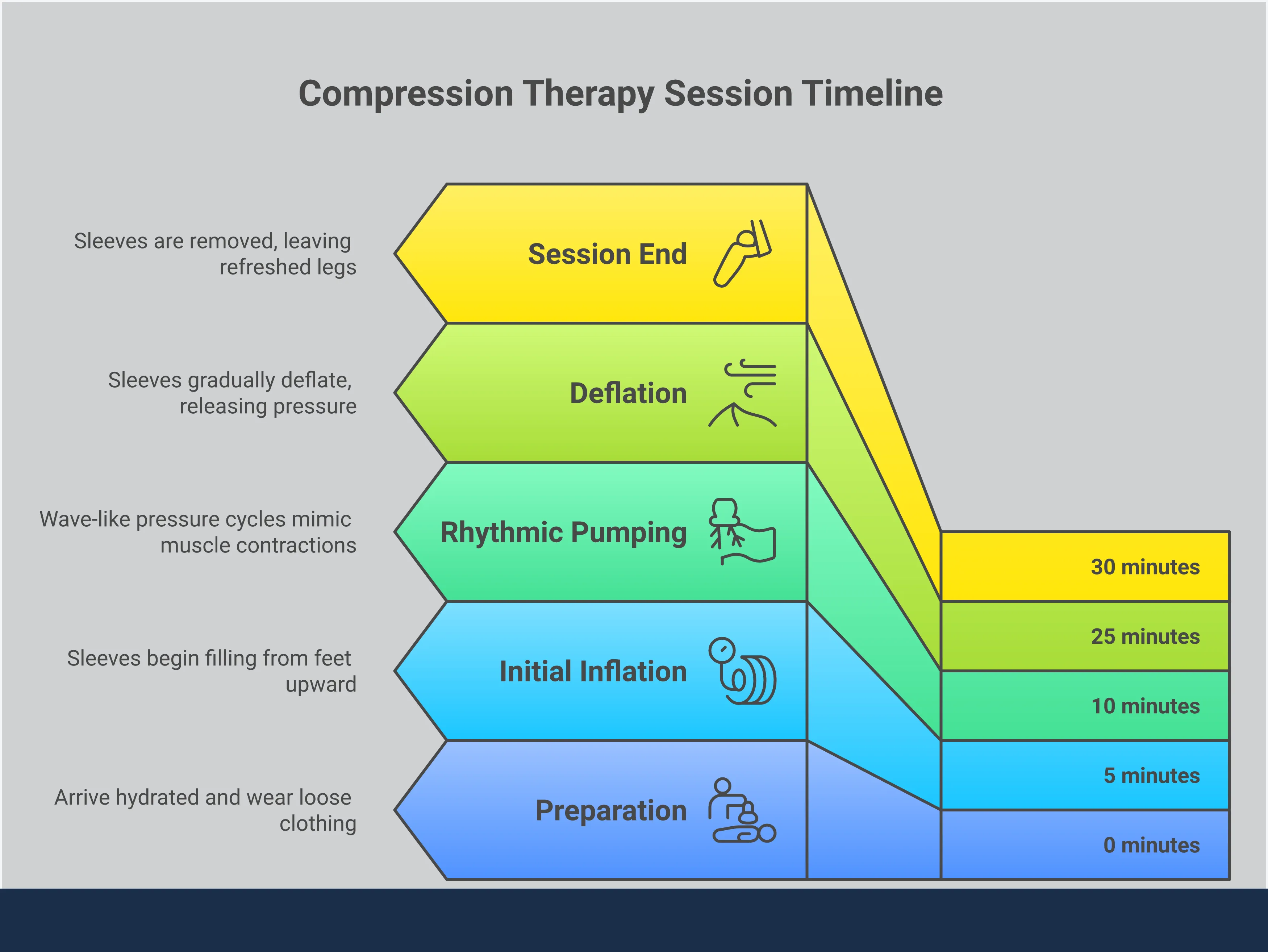
If you’re new to compression therapy, welcome! Your first session is all about getting acquainted with the sensation and finding what works for you. A typical session lasts around 30 minutes, which is a great amount of time to support your circulation. One of the most common questions is about pressure. While the systems are powerful, higher pressure doesn’t automatically mean better results. The key is to find a setting that feels snug and effective, but always comfortable. You should feel a firm squeeze, not pain. Wear loose, comfortable clothing to your appointment, and make sure you’re well-hydrated. This helps your body’s systems function optimally, making the therapy even more effective.
Pairing Compression with Other Therapies for Better Results
Compression therapy works by mimicking your body’s natural muscle pump, squeezing and releasing to move fluid and metabolic waste away from your limbs. This makes it a fantastic standalone treatment, but it’s also a great team player. Pairing it with other therapies can create a powerful, synergistic effect. For example, using compression after a laser therapy session can help your lymphatic system clear out inflammation more efficiently. This is especially helpful for accelerating performance recovery or managing chronic conditions. Think of it as giving your body an extra hand in its natural healing process, helping you feel better, faster.
Why Professional Guidance Matters
While at-home compression devices are available, nothing replaces the value of professional guidance. A trained specialist can help you create a plan tailored to your unique health goals and ensure you’re using the equipment correctly. It’s important to listen to your body during a session. If you ever feel pain or significant discomfort, you should always let your provider know right away. Working with a professional ensures your settings are optimized for your needs, whether you're focused on preventative wellness or addressing a specific injury. This expert oversight provides peace of mind, making your experience both safe and effective.
Frequently Asked Questions
What does a compression therapy session actually feel like? Think of it as a rhythmic, pulsing massage for your limbs. You'll feel the sleeves inflate in a sequence, starting from your feet or hands and moving upward, creating a gentle but firm wave of pressure. The sensation is deeply relaxing for most people. It should always feel comfortable and soothing, never painful.
Is this therapy just a more advanced version of compression socks? While they both use pressure, they work in very different ways. Compression socks provide static, constant pressure to support your veins. A compression therapy system, however, provides dynamic pressure. It actively inflates and deflates in a cycle, which creates a pumping action that is much more effective at moving fluid, flushing out metabolic waste, and reducing swelling.
How long should a session be, and how often do I need it? A typical session is about 30 minutes, which is an effective amount of time to support your circulatory and lymphatic systems. The ideal frequency really depends on your personal goals. An athlete might use it after every intense workout for recovery, while someone managing chronic swelling might benefit from more regular sessions. We can help you figure out a schedule that works best for your body and lifestyle.
Is compression therapy safe for me to try? For most people, compression therapy is an extremely safe and non-invasive treatment. However, it isn't suitable for everyone. If you have certain medical conditions, such as congestive heart failure, deep vein thrombosis (DVT), or an active infection in the area, it's important to talk with your doctor first. A professional consultation ensures the therapy is appropriate and beneficial for your specific health situation.
I'm not a serious athlete. Can I still benefit from compression therapy? Absolutely. While it's a fantastic tool for athletic recovery, its benefits are much broader. Many people use it to manage swelling from conditions like lymphedema, improve poor circulation, or find drug-free relief from chronic aches and pains. It's also a great therapy for general wellness, helping to reduce inflammation and support your body's natural detoxification processes, even if you just spend a lot of time on your feet.
Frequently Asked Questions
Is light therapy safe for athletes?

Yes, light therapy is completely safe and highly beneficial for athletes. It promotes faster muscle recovery, reduces inflammation, and supports performance without the risks of medication or downtime. That’s why professional and amateur athletes worldwide rely on it to train smarter and recover quicker.
How many sessions will I need?
The number of sessions varies depending on the type and severity of your condition. Many patients notice improvement after 3–5 sessions, while chronic conditions may require ongoing care for best results. During your initial consultation, we’ll design a personalized treatment schedule tailored to your body’s response and recovery goals.

Ready to Try Light Therapy for Recovery?