


Class IV vs. Cold Laser for Tendonitis: Which Is Right?
Tendonitis is fundamentally an issue of cellular stress and inflammation. To truly heal, your body needs to repair damaged tissue and calm the inflammatory response. While rest helps, sometimes your cells need an extra push. This is the core principle behind laser therapy, which uses specific wavelengths of light to give your cells the energy they need to heal. The key is delivering that energy to the right place. This brings up the central question of class iv laser therapy vs cold laser for tendonitis: do you need a powerful, deep-reaching treatment or a gentler, more superficial approach? We’ll break down the science behind both, helping you understand how each one can support your body’s recovery on a cellular level.
Key Takeaways
- Choose the Right Tool for the Job: Class IV laser therapy uses powerful light to reach deep, chronic tendonitis in areas like the shoulder, while cold laser therapy offers a gentler approach for more superficial or recent injuries.
- Go Beyond Symptom Relief: Laser therapy addresses the root cause of tendonitis by giving your cells the energy they need to repair tissue and reduce inflammation, offering a path to lasting recovery instead of just masking pain.
- A Custom Plan Is Key: The most effective treatment for your tendonitis depends on factors like its location and whether it's acute or chronic, which is why a professional consultation is essential to determine the best approach for you.
What Is Tendonitis?
If you’ve ever felt a persistent, nagging ache in your shoulder, elbow, or heel, you might be familiar with tendonitis. It’s a common issue that happens when tendons, the strong, fibrous cords that connect your muscles to your bones, become irritated and inflamed. This is often the result of repetitive motion or overuse from activities like sports, gardening, or even typing at a desk all day.
While the name sounds a bit clinical, the experience is all too familiar for many of us. It’s that sharp pain when you lift something, the dull ache that won’t go away, or the stiffness that makes simple movements feel like a chore. Tendonitis can sideline you from the activities you love, but finding effective pain management is the first step toward getting back to your life. Understanding what’s happening in your body is key to finding the right path to healing.
Common Types of Tendonitis
Tendonitis can show up in various parts of the body, and it often gets named after the activities that cause it. You’ve probably heard of some of these before. Common types of tendonitis include tennis elbow (lateral epicondylitis), golfer's elbow (medial epicondylitis), Achilles tendonitis, and patellar tendonitis (jumper's knee). Each one affects a different area, from the outside of your elbow to the tendon connecting your kneecap to your shinbone. Whether you’re an athlete or just dealing with the strains of daily life, identifying the specific type of tendonitis is crucial for effective performance recovery.
When Is It Time to Get Help?
It’s tempting to push through the pain or hope that a few days of rest will fix everything. While home treatments like ice and rest can help with minor strains, they aren’t always enough. If you experience persistent pain, swelling, or stiffness in a tendon that does not improve with rest or home treatment, it may be time to seek professional help. Ignoring the signals your body is sending can lead to a chronic issue that’s much harder to treat down the road. When the pain starts interfering with your daily routine or keeping you up at night, that’s a clear sign to contact a professional and explore your options.
How Class IV Laser Therapy Works for Tendonitis
If you're dealing with the persistent pain of tendonitis, you might feel like you've tried everything. Class IV laser therapy offers a powerful, non-invasive way to address the root cause of your discomfort. Instead of just masking the pain, this treatment uses targeted light energy to stimulate your body's own healing mechanisms. It’s a scientifically backed approach that helps reduce inflammation and repair damaged tendon tissue, getting you back to moving comfortably. Let's look at how it actually works.
The Science Behind the Light
At its core, Class IV laser therapy is a process called photobiomodulation. It sounds complex, but the idea is simple: specific wavelengths of light are directed at the injured tendon. Your cells absorb this light energy, which gives them a significant energy charge. Think of it like recharging a battery. This process increases the production of ATP (adenosine triphosphate), the main source of energy for your cells. With more energy, your cells can repair themselves more efficiently, regenerate new tissue, and reduce the inflammation that causes tendonitis pain. This cellular-level healing is what makes laser therapy an effective tool for pain management.
Reaching Deep Tissue to Promote Healing
One of the biggest advantages of Class IV laser therapy is its power. Unlike lower-powered lasers, a Class IV laser can penetrate deep into your body, reaching tissues up to four inches below the skin's surface. This is incredibly important for treating tendonitis, as tendons are often located deep within joints like the shoulder, hip, or knee. The laser's ability to reach these areas allows it to deliver therapeutic light energy directly to the site of injury. This deep-tissue treatment is particularly effective for chronic conditions like tennis elbow and helps athletes with their performance recovery by targeting strained tendons and muscles that other treatments can't easily reach.
How Cold Laser Therapy Works for Tendonitis
If you're looking for a gentle yet effective way to address tendonitis, cold laser therapy is an excellent option. This treatment uses low levels of light that don't produce heat, making the entire process completely painless. Think of it as giving your cells a gentle nudge to kickstart their natural healing processes. The light energy penetrates your skin and is absorbed by the injured cells in your tendon, which can help reduce inflammation, alleviate pain, and speed up tissue repair. This approach is particularly well-suited for tendonitis because it directly targets the underlying issues without invasive procedures. It’s a cornerstone of our approach to natural pain management because it supports healing from the inside out.
A Gentler Approach to Healing
Cold laser therapy, also known as Low-Level Laser Therapy (LLLT), is all about promoting healing without force. The low-power lasers don't generate heat, so you won't feel any burning or discomfort during a session. Instead, the light energy works at a cellular level to stimulate your mitochondria, which are the tiny powerhouses inside your cells. This process enhances cellular energy, helping your body produce more of the components needed for repair, like collagen. At the same time, it improves local blood circulation, bringing more oxygen and nutrients to the injured tendon while carrying away waste products. This creates the ideal environment for your body to heal itself more efficiently.
Treating Pain Closer to the Surface
One of the biggest advantages of cold laser therapy is its effectiveness for injuries located near the skin's surface. Since many common forms of tendonitis, like tennis elbow, golfer's elbow, and Achilles tendonitis, affect tissues that aren't buried deep within the body, the gentle light can easily reach them. This makes it a go-to treatment for reducing the persistent pain and swelling associated with these conditions. For athletes and active individuals, this targeted approach can be a game-changer for performance recovery, helping you get back to your activities faster without relying on pain medication to mask the symptoms. It addresses the root cause by calming inflammation and supporting true tissue repair.
Class IV vs. Cold Laser: What's the Difference?
When you hear "laser therapy," you might picture one single type of treatment. But the two most common types, Class IV and cold laser, work in different ways. While both use light to reduce pain and promote recovery, understanding their key differences is the first step in figuring out which approach is the right fit for your tendonitis. Let's break down what sets them apart.
Power and Treatment Depth
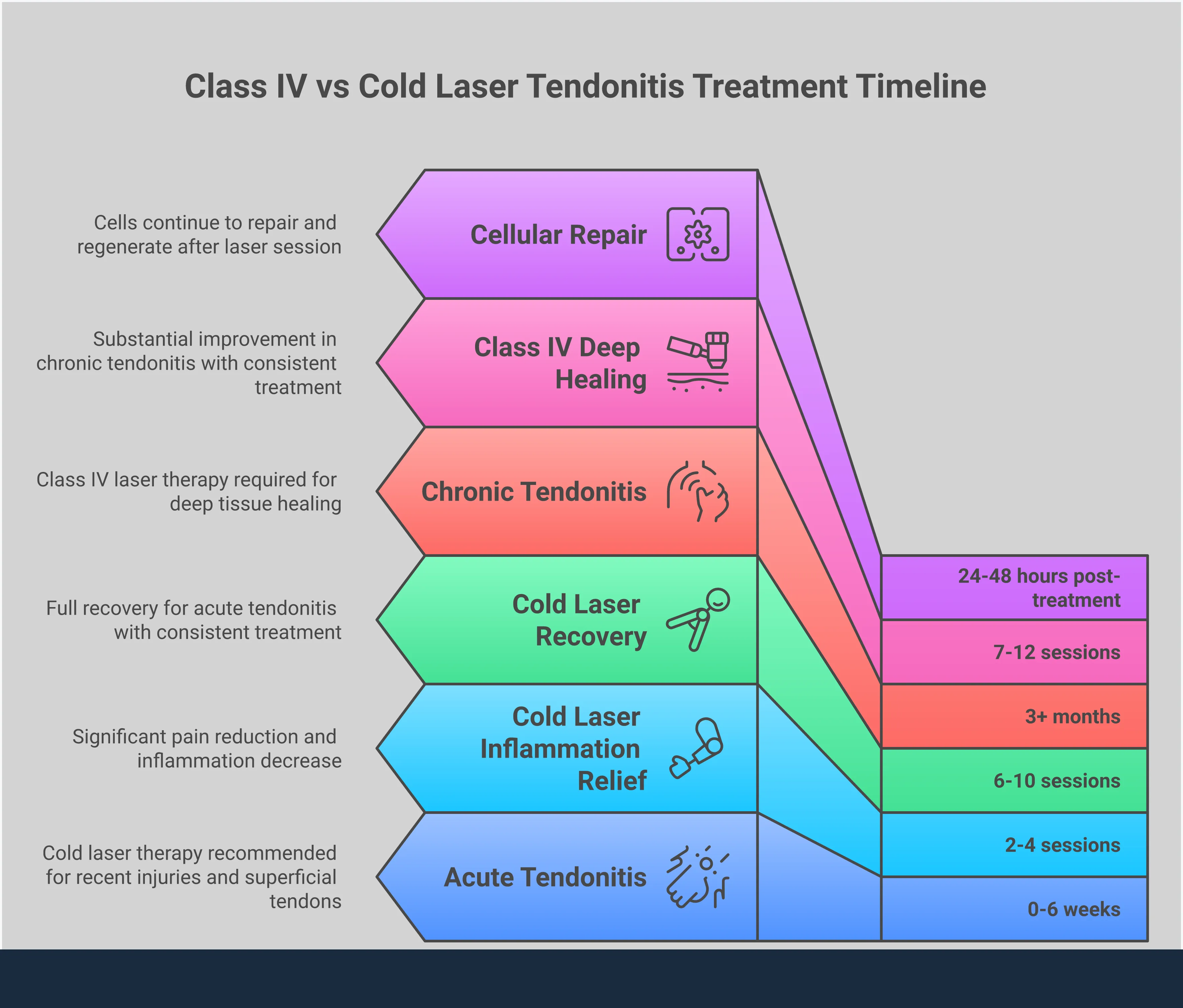
The biggest difference between Class IV and cold laser is power. A Class IV laser is a more powerful tool, allowing its light energy to reach tissues deep within the body, up to four inches below the skin. This makes it incredibly effective for treating pain in large muscles and deep joints. On the other hand, a cold laser (also called low-level laser therapy) uses much lower power. Its energy is best for treating issues closer to the surface, like superficial tendons and nerves. Your specific injury will determine which depth of pain management is needed.
Session Length and Frequency
Your treatment plan will be tailored to you, but there are general guidelines. Many people start to feel relief after just two to four sessions. A complete course of treatment to fully resolve an issue typically involves between seven and twelve sessions. The exact number depends on factors like how long you've had the tendonitis, its severity, and how your body responds. We'll work with you to create a schedule that fits your goals. Consistent treatment is key, which is why many clients find our memberships helpful for staying on track with their recovery.
What Each Treatment Feels Like
If you're worried about pain, you can relax. Both therapies are gentle and non-invasive. During a Class IV laser session, most people feel a soothing, gentle warmth over the treatment area. It’s often described as very relaxing. Cold laser therapy gets its name because it produces no heat at all; you won’t feel any sensation during the treatment. The laser does its work on a cellular level without you feeling a thing. Our team is always focused on your comfort and can walk you through exactly what to expect. You can learn more about our approach on our About page.
Which Laser Therapy Is Right for You?
Choosing between different types of laser therapy can feel confusing, but it really comes down to your specific needs. The best approach depends on what kind of tendonitis you have, where the pain is located, and how long you’ve been dealing with it. Think of it like choosing the right tool for a job. A small screwdriver works for eyeglasses, but you need something more powerful for a bigger project. Let’s break down which therapy might be the best fit for you.
For Acute vs. Chronic Tendonitis
Is your pain a recent development, or has it been a nagging issue for months? If you're dealing with chronic tendonitis, a Class IV laser is often the most effective choice. Its powerful light reaches deep into the tissue to encourage lasting healing. In fact, studies show it provides significant long-term relief for persistent conditions like tennis elbow. For acute tendonitis, which is more recent and involves active inflammation, cold laser therapy can be a great option. It helps reduce swelling and offers more immediate comfort, calming the area down so it can begin to heal.
For Surface vs. Deep Tissue Pain
The location of your pain is another key factor. If your pain is deep within a large muscle or joint, like your hip or shoulder, Class IV laser therapy is the clear winner. It can penetrate up to four inches below the skin's surface, delivering healing energy directly to the source of the problem. This makes it an excellent tool for performance recovery and stubborn injuries. On the other hand, cold laser therapy is better suited for issues closer to the surface. It’s perfect for treating superficial tendons, nerves, and smaller joints, like those in your hands and feet.
Recommendations for Specific Tendons
Let’s get specific. For tendon pain in smaller areas or soft tissue injuries near the skin, cold laser therapy is often recommended. It’s gentle yet effective for things like arthritis pain in the hands. For more robust tendons or chronic issues, we turn to more powerful options. Class IV laser therapy is highly beneficial for common but frustrating problems like Achilles tendonitis, tennis elbow, and jumper's knee. It addresses the underlying damage in these tough, fibrous tissues. The best way to know for sure is to have a professional assess your specific condition, so you can create a pain management plan that’s right for you.
What to Expect During Your Laser Therapy Session
Stepping into a new type of treatment can feel a little uncertain, but I want to walk you through exactly what happens during a laser therapy session. Our goal is to make you feel comfortable and confident from the moment you walk in. Knowing what’s ahead helps remove any guesswork, so you can focus on what matters: feeling better. The entire process is straightforward, gentle, and designed around your specific needs.
A Step-by-Step Look at a Session
First, you’ll have a consultation with one of our specialists to discuss your tendonitis, pinpoint the painful area, and create a personalized treatment plan. Once you’re ready, you’ll get comfortable in a private treatment room. We’ll then use a handheld device, moving it slowly over the affected area. Most people describe the feeling as a gentle, soothing warmth, but you won’t feel any pain. The treatment itself is quick, typically lasting between 10 and 20 minutes. It’s a completely non-invasive approach to pain management, so you can get back to your day right after your session.
Your Recovery Timeline and Results
While many people report feeling some relief after just a few sessions, it’s important to remember that laser therapy works by stimulating your body’s natural healing process at a cellular level. This kind of deep healing takes time and consistency. Most patients notice positive changes within two to four treatments, feeling less stiffness and experiencing a better range of motion. For long-lasting results, an average course of treatment is usually between seven and twelve sessions. Our memberships make it simple to stick with your plan and achieve the best possible outcome for your tendonitis.
Answering Your Questions About Cost
The cost of laser therapy depends on the size of the area being treated and the number of sessions in your personalized plan. We see it as an investment in your long-term health, helping you find relief without relying on drugs or surgery. During your initial consultation, we will outline a clear plan and discuss the costs, so you know exactly what to expect. Laser therapy is very safe when performed by a trained professional, with minimal side effects like temporary warmth or redness. If you have questions about a plan tailored to you, we encourage you to contact us to schedule a consultation.
Is Laser Therapy Safe?
It’s completely normal to ask about the safety of any new treatment. When you’re dealing with pain, the last thing you want is a solution that causes more problems. The great news is that laser therapy is a gentle, non-invasive approach to healing. It’s a drug-free and surgery-free option that works with your body’s natural ability to repair itself. In fact, this type of therapy is FDA-cleared for treating chronic musculoskeletal pain, which speaks volumes about its established safety and effectiveness.
At Laser Lab, your well-being is our top priority. We use advanced light technology to help you find relief without the risks associated with medication or invasive procedures. Our team is highly trained to deliver precise treatments that target the source of your discomfort, helping you get back to your life faster. But like any treatment, it’s important to understand how it works and if it’s the right fit for you. We’ll walk through the safety protocols we follow, clear up some common myths you might have heard, and explain the specific situations where laser therapy might not be recommended. Our goal is to give you all the information you need to feel confident about your path to pain management.
The Safety of Class IV and Cold Lasers
When performed by a trained professional, laser therapy is very safe. During your session, we’ll provide you with protective eyewear, and your technician will be with you every step of the way. The most common sensation people report is a gentle, soothing warmth over the treatment area. Some experience mild redness afterward, but this typically fades quickly.
It’s important to know that therapeutic lasers are not the same as surgical lasers. They don’t burn or cut tissue. Instead, they use specific wavelengths of light to stimulate cellular activity deep within your muscles and joints. This process helps reduce inflammation and accelerate healing without causing damage, making it a reliable tool for performance recovery and everyday aches.
Clearing Up Common Myths
Let’s clear the air on a few things you may have heard about laser therapy. First, there's a myth that the treatment is painful. In reality, most people find it to be a relaxing and comfortable experience. Because it’s non-invasive, there are no needles or incisions involved. You simply relax while the laser does its work.
Another common misconception is that laser therapy isn't backed by science. On the contrary, it is an FDA-cleared treatment for many conditions, and a growing body of research supports its effectiveness for chronic pain relief. It’s a proven method that uses light energy to trigger your body’s own healing mechanisms, offering a credible alternative to traditional pain treatments.
Who Is Not a Candidate for Laser Therapy?
While laser therapy is safe for most people, there are a few exceptions. We always prioritize your health, so we don’t perform treatments directly over areas with active cancer. It is also not recommended for use over the abdomen during pregnancy or for individuals with uncontrolled bleeding disorders. Your safety is paramount, and a thorough health history review is a standard part of our process.
If you have any concerns or questions about your specific health situation, the best thing to do is talk with us. We believe in open and honest communication to make sure you receive the best possible care. Feel free to contact our team to discuss your health history and determine if laser therapy is the right choice for you.
Find the Right Laser Therapy for Your Tendonitis
When you’re dealing with the nagging pain of tendonitis, figuring out the best treatment can feel overwhelming. The good news is that both Class IV and Cold Laser Therapy are excellent options, but they work in slightly different ways. Choosing the right one simply comes down to matching the therapy to your specific needs.
Think of Class IV Laser Therapy as the deep-tissue specialist. It uses a more powerful, focused light that can reach deeper into the body, making it highly effective for chronic conditions or tendonitis in larger joints like the elbow or shoulder. Research has shown that Class IV lasers provide long-term relief for issues like tennis elbow and can even improve grip strength over time. This makes it a fantastic choice for stubborn pain management that hasn’t responded to other treatments.
On the other hand, Cold Laser Therapy, or Low-Level Laser Therapy (LLLT), offers a gentler approach. It uses lower-power light, making it ideal for treating pain and inflammation in tissues closer to the surface. If your tendonitis is in a smaller joint or is a more recent injury, cold laser can help accelerate healing without overwhelming the area. It’s a great tool for soft tissue injuries and is often used to support performance recovery by reducing inflammation and promoting cellular repair.
Ultimately, the best therapy is the one tailored to you. The right choice depends on where your tendonitis is located, how long you’ve had it, and your personal health goals. The best first step is to talk with a professional who can assess your condition and create a personalized plan. We can help you understand your options and guide you toward the most effective path for your recovery. Feel free to contact our team to get started.
Frequently Asked Questions
How is laser therapy different from other tendonitis treatments like medication or physical therapy? Laser therapy works on a cellular level to address the root cause of tendonitis, which is inflammation and tissue damage. Unlike pain medication that temporarily masks symptoms, laser therapy helps your body heal itself from the inside out. It also works as a great partner to physical therapy. By reducing pain and inflammation first, laser therapy can make your physical therapy exercises more effective and less painful to perform.
Will I feel any pain during a laser therapy session? Not at all. Both Class IV and cold laser treatments are gentle and non-invasive. During a Class IV session, you will likely feel a soothing, pleasant warmth over the area being treated. With cold laser therapy, you won't feel any sensation at all, as the laser produces no heat. Most people find the sessions to be very relaxing.
How soon can I expect to feel better, and how many treatments will I need? While everyone’s body responds differently, many people start to feel a decrease in pain and stiffness within two to four sessions. Because the therapy works by stimulating your body’s natural repair cycle, lasting results take time. A full treatment course typically involves between seven and twelve sessions to fully address the underlying issue and help prevent it from returning.
Can I continue my regular activities, like sports or exercise, while undergoing treatment? This really depends on the severity of your tendonitis and your specific situation. Your specialist will give you personalized recommendations. The goal of laser therapy is to get you back to the activities you love without pain. For some, this may mean modifying activities temporarily, while others may be able to continue as usual. We will work with you to create a plan that supports both your recovery and your lifestyle.
Do I need a doctor's referral, and will my insurance cover the cost? You do not need a doctor's referral to begin treatment with us. Regarding insurance, most plans do not currently cover laser therapy. We believe in being transparent about costs, so we will discuss all pricing with you during your initial consultation. We see this as an investment in your long-term health and offer different plans to make care accessible.
Frequently Asked Questions
Is light therapy safe for athletes?

Yes, light therapy is completely safe and highly beneficial for athletes. It promotes faster muscle recovery, reduces inflammation, and supports performance without the risks of medication or downtime. That’s why professional and amateur athletes worldwide rely on it to train smarter and recover quicker.
How many sessions will I need?
The number of sessions varies depending on the type and severity of your condition. Many patients notice improvement after 3–5 sessions, while chronic conditions may require ongoing care for best results. During your initial consultation, we’ll design a personalized treatment schedule tailored to your body’s response and recovery goals.

Ready to Try Light Therapy for Recovery?