


Class IV Laser Therapy Side Effects: A Safety Guide
Class IV Laser Therapy Side Effects: A Safety Guide
Understanding class iv laser therapy side effects can help you decide whether this quick, non-invasive option fits your pain management or recovery goals. Most people describe warmth during a session, but every person responds differently. Careful screening, medical oversight, wavelength-specific eye protection, and clear communication all help make treatment safer and more comfortable.
What are the possible class iv laser therapy side effects?
Direct answer: Possible effects include temporary warmth, mild redness, tingling, tenderness, or a short-lived increase in soreness. Burns or eye injury are possible if a laser is used incorrectly, which is why trained operation and proper eye protection matter.
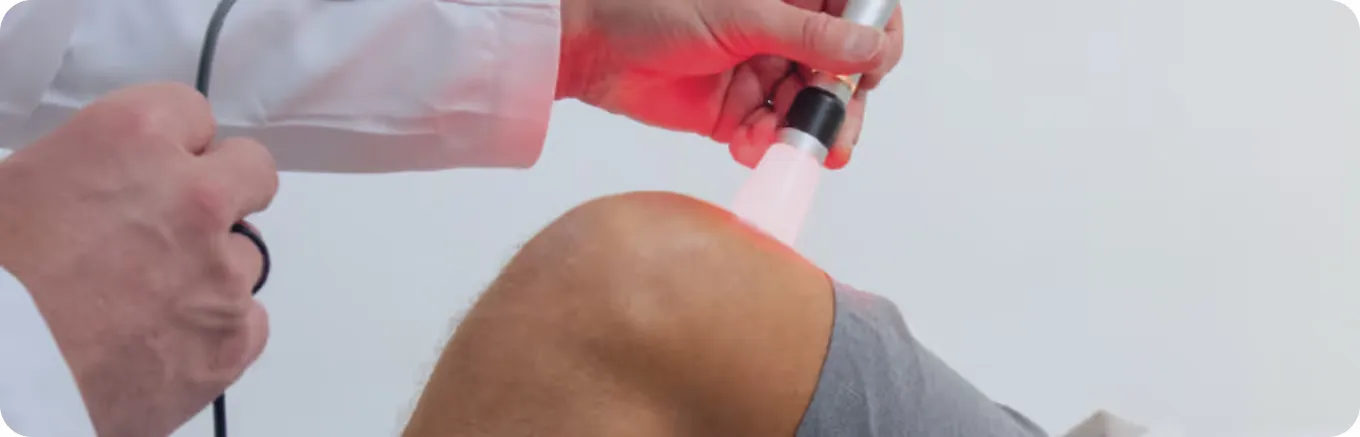
Class IV laser therapy uses concentrated light energy delivered through a handheld applicator. During treatment, many people notice a comfortable warming sensation as the provider moves the applicator across the target area. Others feel little beyond the movement of the device. Sensation can vary with the treatment location, device settings, skin characteristics, and individual sensitivity.
Temporary pinkness or mild tenderness may occur after a session. A person may also notice that a familiar ache feels temporarily more noticeable. These responses do not prove that tissue is healing, and they should not automatically be dismissed as normal. Tell the provider how you feel during treatment and report any new, intense, or persistent symptom afterward.
Common short-term sensations
- Warmth: A gradual warming feeling may develop while the applicator passes over the skin.
- Tingling: Some people notice a mild, brief tingling sensation.
- Temporary redness: The treated area may look slightly pink for a short period.
- Mild soreness: An already sensitive area may feel temporarily tender after treatment.
These effects are generally limited and short-lived, but adverse events can happen. Painful heat, burning, blistering, vision changes, marked swelling, or worsening symptoms require prompt attention. The safest response is to stop the session, inform the provider, and follow appropriate medical guidance rather than assuming discomfort must be endured.
Duration matters as much as intensity. A mild response that settles promptly is different from discomfort that builds, spreads, interrupts sleep, or limits normal movement. Because people have different health histories and pain patterns, there is no universal response that should be accepted without question. Your provider needs accurate feedback to distinguish an expected sensation from a concern that deserves evaluation.
Why device use matters
Class IV describes a laser hazard classification, not a promise about outcomes. These devices can deliver enough energy to cause injury when used improperly. A trained provider selects settings for the treatment area, keeps the applicator moving when the protocol requires it, checks skin response, and asks for real-time feedback. That combination reduces avoidable risk without suggesting that risk is zero.
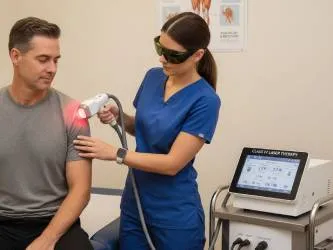
Safety controls used during medically overseen care
Direct answer: A safe visit combines health screening, trained device operation, wavelength-specific eye protection, suitable treatment settings, ongoing skin checks, and medical oversight.
Safety begins before the laser is turned on. A provider should review the concern being treated, relevant health conditions, medications, recent procedures, skin changes, and anything that may affect light sensitivity. This is also the time to clarify what the device may reasonably help with and what requires another type of evaluation.
At Laser Lab Therapy, care is positioned as natural, non-invasive, light-based support for pain management, preventative wellness, and performance recovery. Medical oversight helps the team decide whether a session is appropriate and how a plan should respond to your feedback. You can learn about the people involved in care on the Laser Lab Therapy team page.
Precise FDA-cleared uses
FDA clearance should be described precisely. The technology is cleared for temporary relief of minor muscle and joint aches, arthritis and muscle spasms, relief of stiffness, muscle relaxation, and temporary increase of local blood circulation. Clearance does not mean the device cures an injury, guarantees pain relief, or is suitable for every person or condition.
The FDA explains that medical lasers are regulated medical devices and that different laser systems have different intended uses and risks. Its overview of medical lasers and their safe use also reinforces why operator training and eye safety are important.
Eye protection is not optional
Both the patient and anyone in the treatment area must wear eyewear designed for the specific wavelengths produced by the device. Ordinary sunglasses are not a substitute. Protective glasses should remain in place while the laser is active, even when treatment is focused far from the eyes. The provider should also control access to the treatment space and avoid directing the beam toward reflective surfaces.
| Safety control | What it addresses | What the patient can do |
|---|---|---|
| Pre-session screening | Identifies health factors, medications, or symptoms needing review | Share a complete and current health history |
| Wavelength-specific eyewear | Reduces risk of accidental eye exposure | Keep glasses on until told the laser is off |
| Appropriate settings | Matches energy delivery to the area and protocol | Ask what sensations to expect |
| Applicator movement and skin checks | Helps prevent excessive heat in one location | Report painful heat immediately |
| Medical oversight | Supports appropriate selection and follow-up | Report changing or persistent symptoms |
Who should discuss precautions before a session?
Direct answer: Everyone should complete screening, and people who are pregnant, have active cancer, use photosensitizing medication, have unexplained symptoms, or have a recent procedure should discuss those details before treatment.
A laser session should not begin with assumptions. Screening is intended to identify situations that require avoidance, modification, medical clearance, or a different approach. Tell the provider about diagnosed conditions, current symptoms, medications and supplements, implanted devices, recent injections or surgery, and any unusual skin response to sunlight.
Health details to disclose
Pregnancy, active cancer, a recent cancer history, impaired sensation, bleeding concerns, fever, infection, and unexplained pain all deserve discussion. Providers generally avoid directing therapeutic laser energy over the abdomen or pelvis during pregnancy and over known or suspected malignancy. The appropriate decision depends on the individual, treatment area, device, and medical judgment.
Reduced sensation matters because a person may not reliably feel excessive heat. Open wounds, suspicious lesions, active skin problems, or a rapidly changing symptom may also need evaluation before light-based care. Screening protects the patient by creating a pause when the underlying issue is uncertain.
Medication and light sensitivity
Some medications and supplements can increase sensitivity to light. Bring an updated list rather than trying to decide on your own which items matter. Do not stop a prescribed medication for a laser appointment unless the prescribing clinician directs you to do so. A provider can review the list, ask follow-up questions, and determine the safest next step.
What happens during a 5 to 10 minute session?
Direct answer: A typical session includes a brief check-in, protective eyewear, controlled application of laser energy to the target area, continuous comfort monitoring, and a short aftercare review.
Most sessions are quick, commonly lasting about 5 to 10 minutes. Actual time can vary according to the area and treatment plan. The provider first confirms what has changed since the previous visit and checks whether there is any reason to postpone or adjust care. You should have an opportunity to ask questions before proceeding.
- Complete the check-in. Describe current symptoms, changes since the last visit, and any new medications or health events.
- Confirm the treatment area. The provider verifies the intended location and inspects the skin.
- Put on protective eyewear. Everyone present uses wavelength-specific glasses before the laser is activated.
- Communicate during application. Report how the area feels, especially if warmth becomes uncomfortable or painful.
- Review aftercare. Discuss expected short-term responses, activity guidance, and when to contact the clinic.
The device is typically applied over or close to the target area while the provider follows a defined protocol. A warm sensation may develop, but treatment should not require you to tolerate painful heat. Honest feedback allows the provider to pause, reassess, or change the plan.
Afterward, many people return to ordinary daily activity. Recommendations may differ based on the reason for care and your response, so follow the guidance given for your situation. The clinic's non-invasive pain management approach explains how light-based care fits within its broader focus.
Explore performance recovery options
How Class IV laser therapy compares with other options
Direct answer: Class IV laser therapy is non-invasive and usually involves no downtime, but it serves a different role from medication, injections, surgery, or hands-on rehabilitation. The best choice depends on the diagnosis, goals, risk factors, and clinical guidance.
People often research laser therapy because they want a drug-free or surgery-free option. That preference is reasonable, but it should not lead anyone to delay necessary diagnostic care. Light-based treatment may be one component of a plan, while exercise, rehabilitation, medication, imaging, specialist evaluation, or surgery may be more appropriate in other circumstances.
| Option | Typical experience | Important consideration |
|---|---|---|
| Class IV laser therapy | Non-invasive, quick sessions, warmth may be felt | Requires screening, trained use, and eye protection |
| Exercise or rehabilitation | Active participation over time | May address strength, mobility, and function |
| Medication | May be taken at home as directed | Benefits, interactions, and systemic side effects vary |
| Injection | Minimally invasive office procedure | Requires diagnosis-specific medical evaluation |
| Surgery | Invasive procedure with recovery period | May be necessary for certain structural or urgent problems |
A useful consultation should explain both the potential role and the limits of laser therapy. It should not frame every pain problem as appropriate for the same device or promise a cure. If symptoms point to a condition requiring another clinician or urgent evaluation, that need comes first.
Questions that clarify whether a plan fits
Before choosing any option, ask what finding or working diagnosis guides the recommendation. A provider should be able to explain why the proposed approach fits the concern, what a reasonable trial involves, and what would cause the plan to change. If the answer focuses only on the device and not on your symptoms, health history, and functional goals, ask for more context.
It also helps to define success in practical terms. A meaningful goal might be walking farther, sleeping more comfortably, returning to a modified training routine, or completing work tasks with less limitation. These goals are more useful than a vague promise to feel better because they give you and the provider a shared way to assess progress.
Ask how many sessions will be reassessed before deciding whether care is helping. Treatment plans vary, and no responsible provider can guarantee a result or exact timeline. A planned reassessment creates a point to review benefits, possible side effects, cost considerations, and other care options without continuing automatically.
Evidence and expectations
Research on high-intensity laser therapy includes varied devices, settings, patient groups, and outcome measures. For example, a PubMed-indexed clinical study can help patients understand how researchers assess benefits and adverse effects, but a single study cannot predict an individual's result. Ask how the proposed plan relates to your specific concern and how progress will be measured.
Monitoring your response and knowing when to call
Direct answer: Track comfort, function, skin response, and symptom duration after each session. Contact the clinic about a new, worsening, intense, or persistent reaction, and seek urgent care for emergency symptoms.
Simple monitoring gives your provider better information than relying on memory alone. Note how you feel before treatment, shortly afterward, and the next day. Include both pain and function, such as whether walking, lifting, sleeping, or completing a normal activity feels different. This helps the care team decide whether to continue, adjust, pause, or recommend another evaluation.
A practical response checklist
- Record the treatment date, body area, and your starting symptoms.
- Note warmth, redness, tingling, soreness, or other changes and how long they last.
- Track one or two meaningful activities, not just a pain score.
- Follow the individualized aftercare instructions provided by the clinic.
- Contact the provider if a reaction is concerning, worsens, or does not resolve as expected.
Do not use a blog article to diagnose a reaction. Prompt medical attention is appropriate for severe pain, a burn or blister, sudden weakness, vision changes, chest pain, trouble breathing, or other emergency symptoms. For less urgent concerns, contact the clinic and describe exactly what changed and when.
How to describe a concern clearly
When contacting the clinic, provide the location of the symptom, when it started, whether it is improving or worsening, and what it looks or feels like. Mention any activity, medication, or home-care step that occurred after the session. A photo may help with a visible skin concern if the clinic requests one, but it does not replace an in-person evaluation when one is needed.
Avoid applying unapproved products or using intense heat on an irritated area while waiting for guidance. Follow the instructions provided for your individual situation. If the provider cannot reasonably connect the symptom to the session, you may be directed to your primary clinician, a specialist, or urgent care for appropriate evaluation.
Frequently asked questions about Class IV laser safety
Can Class IV laser therapy burn skin?
Yes. Excessive heat or incorrect use can cause a burn, although trained operation, suitable settings, applicator movement, skin checks, and immediate patient feedback help reduce that risk. Tell the provider immediately if warmth becomes painful.
Why must I wear special eye protection?
Class IV laser light can injure eyes through direct or reflected exposure. Everyone in the treatment area must wear protective eyewear designed for the device's specific wavelengths whenever the laser is active.
How long does a Class IV laser therapy session take?
A session commonly lasts about 5 to 10 minutes, although timing varies with the treatment area and individualized plan. Screening, setup, and the aftercare conversation may add time to the appointment.
Is Class IV laser therapy FDA approved for pain?
It is more precise to say the technology is FDA-cleared for temporary relief of minor muscle and joint aches, arthritis and muscle spasms, relief of stiffness, muscle relaxation, and temporary increase of local blood circulation. Clearance does not guarantee results.
When should I contact the clinic after treatment?
Contact the clinic if you develop a new, worsening, intense, or persistent reaction. Seek urgent medical care for a burn, vision changes, severe pain, sudden weakness, trouble breathing, chest pain, or other emergency symptoms.
Plan a medically overseen consultation in Murrells Inlet
Direct answer: A consultation is the right place to review your goals, health history, medications, possible side effects, and whether Class IV laser therapy is appropriate for you.
Laser Lab Therapy serves Murrells Inlet and the wider Grand Strand with a focus on non-invasive pain management, preventative wellness, and performance recovery. The team emphasizes medical oversight, careful screening, wavelength-specific eye protection, and quick 5 to 10 minute sessions. No outcome can be guaranteed, but you can expect an opportunity to ask informed questions and understand the proposed plan before starting.
Bring a current medication list and be ready to describe what limits you most in daily life. Your path begins with a clear conversation about safety, realistic expectations, and the next appropriate step.
Frequently Asked Questions
Is light therapy safe for athletes?

Yes, light therapy is completely safe and highly beneficial for athletes. It promotes faster muscle recovery, reduces inflammation, and supports performance without the risks of medication or downtime. That’s why professional and amateur athletes worldwide rely on it to train smarter and recover quicker.
How many sessions will I need?
The number of sessions varies depending on the type and severity of your condition. Many patients notice improvement after 3–5 sessions, while chronic conditions may require ongoing care for best results. During your initial consultation, we’ll design a personalized treatment schedule tailored to your body’s response and recovery goals.

Ready to Try Light Therapy for Recovery?