


5 Best Non-Invasive Treatments for Chronic Back Pain
Treating chronic back pain is a lot like tending to a garden. You can spray weed killer to make the problem disappear for a little while, or you can pull the weeds out by the root to solve the issue for good. Pain medication is like that weed killer; it masks the symptoms without fixing the underlying problem. True, long-term relief comes from addressing the source of the pain, whether it’s inflammation, muscle weakness, or poor alignment. This is where non-invasive therapies excel. They work to reduce inflammation at a cellular level and strengthen your body’s natural support systems. Here, we’ll explore the best non-invasive treatment for chronic back pain to help you find a solution that truly lasts.
Key Takeaways
- Address the root cause for lasting relief: True healing from chronic back pain involves correcting underlying issues like muscle imbalances and poor posture, rather than just masking symptoms with medication.
- Prioritize non-invasive options to heal safely: Treatments like low-level laser therapy and physical therapy support your body’s natural healing abilities, offering a powerful way to manage pain without the risks and downtime of surgery.
- Build a personalized treatment strategy: A single therapy rarely solves chronic pain, so work with a provider to create a customized plan that combines different treatments to address your pain from all angles.
What Is Chronic Back Pain (And What Causes It)?
If you’ve ever dealt with a nagging backache, you know how disruptive it can be. It can make sitting at your desk, playing with your kids, or even just getting a good night's sleep feel like a major challenge. For many, back pain is a temporary problem that goes away with a little rest. But what happens when it sticks around?
When back pain becomes a constant companion, it’s known as chronic pain. This isn't just about the occasional twinge; it's a persistent issue that can seriously affect your quality of life. Understanding what makes back pain chronic is the first step toward finding a solution that actually works for you, without resorting to invasive procedures or a cabinet full of pain pills. Let's get into what's really going on with your back and why common treatments sometimes miss the mark.
What Makes Back Pain "Chronic"?
So, what’s the difference between a standard backache and chronic pain? The main factor is time. Back pain is officially considered "chronic" when it lasts for more than three months. It’s not just a symptom of a recent injury; it’s a persistent condition that lingers long after you’d expect it to heal.
This long-term pain can come from a variety of sources. Sometimes it’s linked to an underlying condition like arthritis, a herniated disc, or nerve irritation. In other cases, a specific cause can be hard to pinpoint. But just because a doctor can't find a clear reason doesn't make your pain any less real. It simply means the solution requires a more comprehensive approach to pain management.
The Real Reasons Your Back Hurts
While serious conditions can cause chronic pain, the truth is that most back pain comes from more common issues. Things like muscle strain, poor posture from hunching over a screen, and a weak core are often the primary culprits. Our modern lifestyles, which often involve long hours of sitting and less physical activity, can make these problems even worse.
Think of your core muscles as a natural corset that supports your spine. When those muscles are weak, your back has to work overtime to keep you upright, leading to strain and fatigue. Over time, these seemingly small issues can build up, creating a cycle of inflammation and pain that becomes difficult to break.
Why Old-School Methods Don't Always Work
If you’ve tried traditional treatments for back pain, you might have felt frustrated with the results. Often, these methods focus on masking the symptoms with medication or recommending invasive surgery. While these can be necessary in some cases, they frequently fail to address the underlying cause of the pain. A pill might dull the ache for a few hours, but it won’t strengthen your core or correct your posture.
Many people find that these old-school approaches provide only temporary relief. That’s because they don’t always support the body’s natural ability to heal. A truly effective treatment plan should focus on reducing inflammation and restoring proper function, which is why so many people are now turning to non-invasive options.
Your Guide to Non-Invasive Back Pain Treatments
If you're tired of temporary fixes and want to address the root cause of your back pain without surgery or medication, you have options. The goal of non-invasive care is to help your body heal itself, providing long-term relief and restoring your quality of life. These treatments focus on reducing inflammation, improving mobility, and strengthening your body to prevent future pain. Let’s walk through five of the most effective approaches available today.
Low-Level Laser and Light Therapy
Low-level laser therapy, also known as photobiomodulation, is a gentle, light-based treatment that helps manage both chronic and acute pain. It works by using specific wavelengths of light to penetrate the skin and stimulate your body's natural healing processes at a cellular level. This process helps reduce inflammation, improve circulation, and accelerate tissue repair right at the source of your pain.
Clinical reviews show that patients who stick with their recommended treatment schedule are far more likely to experience significant, lasting relief. Because it’s a drug-free and non-invasive approach, it’s a powerful tool for effective pain management without the side effects of medication or the long recovery of surgery.
Physical Therapy and Targeted Exercises
Physical therapy is often one of the first lines of defense against chronic back pain, and for good reason. A physical therapist doesn't just treat your symptoms; they work with you to identify and correct the underlying mechanical issues causing your pain. Your program will be tailored to your specific needs, focusing on exercises that decrease pain, improve your back's function, and increase your spine's flexibility.
The ultimate goal is to empower you with a long-term maintenance plan to keep your back healthy and prevent pain from returning. By strengthening your core and improving your posture, you build a stronger foundation for a pain-free life, making it a key part of performance recovery and daily wellness.
Chiropractic Care and Spinal Adjustments
Chiropractic care centers on the health of your spine and nervous system. The primary treatment is a spinal adjustment, where a chiropractor uses their hands or small instruments to apply controlled force to a spinal joint. The goal is to correct structural alignment and improve your body's physical function. By realigning the vertebrae, adjustments can relieve pressure on nerves and reduce pain.
While treatments like laser therapy work to reduce inflammation at a cellular level, chiropractic adjustments focus on the mechanical structure of your spine. For many people, combining these approaches offers comprehensive relief by addressing both the structural and inflammatory components of their back pain.
Acupuncture and Alternative Therapies
Acupuncture is a traditional medical practice that has been used for centuries to treat pain. It involves inserting very thin needles into specific points on the body to stimulate nerves, muscles, and connective tissue. This stimulation is believed to release your body’s natural painkillers and improve blood flow.
Modern research supports its effectiveness, with studies showing that acupuncture can be a valuable tool for managing chronic low back pain. It’s a safe and widely used therapy that offers a different path to relief, especially for those who haven't found success with other methods. Many people find it to be a relaxing experience that helps reduce stress and muscle tension along with their pain.
Therapeutic Massage
Far more than just a way to relax, therapeutic massage can be a highly effective treatment for chronic low back pain. A skilled therapist can target tight muscles and trigger points that contribute to your discomfort. By releasing muscle tension, breaking up scar tissue, and improving circulation, massage can significantly reduce pain and improve your range of motion.
It’s often recommended as part of a complete treatment plan that includes other therapies like exercise and light therapy. When included in a preventative wellness routine, regular therapeutic massage can help keep your muscles flexible and your back feeling great, stopping pain before it starts.
What to Expect from Non-Invasive Treatments
Stepping into a new kind of treatment can feel a little uncertain, but it doesn’t have to be. Non-invasive therapies are designed to be gentle, supportive, and focused on helping your body heal itself. Unlike surgery, these methods work with your body’s natural processes to reduce pain and improve your mobility over time. The goal is to get to the root of the problem, not just mask the symptoms.
From your very first appointment, the focus is entirely on you: your pain levels, your lifestyle, and your goals. We’ll work together to create a plan that feels right and gets you back to living your life with less pain and more freedom. Let’s walk through what you can expect as you start your journey toward relief.
How These Treatments Relieve Pain
Non-invasive treatments work by addressing the underlying causes of your pain, like inflammation and muscle tension, without needing surgery or medication. For example, therapies like physical therapy focus on strengthening your core muscles and improving flexibility to better support your spine. This helps decrease painful symptoms and improves your overall function.
Similarly, low-level laser therapy uses specific wavelengths of light to penetrate deep into your tissues. This process helps reduce inflammation, stimulates cellular repair, and increases circulation to the affected area. By encouraging your body’s own healing mechanisms, these treatments provide lasting relief and help prevent your back pain from returning, allowing you to build a foundation for long-term health.
How Long Does It Take to See Results?
This is one of the most common questions, and the honest answer is: it varies for everyone. Your body is unique, and so is your path to healing. Some people start to feel a noticeable improvement within just a few weeks of starting treatment, while for others, the process is more gradual. Factors like the severity of your condition, how long you’ve had the pain, and your overall health all play a role.
The most important thing is consistency. Sticking to your recommended treatment schedule is key to achieving significant and lasting pain relief. Think of it as building a new, healthier foundation for your body. Each session adds another layer of support, bringing you one step closer to feeling and moving better.
Your First Appointment: A Step-by-Step Guide
Your first visit is all about getting to know you and understanding your pain. We’ll start with a conversation about your symptoms, how they affect your daily life, and what you hope to achieve. Then, we’ll do a gentle assessment to see how you sit, stand, and walk to identify the source of your discomfort. This isn't a test; it's simply a way for us to see what’s really going on.
Based on this initial evaluation, we’ll create a personalized treatment plan tailored to your specific needs. This plan will outline the types of therapies we recommend and the frequency of your visits. Our goal is to make sure you feel comfortable, informed, and confident in the path ahead. You can always schedule a consultation to discuss your options.
Why a Combined Approach Works Best
When it comes to chronic back pain, there’s rarely a single magic bullet. That’s why a combined approach is often the most effective strategy. Think of it like building a team where each player has a special skill. Combining treatments like laser therapy, targeted exercises, and lifestyle adjustments creates a powerful synergy that addresses your pain from multiple angles.
This comprehensive approach ensures you’re not just relieving symptoms but also building strength, improving posture, and supporting your body’s overall wellness. For instance, while laser therapy reduces inflammation, physical therapy can strengthen the muscles that protect your spine. This integrated strategy leads to better, more sustainable outcomes, helping you manage your pain and maintain a healthy, active life.
The Benefits of Skipping Surgery
When you’re dealing with chronic back pain, the thought of surgery can feel both daunting and like the only option left. But what if there was a different path? Exploring non-invasive treatments isn’t about avoiding a solution; it’s about choosing a smarter, safer one that works with your body. These modern approaches act as a bridge between simple remedies and major surgery, offering powerful relief without the significant risks and downtime. By opting for a non-surgical route, you’re choosing a path that prioritizes your overall well-being, helping you heal on your own terms.
Fewer Risks, Fewer Side Effects
One of the biggest advantages of non-invasive treatments is what you get to avoid: the risks that come with surgery. Open spine surgery is a major medical event that carries the potential for complications like infection, blood clots, and adverse reactions to anesthesia. Non-invasive options, on the other hand, work with your body’s natural healing mechanisms. Treatments like light therapy are designed to be gentle and have minimal side effects. Instead of creating disruption with incisions and long recovery periods, they support your body’s ability to reduce inflammation and repair tissue, making your journey to pain management a much safer one.
A Path to Drug-Free Pain Relief
Living with chronic pain often means relying on a steady stream of pain medication, which can come with its own set of unwanted side effects and concerns about long-term use. Non-invasive therapies offer a way to break that cycle. Treatments like physical therapy, acupuncture, and light therapy focus on addressing the root cause of your pain, not just masking the symptoms. They help decrease inflammation, improve function, and promote healing from within. This approach empowers you to find lasting relief without depending on pills, aligning with a more holistic view of wellness that puts you in control of your health.
Get Back to Your Life Sooner
The recovery from back surgery can be a long and frustrating process, often requiring weeks or even months away from work, hobbies, and daily activities. Non-invasive treatments are designed to fit into your life, not put it on hold. Because there are no incisions or anesthesia, there’s little to no downtime. Most people can return to their normal routines right after a session. Many patients report feeling significant relief within just a handful of treatments, allowing them to achieve faster performance recovery and get back to doing what they love without a lengthy interruption.
How It Affects Your Wallet in the Long Run
While surgery might be covered by insurance, the associated costs can add up quickly. You have to account for hospital stays, prescription medications, and significant time off work. Non-invasive treatments often present a more predictable and manageable financial picture. Though there may be an upfront cost, you avoid the hidden expenses of a major medical procedure. With fewer required sessions and no need for a long recovery, these therapies can be a more cost-effective investment in your long-term health. Options like memberships can also make consistent care more affordable, ensuring you can manage your pain without financial strain.
Are Non-Invasive Treatments Always the Answer?
Non-invasive therapies are incredible tools for managing and relieving chronic back pain, but it's fair to ask if they work for everyone, every time. The honest answer is that while they are effective for the vast majority of people, they aren't a universal cure. The goal is always to find the right path for your specific situation. For many, a non-invasive approach like light therapy is the key to getting their life back. For others, it’s a critical piece of a larger puzzle.
Thinking about pain relief isn't about choosing one single method and hoping for the best. It’s about creating a smart, personalized strategy. Sometimes, that means combining different non-invasive treatments to get the best results. In other cases, it might mean using these therapies to delay or even avoid more aggressive procedures. Understanding the nuances will help you make the most informed decisions for your health and find a sustainable solution that truly works for you.
When You Might Need Something More
Let's be real: while non-invasive treatments are the best starting point for most back pain, there are times when you might need to explore other options. If your pain is severe, has lasted longer than three months, and isn't responding to initial therapies, it might be time for a deeper look. This doesn't automatically mean surgery is next. It just means your condition may require a more comprehensive plan. For example, our approach to pain management focuses on finding the root cause, but severe structural issues might need a specialist's opinion. The key is to see non-invasive care as the powerful first line of action that can often prevent the need for anything more.
Separating Fact from Fiction
It’s easy to fall down a rabbit hole of misinformation when you’re in pain. One of the biggest myths is that serious back pain always leads to surgery. The truth is, most cases of back pain, even chronic ones, can be managed effectively without ever going under the knife. Most pain stems from issues like muscle strain or poor posture, not a catastrophic injury. Don't let fear dictate your treatment path. Instead, focus on working with a provider who creates a customized plan for you. A good plan starts with conservative, effective treatments designed to help your body heal itself naturally.
How to Set Realistic Expectations
When you start any new treatment, you want to feel better yesterday. But healing takes time. It’s important to have realistic expectations. Non-invasive treatments work by reducing inflammation, improving circulation, and stimulating your body’s natural healing processes, which doesn't happen overnight. Think of it as a partnership. While treatments like light therapy do a lot of the heavy lifting, your results will be even better when you take an active role. Simple exercises and gentle stretches, as recommended by your provider, can be the foundation of your recovery. Consistency is everything; these therapies are most effective when you stick with the plan.
Why Your Results May Vary
Every person's body and pain journey is unique, so it makes sense that your results will be, too. How quickly you feel relief can depend on several factors: how long you've been in pain, your overall health, and your lifestyle. But the single biggest factor is consistency. Studies and our own experience show that patients who follow their recommended treatment schedule see significantly better and faster results. Some people feel a difference after just a few sessions, while others may need a bit more time. Be patient with your body and maintain open communication with your provider. This allows for adjustments to your plan to ensure you’re getting the best possible outcome.
How to Choose the Right Treatment for You
With so many different treatments available for back pain, figuring out where to start can feel like a job in itself. The truth is, there’s no single "best" option for everyone. The right path for you depends entirely on your body, your lifestyle, and your specific goals. Think of this as your roadmap to making a confident and informed decision. It’s all about understanding your unique situation, asking the right questions, and finding a provider who will partner with you to create a plan that actually works.
Your journey to feeling better isn’t about finding a quick fix. It’s about finding a sustainable solution that helps you get back to living your life. Whether you’re dealing with a new injury or a nagging pain that’s been around for years, taking a thoughtful approach to your care is the first and most important step. Let’s walk through how to find the treatment that’s the perfect fit for you.
Key Factors to Consider
Before you commit to a treatment plan, take a moment to assess your situation. First, consider the nature of your pain. Is it a sharp, acute pain from a recent injury, or is it a dull, persistent ache that’s lasted for more than 12 weeks? Pain that sticks around this long is considered chronic, and it often requires a different approach than a new injury. Also, think about your lifestyle and goals. Are you an athlete trying to get back to peak performance, or do you simply want to be able to garden or play with your grandkids without pain? Your daily activities and long-term goals will help determine which treatments are most suitable.
Smart Questions to Ask Your Provider
Walking into an appointment armed with questions is one of the best things you can do for your health. It helps you become an active participant in your own care. Don’t hesitate to ask a potential provider: What are all of my treatment options? What are the pros and cons of each? What does success typically look like for someone with my condition, and how will we track progress? A great practitioner will welcome your questions and provide clear, honest answers. If you ever feel rushed or unheard, remember that getting a second opinion is always a smart move. You deserve to feel completely comfortable with your care plan.
Building Your Personalized Pain Relief Plan
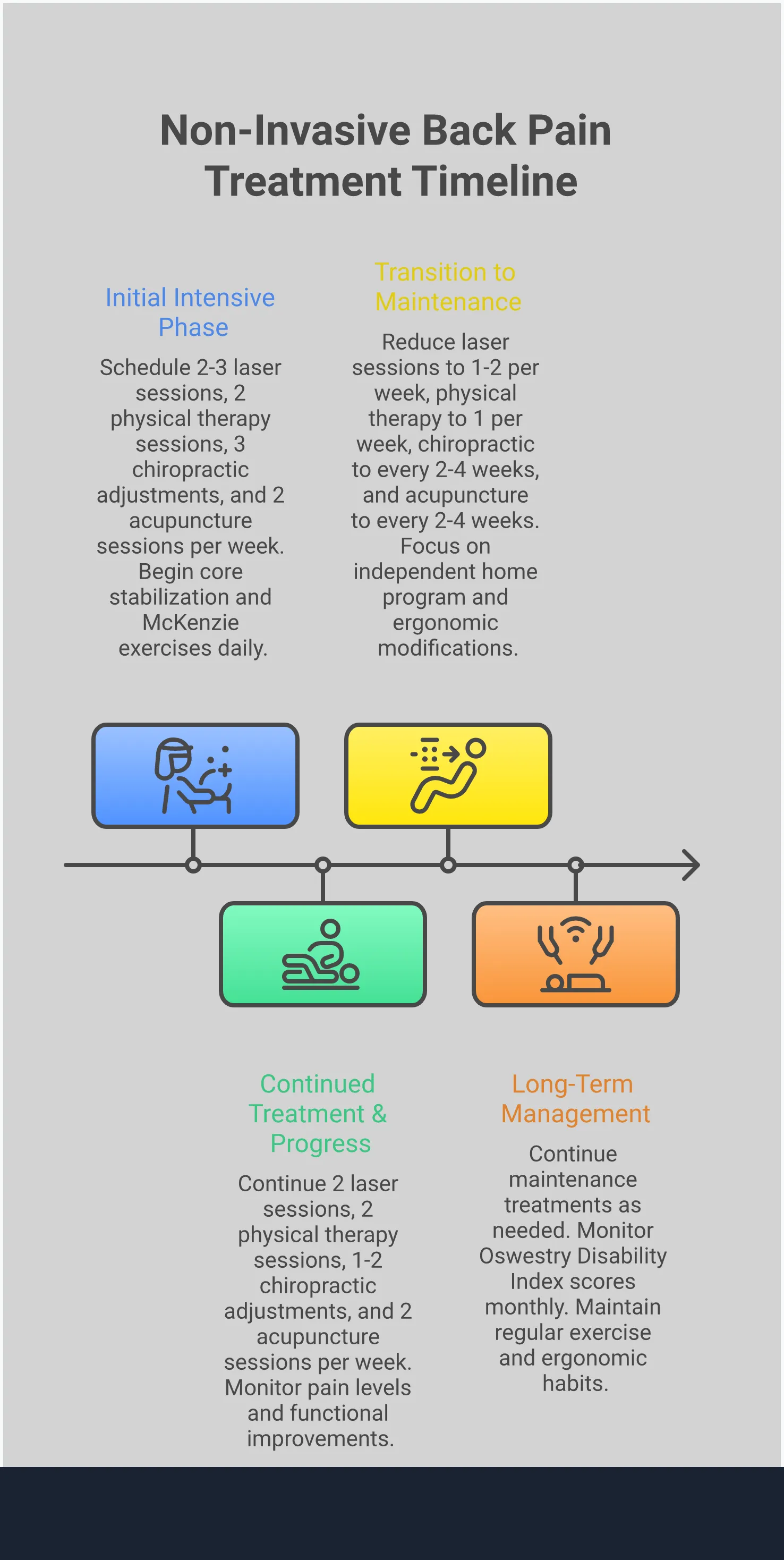
The most effective approach to back pain is rarely a single treatment. Instead, it’s usually a combination of therapies that work together to address your pain from multiple angles. A truly personalized pain management plan might include light therapy to reduce inflammation and promote healing at a cellular level, combined with specific stretches and exercises from a physical therapist to improve strength and flexibility. The goal is to create a holistic strategy that not only relieves your current symptoms but also helps prevent them from coming back. Your provider should work with you to build a plan that feels manageable and fits into your life.
How to Find a Qualified Practitioner
Finding the right person to guide you is just as important as choosing the right treatment. Look for a practitioner who specializes in non-invasive therapies and has a deep understanding of the body’s natural healing processes. The best providers are great listeners. They take the time to understand your health history, your lifestyle, and what you hope to achieve. When you meet with them, you should feel like you’re talking to a partner who is genuinely invested in your well-being. A great team, like the one we’ve built at Laser Lab Therapy, will make you feel supported every step of the way.
Frequently Asked Questions
How is low-level laser therapy different from just taking pain medication? Pain medication often works by masking your symptoms, providing temporary relief without addressing the underlying issue. Low-level laser therapy, on the other hand, works at a cellular level to help your body heal itself. It uses specific light wavelengths to reduce inflammation, improve circulation, and repair damaged tissue right at the source of your pain, offering a path to long-term relief instead of a short-term fix.
Are non-invasive treatments like light therapy painful? Not at all. These treatments are designed to be gentle and comfortable. During a low-level laser therapy session, for example, most people feel nothing more than a slight, soothing warmth on their skin. The goal is to support your body's healing process without causing additional stress or discomfort, making it a relaxing experience that works against your pain, not with it.
How many sessions will I need before I feel better? The timeline for relief is unique to each person, as it depends on your specific condition, how long you've been in pain, and your overall health. Some people notice a significant improvement after just a few sessions, while for others, it's a more gradual process. The most important factor for success is consistency, as each treatment builds on the last to create lasting change.
Can I use these therapies if my doctor has already recommended surgery? Yes, and for many people, it's a very smart step to take. Exploring non-invasive options before committing to surgery gives you a chance to find relief without the associated risks and long recovery time. These treatments can be powerful enough to delay or even help you avoid a surgical procedure altogether by addressing the root causes of your pain in a less disruptive way.
Do I have to choose just one type of treatment? You don't, and in fact, you often get better results by combining therapies. A personalized plan might pair light therapy to tackle inflammation with physical therapy to build strength and improve mobility. This kind of integrated approach addresses your pain from multiple angles, creating a more comprehensive and sustainable solution than any single treatment could on its own.
Frequently Asked Questions
Is light therapy safe for athletes?

Yes, light therapy is completely safe and highly beneficial for athletes. It promotes faster muscle recovery, reduces inflammation, and supports performance without the risks of medication or downtime. That’s why professional and amateur athletes worldwide rely on it to train smarter and recover quicker.
How many sessions will I need?
The number of sessions varies depending on the type and severity of your condition. Many patients notice improvement after 3–5 sessions, while chronic conditions may require ongoing care for best results. During your initial consultation, we’ll design a personalized treatment schedule tailored to your body’s response and recovery goals.

Ready to Try Light Therapy for Recovery?