


Benefits of Compression Therapy for Runners: Fact vs. Fiction
That familiar ache in your calves and quads the day after a long run is a sign you’ve put in the work. But what if you could lessen that soreness and get back to training sooner? This is where compression therapy comes in. It’s a simple, non-invasive technique that uses targeted pressure to help your body’s natural recovery process. By improving circulation, compression gear helps clear out the metabolic waste that causes stiffness and pain. Exploring the benefits of compression therapy for runners can be a game-changer for your routine. Here, we’ll explain how it works and how to add it to your performance recovery plan.
Key Takeaways
- Prioritize Recovery Over Performance: The primary benefit of compression gear is helping you recover faster. By improving circulation and reducing muscle soreness, it helps you bounce back quicker after tough runs, even if it doesn't directly make you faster.
- Get the Right Fit for Real Results: Compression gear only works if it fits correctly. It should feel snug but never painful, so always measure your legs and use the brand's sizing chart to ensure you get the benefits without restricting blood flow.
- Combine Compression with Other Recovery Habits: Think of compression as one tool in your recovery toolkit. For the best results, pair it with other healthy practices like proper hydration, good nutrition, and getting enough sleep to support your overall running health.
What is Compression Therapy and How Does It Work?
Let's start with the basics. Compression therapy is a technique that uses controlled pressure on a specific part of your body, most often your legs. Think of it as a gentle, strategic hug for your muscles. This is usually done with special gear like socks, sleeves, or even high-tech, air-filled boots that you might see professional athletes using. The main goal is to improve your blood flow, which in turn helps reduce swelling and supports your body's natural healing process. When you run, your muscles work hard, leading to tiny micro-tears and inflammation. Compression helps manage this by giving your circulatory system a helping hand.
It assists in moving metabolic waste products (like lactic acid) out of your muscles and bringing fresh, oxygen-rich blood in. It’s a simple yet effective tool that can be a game-changer for your performance recovery routine, helping you feel better and get back to your runs faster. By applying consistent pressure, compression gear supports your veins and muscles, making the whole recovery cycle more efficient and less painful. It’s a non-invasive way to address the soreness and fatigue that often follow a tough workout, fitting perfectly into a holistic approach to wellness.
Understanding Graduated Pressure
You’ll often hear the term “graduated compression” when looking at running socks or sleeves, and it’s a key part of what makes this gear effective. It simply means the pressure is not the same all the way through the garment. The squeeze is tightest at the point farthest from your heart, like your ankle, and gradually becomes lighter as it moves up your leg. This design is intentional. It acts like a pump, helping to push blood that has pooled in your lower legs back up toward your heart. This counteracts the effects of gravity and helps your body circulate blood more efficiently, which is crucial for clearing out waste and delivering nutrients for muscle repair.
Common Types of Compression Gear for Runners
Compression gear isn't one-size-fits-all. It comes in the form of specialized clothing designed to gently squeeze specific parts of your body. For runners, the focus is usually on the legs, and you have a few common options to choose from. The most popular types of compression clothing include socks, calf sleeves, tights, and shorts. Compression socks cover your entire foot and lower leg, making them great for overall support and reducing swelling. Calf sleeves target just the calf muscles, which is ideal if you’re prone to shin splints. Tights and shorts offer compression for your quads, hamstrings, and glutes, providing support for your entire leg during and after a run.
Why Do Runners Use Compression Therapy?
If you’ve ever seen a runner sporting knee-high socks on a warm day, you’ve seen compression gear in action. It might look like a style choice, but runners wear compression for very specific reasons, mostly centered around performance and recovery. The gentle, graduated pressure applied by this gear is designed to help your body work more efficiently and bounce back faster after a tough workout.
Think of it as a helping hand for your circulatory system. By applying targeted pressure to your muscles, compression gear can help improve blood flow, deliver more oxygen where you need it most, and clear out metabolic waste. This can lead to less soreness, reduced fatigue, and better muscle support while you’re on the move. For many runners, incorporating compression into their routine is a simple, non-invasive way to support their training goals and take care of their bodies. It’s a tool that works both during and after a run to help you feel stronger and recover smarter. Whether you're a seasoned marathoner or just starting your running journey, understanding how compression works can give you another valuable tool for your training and recovery toolkit.
Better Circulation and Oxygen Flow
One of the main jobs of compression gear is to improve your circulation. The gear is designed with graduated pressure, meaning it’s tightest at the point farthest from your heart (like your ankle) and gradually gets looser as it moves up your leg. This gentle squeeze helps your veins push deoxygenated blood back toward your heart more efficiently.
When your circulation is working well, your body can deliver oxygen-rich blood to your hard-working muscles more effectively. More oxygen means your muscles can perform better for longer. This simple mechanical assistance can make a real difference in how your legs feel, especially during those long, grueling runs when your body is under a lot of stress.
Reduce Muscle Soreness and Inflammation
We’ve all felt it: the dreaded delayed onset muscle soreness (DOMS) that sets in a day or two after a hard run. Compression therapy can help take the edge off. By improving blood flow, compression gear helps your body flush out metabolic waste products, like lactic acid, that build up in your muscles during exercise.
This faster clearance of waste can reduce inflammation and the micro-trauma that causes muscle soreness. When you wear compression gear after a run, you’re essentially helping your body’s natural cleanup crew work more effectively. The result is often less pain and stiffness, allowing you to feel more comfortable and ready for your next training session without as much downtime.
Recover Faster Between Runs
Faster recovery is the holy grail for any dedicated runner. The quicker you can bounce back, the more consistent your training can be. Compression therapy is a key tool for accelerating this process. By improving circulation and reducing muscle soreness, it helps your body repair itself more quickly after the stress of a run. This means you can get back on the road or trail feeling fresher and more prepared.
Combining compression with other recovery methods can create a powerful routine. At Laser Lab, we focus on holistic, non-invasive techniques for performance recovery that help your body heal naturally. Adding compression to your toolkit is another great way to support your muscles and stay on top of your training schedule.
Improve Muscle Support and Stability
Running involves a lot of impact, and with every stride, your muscles vibrate. Over time, this constant oscillation can contribute to muscle fatigue and even minor soft tissue damage. Compression gear provides a snug layer of support that holds your muscles in place, significantly reducing this vibration.
This added stability can help your muscles feel less tired during and after your run. It’s not about making you artificially stronger, but about helping your muscles operate more efficiently by minimizing unnecessary movement. By supporting your muscles and reducing fatigue, compression gear can help you maintain your form and feel more secure, especially as the miles add up.
Can Compression Therapy Actually Improve Your Running Performance?
This is the big question, isn't it? We see elite athletes and weekend warriors alike sporting compression socks and sleeves, but does the gear actually make you faster or help you run longer? The answer is a little more complex than a simple yes or no. While compression offers some clear physical benefits that can support your running, its direct impact on your race-day PR is still up for debate. Let's break down what the gear can and can’t do for your performance on the road or trail.
Fighting Fatigue and Building Endurance
The main theory behind compression and performance is that it improves circulation. By applying gentle, graduated pressure, the gear helps your circulatory system work more efficiently. This means more oxygen-rich blood gets to your hard-working muscles, and metabolic waste gets cleared out faster. In theory, this process should help you fight off fatigue and improve your endurance performance. The idea is that with better oxygenation and less waste buildup, your muscles can work harder for longer, making you a more efficient runner. While many runners swear by this feeling, the measurable impact on speed and distance varies from person to person.
Less Muscle Vibration
Here’s one area where compression has a clear, scientifically-backed advantage. Every time your foot strikes the ground, it sends a shockwave up your leg, causing your muscles to vibrate. Over the course of a long run, this constant oscillation can contribute to muscle fatigue and micro-damage. Compression gear acts like a supportive hug for your muscles, holding them firmly in place. Studies confirm that wearing compression garments significantly reduces this soft tissue vibration. By minimizing this jiggle, you reduce muscle strain and damage, which can help you feel stronger during your run and less beat up afterward.
A Reality Check on Performance Gains
So, will slipping on a pair of compression socks shave minutes off your marathon time? Probably not. Despite the benefits of reduced muscle vibration and theoretical circulation improvements, the current scientific evidence doesn't show a strong, direct link between wearing compression gear and enhanced running performance in terms of speed or time. Large-scale reviews have found that while the gear helps with muscle stabilization, it doesn't consistently make runners faster. Think of compression as a tool for support and recovery rather than a magic bullet for performance. It helps manage the stress of running, which is a crucial part of any effective performance recovery plan.
What the Science Says About Compression
When you look at the starting line of any race, you’ll see plenty of runners wearing compression socks or sleeves. But does the gear actually live up to the hype? The answer is a little more complex than a simple yes or no. While many runners swear by compression for its recovery benefits, the scientific community has found that its effects on performance are less clear-cut. Let's break down what the research tells us about how compression therapy works and where it really shines. Understanding the evidence can help you decide if it’s the right tool for your running and recovery routine.
The Evidence for Faster Recovery
This is where compression gear truly earns its reputation. The science supporting its role in recovery is quite strong. The controlled pressure from compression garments helps your circulatory system work more efficiently. It improves blood flow, which speeds up the removal of metabolic waste products, like lactic acid, that build up in your muscles during a hard run. This process is key to reducing muscle soreness and swelling after your workout. By supporting your body’s natural healing process, compression can help you feel less achy and more ready for your next run. It’s a simple, non-invasive way to support your performance recovery goals.
The Mixed Evidence on Performance
While the recovery benefits are well-documented, the idea that compression gear will make you run faster is not as well-supported. Some studies have found that the gear doesn't significantly improve running performance in terms of speed or endurance. However, there is a small benefit that researchers have noted: reduced muscle oscillation. In simpler terms, compression gear helps decrease the amount your muscles jiggle or vibrate upon impact. This can lead to a feeling of greater support and potentially reduce muscle fatigue over a long run. So, while it might not shave minutes off your personal record, it could help your legs feel a bit fresher toward the end of your race.
Common Myths About Compression Gear
A couple of common misconceptions often stop runners from trying compression gear. The first is that it's only for people with medical conditions. While doctors do prescribe compression for issues like varicose veins, it has also become a standard tool for athletes looking to manage muscle soreness and speed up recovery. Another myth is that the gear is impossible to put on. It’s true that compression socks and sleeves can be tricky at first because they are designed to be tight. However, there are simple techniques to make it easier, and like anything new, it just takes a little practice to master.
How to Choose and Use Compression Gear
Ready to give compression a try? That’s great! But before you add anything to your cart, it’s important to know that not all gear is created equal, and how you use it matters. Choosing the right type, getting the perfect fit, and knowing when to wear it will make all the difference in your recovery. Think of compression gear as a tool in your running toolkit, and like any tool, you need to know how to use it correctly to get the best results.
From sizing charts to washing instructions, here’s everything you need to know to make a smart choice and get the most out of your gear.
Finding the Right Fit and Size
Getting the right fit is the most critical step. If your gear is too loose, you won’t get the benefits of graduated pressure. If it’s too tight, you could actually restrict blood flow, which is the opposite of what you want. Compression clothing should feel snug and supportive, much tighter than your usual running apparel, but it should never be painful or limit your movement.
Forget your standard t-shirt or shorts size. Most compression brands size their gear based on your height and weight, or specific body measurements like your calf or thigh circumference. Always check the brand’s sizing chart before you buy. A proper fit ensures the pressure is applied correctly to support your muscles and circulation effectively.
Socks vs. Sleeves vs. Tights: What's the Difference?
The type of gear you choose depends on your specific needs and which muscles you want to target.
- Compression Socks: These cover your feet and calves, making them a great all-around choice for recovery. They help improve circulation in your lower legs, which can reduce swelling and soreness after a long run.
- Calf Sleeves: Sleeves focus solely on the calf muscles. Many runners wear them during a run for added muscle support and to reduce vibration. However, since they don't cover the foot, they aren't the best option for post-run recovery when blood can pool in your feet.
- Compression Tights: For full-leg support, tights are the way to go. They cover your glutes, quads, hamstrings, and calves, making them ideal for reducing muscle oscillation during a run and providing comprehensive pressure for recovery afterward.
When to Wear It: Before or After Your Run?
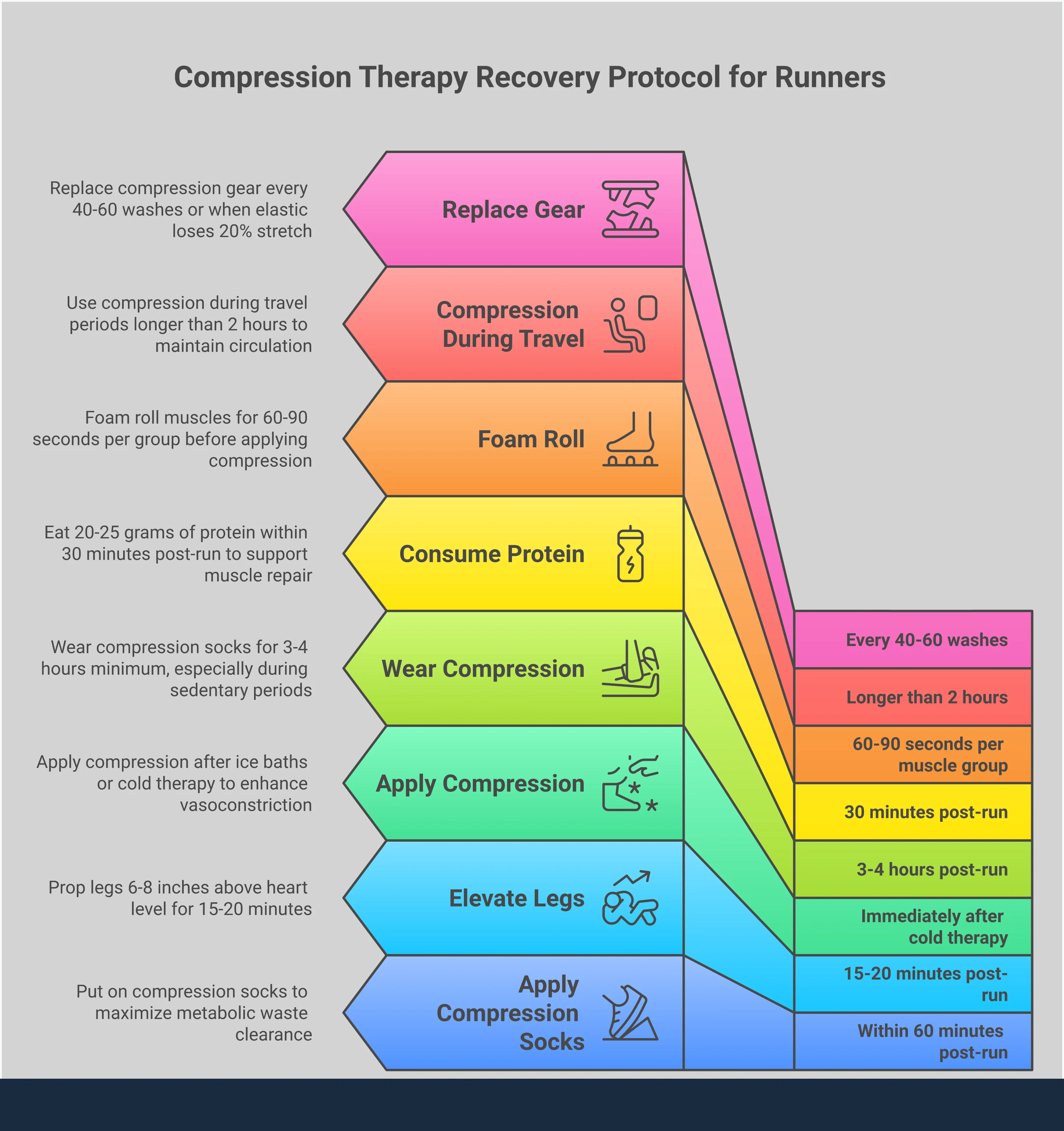
While some runners wear compression gear during their workouts for muscle stability, the real magic happens during recovery. The best time to put on your compression socks or tights is within an hour after you finish your run. This helps kickstart the recovery process by encouraging blood flow, which can reduce inflammation and that next-day muscle soreness.
You can also wear them during long periods of inactivity, like on a flight or a long car ride, to keep your circulation moving. If you’re dealing with a specific injury, compression can be a helpful part of your performance recovery plan, but it’s always a good idea to follow your doctor’s advice.
How to Care for Your Gear
To keep your compression gear effective, you need to take care of it. The supportive stretch in the fabric won’t last forever. Typically, you can expect your gear to last for about 40 to 60 washes, which is similar to the lifespan of a good pair of running shoes.
To help it last as long as possible, wash your gear in cold water on a gentle cycle and let it air dry. High heat from a dryer can break down the elastic fibers that provide the compression, making the garment less effective over time. Treating your gear with a little care will ensure it keeps supporting you run after run.
When Should You Avoid Compression Therapy?
While compression gear is a fantastic tool for most runners, it’s not always the right answer for everyone or every situation. Like any piece of performance equipment, knowing how and when to use it is key to getting the benefits without any drawbacks. Being mindful of your personal health and how the gear feels on your body will ensure you’re using compression safely and effectively.
Before you add compression to your routine, it’s worth knowing about a few situations where you might need to be more cautious or check in with a professional first.
Health Conditions to Consider
For most healthy runners, compression gear is perfectly safe. However, if you have certain pre-existing health conditions, it’s a good idea to chat with your doctor before you start wearing it. Compression works by affecting your circulatory system, so anyone with a condition related to blood flow should proceed with caution.
This includes conditions like peripheral artery disease (PAD), congestive heart failure, certain skin infections, or significant nerve damage in your legs (neuropathy). While compression can be an important part of a treatment plan for some venous diseases, it’s crucial that it’s used under medical guidance. If you're already working with a professional on a pain management plan, ask them if compression therapy is a good fit for you.
Warning Signs of a Bad Fit or Overuse
The single most important factor for safe compression is getting the right fit. Gear that’s too loose won’t provide any benefits, and gear that’s too tight can cause problems. While new compression socks or sleeves can be a bit tricky to get on at first, they should never cause pain.
Listen to your body and watch for these warning signs that your gear is too tight:
- Numbness, tingling, or a "pins and needles" sensation in your feet or toes.
- Your skin changing color, becoming pale, reddish, or blue.
- Pain, cramping, or increased swelling while wearing the gear.
- Deep indentations or marks on your skin that don't fade shortly after you take the gear off.
If you experience any of these, take the gear off immediately. An incorrect fit can do more harm than good, and as some experts warn, it can even cut off blood flow if it's overly restrictive. Always follow the manufacturer’s sizing chart and measure your legs carefully to ensure you choose the correct fit for your body.
Adding Compression to Your Recovery Routine
So, you’ve got the gear, but how do you fit it into your running schedule? The key is to think of compression as one part of your overall recovery strategy, not a magic fix. Using it thoughtfully can make a real difference in how your legs feel day-to-day. Your approach might change depending on the intensity of your run, and it works best when combined with other smart recovery habits.
The goal is to create a routine that helps you bounce back faster and feel stronger for your next run. Whether you’re training for a marathon or just enjoying a few miles a week, being intentional about your recovery can help prevent injuries and keep you moving comfortably. Let’s break down how to build a simple and effective plan.
A Recovery Plan for Easy vs. Hard Runs
Not all runs are created equal, and your recovery plan shouldn’t be either. After a tough workout like a long run or speed session, your muscles need extra support. This is the perfect time to use compression for recovery. Try to put on your compression socks or sleeves within an hour of finishing your run to help reduce soreness and swelling. This can make a huge difference in how you feel the next day and is a key part of any solid performance recovery plan.
For easier, shorter runs, you might not need compression for recovery. However, some runners like to wear it during these runs. The gear supports your muscles and minimizes vibration as you move, which can lead to less fatigue. Experiment to see what feels best for your body.
Pairing Compression with Other Recovery Methods
Compression gear is a fantastic tool, but it works best as part of a team. Think of it as one component of a complete recovery system. To get the most out of it, you need to combine it with other healthy habits. This includes getting enough sleep, staying hydrated, and eating nutritious food to refuel your muscles.
Many runners also find that other methods, like gentle stretching, foam rolling, or even cold water baths, complement compression therapy well. Creating a well-rounded approach is the best way to support your body. By layering different techniques, you build a powerful routine that supports long-term health and preventative wellness. This holistic strategy ensures you’re not just recovering from your last run but also preparing your body for the next one.
Frequently Asked Questions
How long should I wear my compression gear after a run for the best results? For recovery, a good rule of thumb is to wear your compression gear for at least three to four hours after you finish your run. The goal is to support your circulatory system as it clears out metabolic waste and reduces inflammation. Putting them on within an hour of your cool-down and keeping them on while you rest or go about your day gives your body a great window of time to reap the benefits.
Is it okay to sleep in my compression socks? It's generally not recommended to sleep in your compression gear unless you've been specifically advised to do so by a doctor. When you're lying down, your circulatory system doesn't have to fight gravity in the same way, so the extra pressure isn't as necessary. More importantly, the gear can sometimes shift or bunch up as you sleep, which could potentially restrict blood flow in an unsafe way.
What's the real difference between socks and calf sleeves? The main difference comes down to coverage and purpose. Calf sleeves are great for wearing during a run because they target the calf muscles to reduce vibration and provide support. However, since they leave the foot exposed, they aren't ideal for post-run recovery, as blood can still pool in your feet. Compression socks cover both the foot and the calf, making them the better choice for recovery because they support circulation all the way from your toes back toward your heart.
Should I wear compression gear during my run or just for recovery? You can do either, as they serve slightly different purposes. Wearing compression gear during a run, like calf sleeves or tights, is primarily for muscle support and stability. It helps reduce muscle oscillation, which can decrease fatigue. Using compression gear after a run is all about recovery. The graduated pressure helps improve blood flow to repair your muscles faster and reduce soreness. Many runners do both, using sleeves during and switching to socks after.
How do I know if my compression gear is tight enough but not too tight? Your gear should feel snug and supportive, like a firm hug for your muscles, but it should never be painful. A proper fit means you feel consistent pressure without any pinching, tingling, or numbness in your feet or toes. If you take the gear off and see deep indentations in your skin that don't fade quickly, or if your skin looks pale or reddish while wearing it, it's likely too tight. Always use the brand's specific measurement chart to find your correct size.
Frequently Asked Questions
Is light therapy safe for athletes?

Yes, light therapy is completely safe and highly beneficial for athletes. It promotes faster muscle recovery, reduces inflammation, and supports performance without the risks of medication or downtime. That’s why professional and amateur athletes worldwide rely on it to train smarter and recover quicker.
How many sessions will I need?
The number of sessions varies depending on the type and severity of your condition. Many patients notice improvement after 3–5 sessions, while chronic conditions may require ongoing care for best results. During your initial consultation, we’ll design a personalized treatment schedule tailored to your body’s response and recovery goals.

Ready to Try Light Therapy for Recovery?